Let’s Hear It for the Arts by Saralyn Richard
One of my favorite jobs was being the Fine Arts Chairperson at Thornton Township High School, Harvey, Illinois. I came to the position in a circuitous way, since I had previously taught English. The school district had just restructured departments and consolidated the music, art, foreign language, and speech departments into a single department, labeled Fine Arts.
I was transitioning from teacher to administrator, and I was excited to step into the leadership role, even though it meant teaching speech instead of English. It also meant working in an elective instead of a core subject department, where classes were required for graduation. I had no idea of what a big difference that would make, or what challenges I would have to face, but the lessons I learned have been useful, even today as a member of the arts community.
Elective teachers have to recruit fight for students. If too few students sign up for a class (say, it’s band or choir) there will be no band or choir, no need for that teacher. While every student has a designated spot in his schedule for English every year, there are only a few elective spots allowed, and all of the elective teachers are competing for that student to choose their classes over all the other attractive ones.
Equally frustrating was the constant pressure to stay relevant in face of budget cuts for all but the four core subjects (English, math, science, social studies). Whenever the costs of equipment, materials, or small classes (meaning more teachers) became a concern, the first resort would be to cut the “frills.” All the brain-based research stating how valuable fine arts was for helping students learn was easy to ignore when state testing would be core all the way.
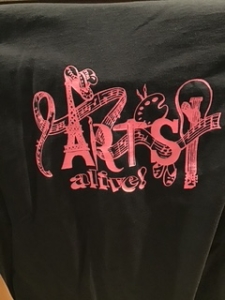
Part of my job was to make sure that students were aware of the enriching and engaging electives our department provided. So as a team, we instituted an annual Fine Arts Festival held right before the students signed up for their courses for the following year. Each of the fine arts teachers offered a mini-class that would allow students who signed up to “taste” what the course would be like. We had tshirts and contests and prizes and lots of creativity for the whole school to partake in. A lot of work went into the single day’s activities, but everyone looked forward to it each year, and the festival promoted the arts better than any other single initiative we took in curriculum, instruction, or staff development.
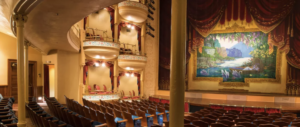
Little did I realize how working on the Fine Arts Festival would help me with arts activities in my later years. The Grand 1894 Opera House, a small, historic theater in my hometown, like the Fine Arts department, is the heart of the city. Its program is filled with shows that touch people’s thoughts and emotions in unique ways. Those who elect to attend the shows and support the theater experience culturally enriched lives.
Yet, patronizing a theater requires discretionary income, and not everyone participates. The job of the theater personnel—both paid and volunteer—is to find ways to recruit and retain patrons and supporters.
The same is true for authors, whose literary works fall into the category of fine arts. A book launch is similar to a Fine Arts Festival. The author and publisher must find ways to “advertise” the book, so that readers will choose IT from among all the attractive options for a limited amount of time to read, book budget, and shelf space.
Sometimes I hear fellow authors becoming discouraged about the trials and tribulations of marketing their books, and I think of the fine arts teachers, whose travails were just as daunting and real. And yet, we still have fine arts electives, fabulous program seasons, and exciting new books to read. Nothing ever obliterates the arts, because they are the only things that nourish the human soul. For that reason alone, all our efforts matter, and fighting the battles is worth it.
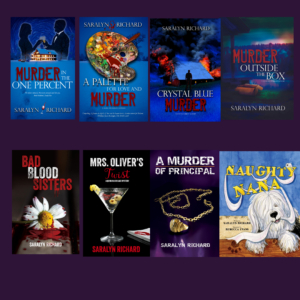
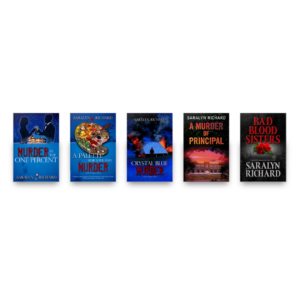
Saralyn Richard is an educator and multiple award-winning author of seven mystery novels, a children’s book, and numerous short stories, poems, and essays published in anthologies and magazines. Her works include the Detective Parrott Mystery Series, the Quinn McFarland Mystery Series, A Murder of Principal, and Naughty Nana. Saralyn is an active member of Mystery Writers of America and International Thriller Writers, and she has taught literature and creative writing to high school students and adults through the Osher Lifelong Learning Institute.
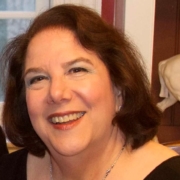
 Saralyn Richard writes award-winning humor- and romance-tinged mysteries that pull back the curtain on people in settings as diverse as elite country manor houses and disadvantaged urban high schools. An active member of International Thriller Writers and Mystery Writers of America, Saralyn teaches creative writing and literature, and continues to write mysteries. Her favorite thing about being an author is interacting with readers like you. Visit Saralyn