Tag Archive for: Paula Gail Benson

Finding Neverland: the Musical

by Paula Gail Benson

This
summer, while I was in Boston for a business meeting, I had the wonderful opportunity
to attend the opening night performance for the national tour of Finding Neverland at the Boston Opera House. Based on a successful
book and movie, this musical tells the story of how author J.M. Barrie
developed the story of Peter Pan after meeting the sons of Sylvia Llewelyn
Davies. Although the fictionalized story does not strictly follow the facts
found on Wikipedia or in Andrew Birkin’s J.M.
Barrie and the Lost Boys: the Real Story Behind Peter Pan
or Piers Dudgeon’s
Neverland: J.M. Barrie, the DuMauriers,
and the Dark Side of Peter Pan
(which has been reviewed as being a little
too dark and not as factually reliable), the exploration of how an author found
his character (and vice versa) is a fascinating view of the creative process.
Diane Paulus
Seeing
this particular production had many advantages. The show already played
Broadway and some of the company had been affiliated with that production. In
particular, Diane Paulus, the Artistic Director of the American Repertory
Theatre (ART) at Harvard University, had directed the musical from the time it was
being developed at ART through its Broadway run. She also directed this
national tour company, and had worked with the creators to incorporate
suggestions for improving the plotline and making the story more immediate for
the audience. The result was a really captivating performance that allowed the
audience’s recollections of the boy who wouldn’t grow up to add another
dimension to the story.
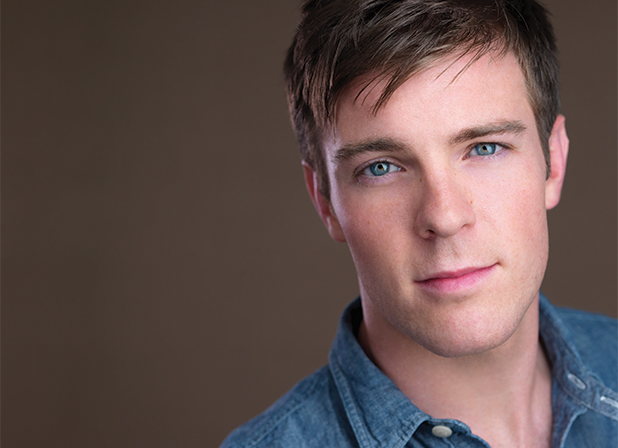
Billy Harrigan Tighe
As
the musical begins, stoic Scotsman J.M. Barrie, a successful London playwright,
is concerned that his plays are all the same and wondering what his next work
should be. His American producer, Charles Frohman, urges him not to worry and finish
the next show. His wife Mary, a former actress now enjoying life in society due
to her relationship with Barrie, also encourages him to continue with the status
quo. But, Barrie meets four boys and their widowed mother, Sylvia Llewelyn
Davies, in the park. After playing with the boys and relearning the joys of
indulging his imagination, he faces triple crises of his wife leaving him for a
nobleman, his producer demanding a new play, and Davies’ mother insisting that
he cut off his relationship with her family.
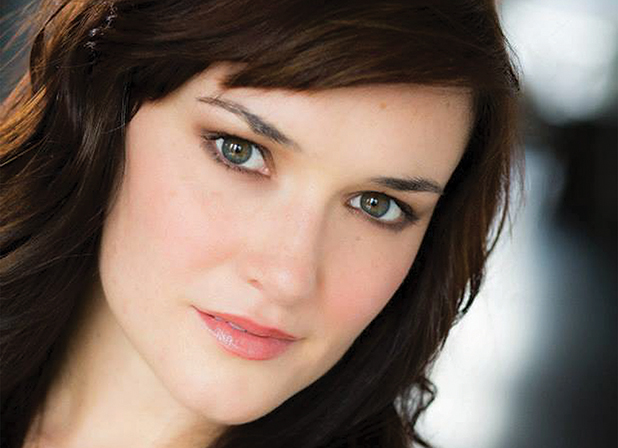
Christine Dwyer
From
the inner turmoil Barrie experiences, a villain emerges. His first name is
James (after Barrie’s own first name and because, as the character informs
Barrie, he is his alter ego) and his second name is Hook, for the appendage that
takes place of a lost arm as well as the concept necessary to develop a story.
As the first act concludes, Barrie’s imagination has taken the games from the
park, added a dark presence consumed by the press of a ticking clock inside a
crocodile that swallowed the missing arm, and created a pirate adventure that
will become the story of Peter Pan. In the finale, Barrie becomes “Stronger” as
his mind builds the images of the pirate ship (that the audience sees grow from
a park bench) and has Barrie standing on the edge of the plank as the curtain
falls.
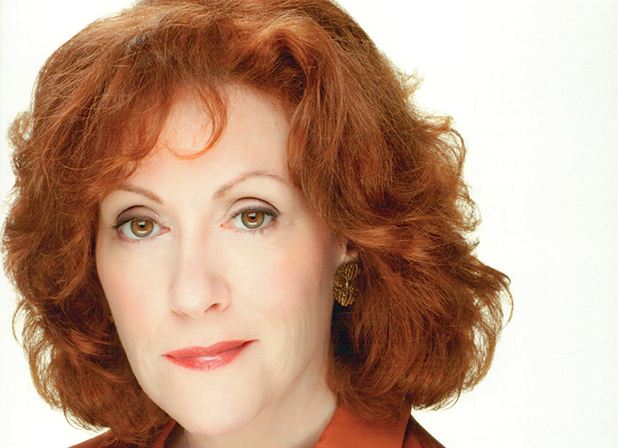
Karen Murphy
In
the second act, Barrie convinces his dubious producer and cast to put on his
new work. Gradually, they warm to the project as Barrie discovers that Sylvia
is ill. On opening night, Peter Davies is chosen to accompany Barrie to the
theatre, but then the whole company returns to the nursery to give a private
performance for the Davies family. In the end, Sylvia dies and Barrie with her
mother collaborate to raise the boys.
John Davidson
Following
the Boston performance, our audience enjoyed an onstage interview with the main
actors and director Diane Paulus. Billy Harrigan Tighe, who had worked with
Paulus in Pippin on Broadway played
J.M. Barrie. Christine Dwyer, who had grown up near Boston, took on the role of
Sylvia and was delighted to have so many people she knew coming to see the
production. Veteran actress Karen Murphy played Mrs. DuMaurier, the strict
matriarch who warms to Barrie’s charm, and well-known actor, singer, and TV
personality John Davidson was featured as producer Frohman and alter ego Hook.
In characterizing his work with the production, Davidson spoke eloquently about
how each performance became a contract between the audience members and cast
where all brought their impressions of Peter Pan into the mix.

The musical speaks to
writers seeking to create as well as readers who remember a unique literary creation.
Here’s the website where you can see if it is coming to a theatre near you: http://findingneverlandthemusical.com/tour/.
If it is, please go see it. You will thoroughly enjoy it.
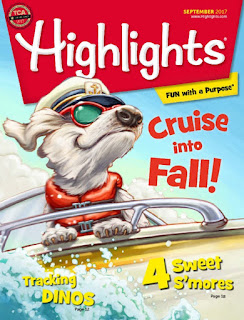
Another Highlights Inspired Post

by Paula
Gail Benson

Okay,
I have to admit it. Since I had the opportunity to visit the Highlights
editorial offices in Honesdale, Pennsylvania, and attend a Highlights
Foundation workshop, every time I go to a doctor’s office, I scan the stacks of
magazines to see if the children’s magazines are there. The other day I hit the
jackpot. I arrived extra early for a routine appointment and at the top of a
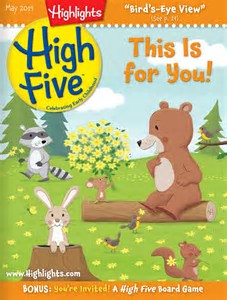
stack were Highlights for Children
(ages 6 to 12) and High Five (ages 6 to 8). I picked them up for
closer study, glad to see that I wasn’t keeping them from a member of their
true audience, since there were only adults in the waiting room.

Although
I glanced at High Five, my focus was
on the issue of Highlights because I
had an idea for a submission. Both magazines were dated November 2014 and
labelled as sample issues, which I decided must be the company’s advertising
campaign. A savvy idea.

During
the workshop, my classmates and I had discussed what a good marketing strategy
it had been for the magazines to have been distributed to doctors’ offices with
perforated subscription forms that allowed immediate mailings to a child and
later billings for the giver. No wonder they maintain a million subscribers to
each, even in this digital age. As our guide at the editorial offices told us, “Children
love to get something of their own in the mail.”

I
enjoyed reviewing some of the regular features, but focused upon the fiction. A
contemporary story about Thanksgiving had a young girl protagonist trying to
convince her parents to prepare only foods that would have been served at the
first feast. The family quickly realized the idea was impractical in that
several dishes now considered traditional would be missing (like pie,
cranberries, and potatoes) and that others would be difficult, if not
impossible, to obtain (lobster, eel, partridge, and–horrors!–eagle).

The
second story that drew my interest was a historical one, set during the
depression. A young boy, Chet, resented that hoboes (or askers—a term I had not
previously heard hoboes called) kept frequenting his grandmother’s house and
eating the best portions of their meager meals. From listening to the group of
hobo visitors, Chet learned that his house has been marked by the depiction of a
cat, meaning to other hoboes that a nice woman lives there. Chet asked if there
was symbol for danger and the hoboes showed it to him. After the hoboes left, Chet replaced the cat with the
danger sign. When his father returned after having lost his job and riding the
rails, Chet realized his selfishness and replaced the welcoming signal. The
story was beautifully told as well as revealing a fascinating, little known
history.

Although
the Highlights editors buy all rights
to a story, they pay generously and display the stories to their best
advantage. The illustrations are beautifully created and reflect the true
nature of the stories, drawing in readers as well as contributing to the
enjoyment of the story.

So, the next time you’re
in a doctor’s waiting room, scan those stacks of magazines. See if you can find
a Highlights or High Five and delight in the paths they lead you. Just be sure to
share them with any younger readers who might have an appointment there, too!

Literary Boston

by Paula Gail Benson

I’m
going to follow in the footsteps of my blogging partner Dru Ann Love and write
about my experiences on a recent trip to Boston. It’s a city I’ve always found
captivating in books.

When
I was young, I read Esther Forbes’ Johnny
Tremain
and was enthralled by the young apprentice studying Paul Revere’s
workmanship. Later, I discovered Robert B. Parker’s Boston-based, single-named
detective, Spenser, through a television series. I avidly read Linda Barnes’ mysteries
featuring cabbie and sometimes investigator Carlotta Carlyle. Not to mention
Hank Phillippi Ryan’s novels about Boston investigative reporter Charlotte
McNally and her Jane Ryland thrillers; some of Toni L.P. Kelner’s Laura Fleming
series; and Dana Cameron’s Anna Hoyt stories that take place in colonial Boston.

In
Boston’s Public Garden, a line of bronze ducks represent the characters from
Robert McClosky’s Make Way for Ducklings.
A plaque explains that the story made the Garden familiar to children
around the world and I have read that the ducks’ bronze surfaces never need to
be shined because so many little bottoms come to sit on them.

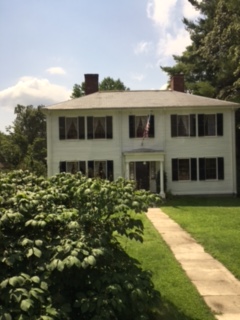
Emerson House in Concord

Growing
up, I found Boston’s neighboring town of Concord fascinating for its collection
of literary figures. In high school, I read about the three Peabody sisters:
Elizabeth, an educator and book store operator, who introduced her sisters to
their famous husbands (artist Sophia married Nathaniel Hawthorne and Mary
became Horace Mann’s wife). Ralph Waldo Emerson lived in Boston and Concord,
and Henry David Thoreau was born in Concord and wrote of its local Walden Pond.

As
far as I was concerned, the most famous Concord resident was Louisa May Alcott,
whose Little Women had been a
constant companion for me and seen me through good times and bad.

I
was extremely fortunate to find a tour that went to Lexington and Concord,
showing us not only the Revolutionary War significant sites, but also the homes
of Emerson, Hawthorne (Wayside Inn), and Alcott (Orchard House).

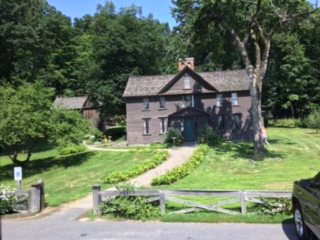
Orchard House

Seeing
Orchard House, made even more real Meg’s garden wedding and the attic where Jo
wrote her novels. Yes, this was the place where the four March girls grew to
become Little Women, and I rejoiced in seeing a spot that had so long filled my
imagination.

Fortunately,
our tour guide was experienced enough to make a story of the journey. He traced
the route that Paul Revere had taken, showing us the monument at the place
where Revere was captured, and even pointing out the house that belonged to the
Merriam family (of Merriam Webster fame).
Revere Monument near Concord

I also
learned also that a large portion of modern day Boston was created by years of
immigrants (many of them Irish) working to fill in habitable land around the
harbor. The hotel where I stayed was in the Back Bay. I thought the name
unique, but quickly learned it was used to describe many of the area’s buildings.
An Amazon search led me to discover a William Martin novel titled Back Bay, which traces the history, and
is now on my reading list.

Probably
the most invigorating thing I discovered about Boston was the
pride in the sense of history so clearly exhibited among its inhabitants.
Everywhere I went, from Fenway Park to the TD Garden to the harbor to the
theatre district, people told stories about the past and pointed to monuments
that commemorated important persons and events. The city was vibrant with
memories of the past and hopes for the future.

I walked near the end
of the Boston Marathon course and thought of the bombing victims. May we all continue
to hear and tell the stories of Boston and to remain “Boston Strong.”

B.K. “Bonnie” Stevens, True Friend and Good Writer

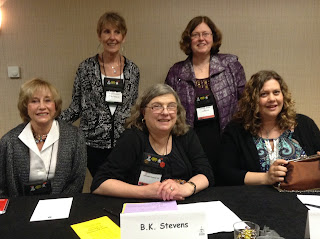
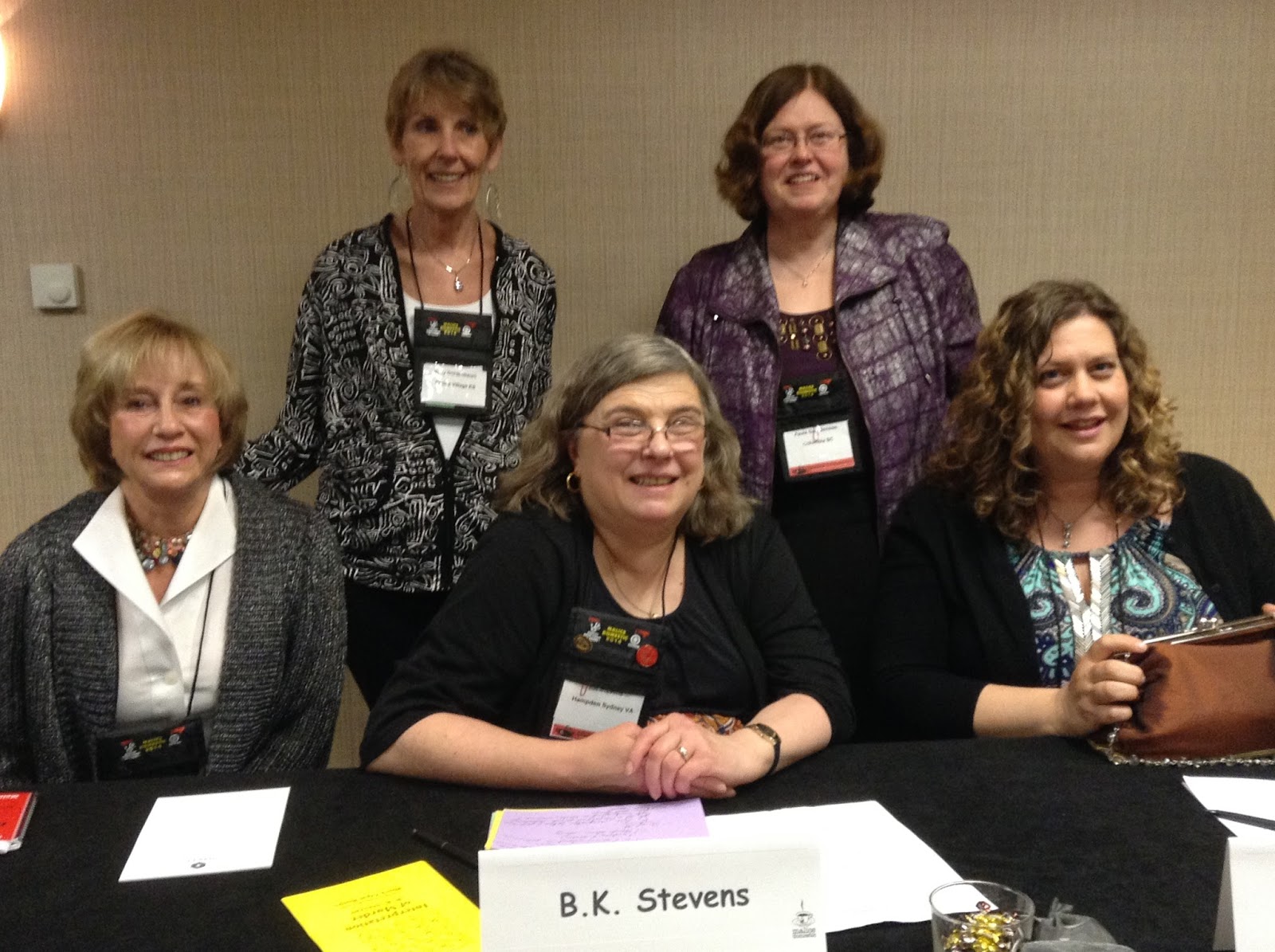
My first panel at Malice with Sally Goldenbaum, Liz Stauffer, Bonnie, me, and Wendy Tyson

by Paula Gail Benson


“It
is not often that someone comes along who is a true friend and a good writer.”
E.B. White,
Charlotte’s Web
When
we learned last week about B.K. “Bonnie” Stevens passing, Shari Randall
(writer, librarian, blogging partner, and friend) reminded me of E.B. White’s
novel and his description of the barn spider Charlotte who, by weaving
carefully chosen words into her web, saved Wilbur the pig’s life.
Bonnie
embodied the phrase, “true friend and good writer.” Her life was a testament
to the importance of constantly reaching out to others, eagerly opening your
mind to learn, and joyously communicating.
Like
Charlotte, Bonnie spoke truthfully, honestly, and with respect for the
complexities of the world. She also understood the power and wonder of
individuals sharing their lives with each other.
Chronologically,
I did not know Bonnie for a long period of time, but our connection and friendship
is enduring. I know that her inspiration, advice, and encouragement are part of
my life forever.
Maybe
one thing that drew us together, besides my great admiration for her prose, was
our backgrounds in and appreciation of education. Bonnie spent a good portion
of her life as an instructor and I came from a family of teachers. From that environment,
you realize how delightful discovering new facts and information can be.
As
I read Bonnie’s longer biography on her website, I realized that her philosophy
of remaining open to whatever life brought her continued to enrich her own experience.
Through her fiction and nonfiction, she passed that joy along to her readers.
While
reading Bonnie’s stories or being able to discuss writing with her were
incredible treats, experiencing her generosity of spirit was truly humbling. I
once got up the nerve to ask if she would read one of my stories and give me
feedback. She did so promptly with excellent suggestions, but also asked what
others had told me about the story. All perspectives of the writing process
were fascinating to her. Later, she asked me to read and react to a play she
had written. I hesitated, wondering if my comments possibly could be of any
help to her. After all, she had won an award for this play. She assured me that
she wanted to hear from me because I wrote plays and directed them for a drama
ministry, and my view, as someone who had staged a play, would give her
valuable insight.
One
of the kindest and most incredible gifts that Bonnie and her husband Dennis
gave me was a phenomenal birthday celebration during Bouchercon in New Orleans.
In advance, Bonnie sent me a list of possible venues, each sounding more
wonderful than the last, and asked me to pick the location. She gathered good
friends Art Taylor, Debra Goldstein, and Riley Miller to join us. By the end of
the blissful evening, we had a table full of desserts (including the most
delicious jalapeno lime cheesecake as well as an Almond Joy chocolate cake) and
the great satisfaction of an unforgettable time spent in lovely conversation. [Please
look for Art Taylor’s “Remembering Bonnie Stevens” message and other tributes by fellow bloggers on SleuthSayers.org
and Debra Goldstein’s “In Memory of Bonnie (B.K.) Stevens” to be posted on
Friday, August 25, 2017, here on The Stiletto Gang.]
Bonnie
gave selflessly to so many. Just recently, I saw Kaye George’s remembrance of
meeting Bonnie when she came to Kaye’s book signing at Malice Domestic. Kaye
asked, “Are you the B.K.
Stevens?” Bonnie said she was and asked Kaye, then President of the Guppies,
the online chapter for Sisters in Crime, how she could join. From the time she
became a member, Bonnie was constantly sending out words of welcome and
congratulations.
When
she began her blog “The First Two Pages,” Bonnie set out to highlight other
writers’ work by allowing them to analyze the beginning of a short story or
novel. Her initial post came from Kaye George and the latest messages are from
the contributors to Kaye’s anthology to celebrate the solar eclipse, Day of the Dark (Wildside Press), some
of whom are making their debut publication.
As
I prepare to post these words on Monday, August 21, 2017, the day our country
experiences the eclipse from coast to coast, I’m reminded of a special theatre tradition
to recognize the passing of well known members of the Broadway community — the simultaneous
dimming of all the marquee lights for one minute at the 8:00 pm curtain hour.
When the lights come back up, the shows go on.

While I experience
this solar eclipse, I’ll remember Bonnie, my true friend and good writer, and
think about all that she has done for the many lives she has touched. Thank you
Dennis and daughters Sarah and Rachel for sharing her with us.

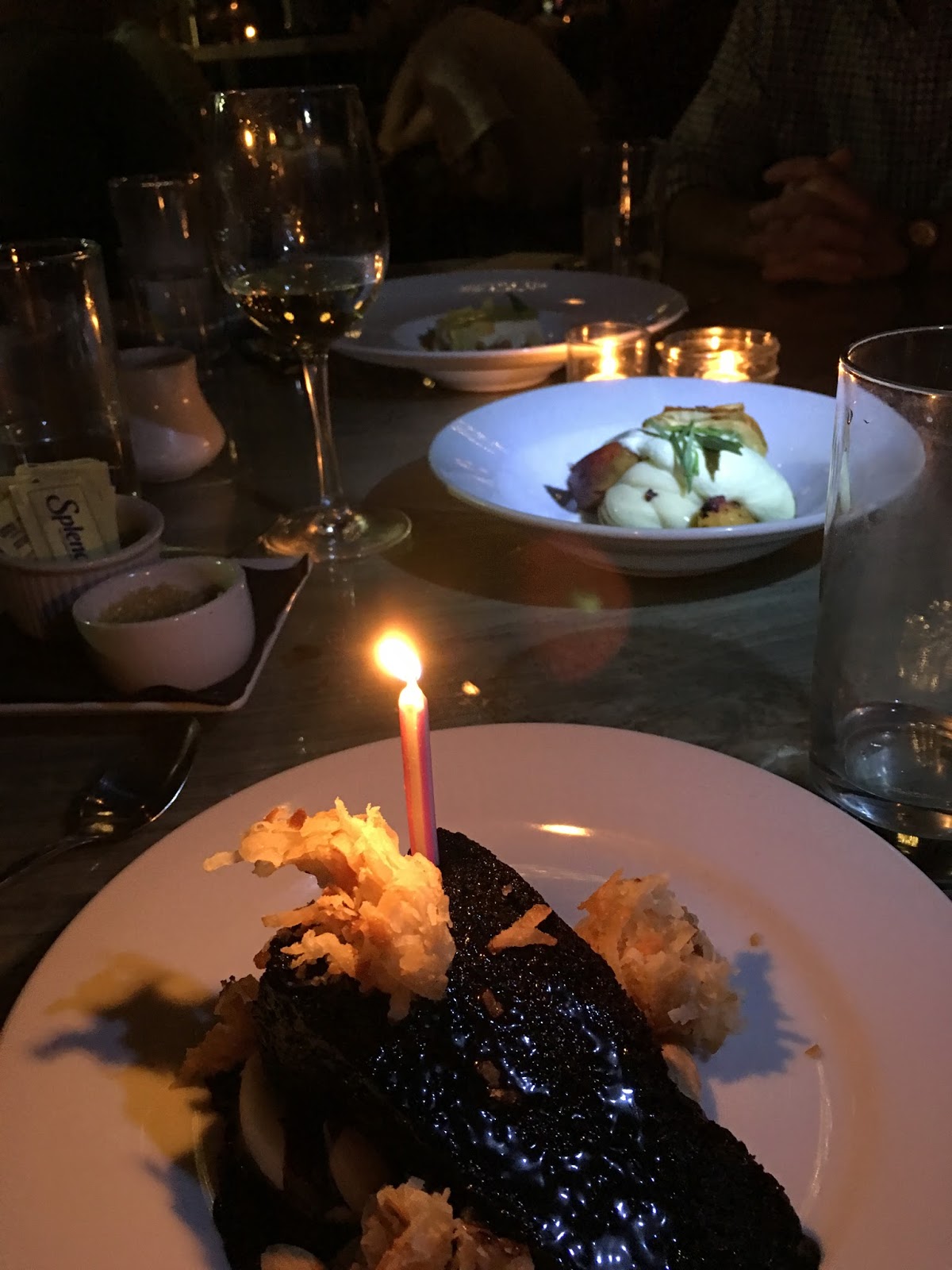
My New Orleans Bouchercon Birthday

Writing for Woman’s World Short Fiction Markets

by Paula
Gail Benson

If
you’re interested in writing short romance or mystery stories, you might want
to consider submitting to Woman’s World
(WW), a weekly magazine found in most grocery stores. Before sending in a
story, you’ll definitely want to read the publication. Its fiction guidelines
are strict: (1) romances must be contemporary and no more than 800 words, and
(2) mysteries must be up to 700 words written in a “solve-it-yourself” format to
allow readers to test their sleuthing skills with the resolution at the end.
The pay is excellent (about $800 for romances and $500 for mysteries), but the
competition is fierce. If your story is selected, you’ll become part of a distinguished
group, including John Floyd and B.K. Stevens.

Several
websites have been developed to help writers determine how best to hone their
submissions.

The
following provide guidelines:

for
romances

and
for mini-mysteries

Until
September 6, 2016, when she had to suspend her messages to concentrate on
caring for her mother, Jody Lebel, a WW published mystery author, analyzed the
mini-mysteries and listed other markets accepting shorts. Her blog is well
worth reading to understand the type stories and formatting that WW is seeking.
Here’s the link:

In
addition, two Sleuthsayers blog messages from R.T. Lawton (“Me and the
Mini-Mystery”) and John Floyd (“A Woman’s World Survival Guide”) give some
excellent advice for successful submissions. They can be accessed at: http://www.sleuthsayers.org/2012/08/me-and-mini-mystery.html
and http://www.sleuthsayers.org/2012/08/a-womans-world-survival-guide.html.

Rediscovering Highlights for Children

by Paula Gail Benson

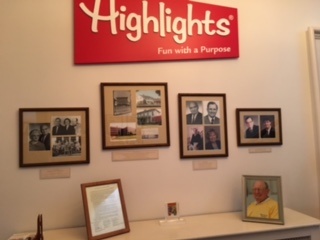
Wall of History at Highlights’ Editorial Offices

When you
were growing up, do you remember seeing Highlights
for Children
(a magazine for ages 6 through 12, with the motto:
“Fun with a Purpose”) in your doctor’s office? I often read it there and for a while
had my own subscription.

Did you
know Highlights is still published
monthly and has a million subscribers? It used to have two million, but the
company began a new publication for younger children (ages 2 through 6), High Five, that took over one million subscribers.
A third periodical (for those under age 2), Hello,
comes in a form that curious hands and mouths can explore without fear of
destruction.
I became
reacquainted with Highlights and
learned about its affiliates when I had the opportunity to attend a summer
workshop sponsored by the Highlights Foundation in Honesdale, Pennsylvania, in
the northeastern corner of the state bordering New York. From the experience, I
came to realize why Highlights and
its associated businesses represent a true American success story.
Highlights was established by Dr. Garry
Cleveland Myers and his wife Caroline Clark Myers in 1946, at ages 61 and 58.
Each had distinguished careers in education and had worked for another
children’s publication, which they thought could be operated in a manner that
would be more beneficial for its readers. Eventually, they took over that
magazine and incorporated it into Highlights.
Boyds Mills Press

The
business remains a family concern, with editorial offices based in downtown
Honesdale, a quaint, lovely place with a railroad track running through it,
located in the vicinity of many summer camps. Next door is the affiliated children’s
trade book company, Boyds Mills Press, which publishes distinguished fiction
and nonfiction. Nearby, in the rural countryside, the family home has been
converted into a writing retreat with individual cabins, a lodge, and a “barn”
where three meals a day plus appetizers are provided for visitors. The business
offices for the companies are in Columbus, Ohio.

When I
recently took a workshop in Honesdale, my classmates and I had the opportunity
to tour the Highlights and Boyds
Mills Press facilities in side-by-side buildings on Church Street. Our very
informative guides (who welcomed some additional guests wanting to brag to
their grandchildren that they had toured the Highlights headquarters) made it clear that the readers remain the
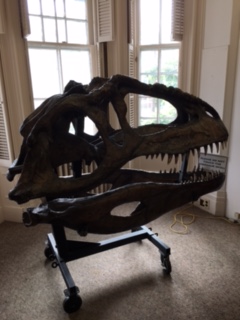
primary focus. A single staff member answers every letter received from a child. In the main office, the replica of a skeletal dinosaur head that had
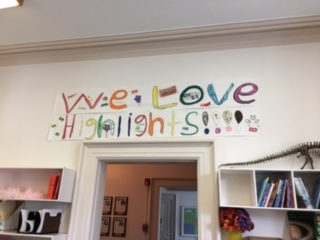
been used in a promotion was on display. Above the archway leading to the hall
was an appreciative message drawn by readers.

Most of us
were surprised to learn that Highlights
acquired all rights from the submissions it accepted. A member of our group had
sold more than one hundred works to the magazine and advocated submitting. She
said Highlights paid generously for
the rights and, if a story was subsequently sold to another market, Highlights often sent a royalty check to
the author.
When we
asked how Highlights managed to
maintain such high subscription levels in a digital age, the answer made
perfect sense: children still love to receive something of their own in the
mail. I have to admit, when I told my work colleagues where I was attending the
workshop, most said that they had given subscriptions as gifts for children or
grandchildren.

Obviously, Highlights
has found the secret to presenting quality materials for children while
continuing to develop new technologies and encourage emerging authors. It’s a
true winning combination for both readers and writers. If you would like to
know more about my workshop experience, check out my post tomorrow at
Writers Who Kill. Even if you don’t write for children, you might want to consider this wonderful facility for a possible retreat.

The End and Beginning of a Journey: Five Questions (and a Bonus) for Life and Writing


by Paula Gail Benson
During the month of May, numerous commencement speeches have been
featured on social media sites. I feel for the persons selected for this “honor.”
In a matter of a relatively few minutes, these folks are expected to be
inspirational, reflective, humorous, wise, and memorable. It’s a tough gig.
My friend Art Taylor, a Yale alumnus and Associate
Professor at George Mason University, faced the challenge when asked to address
his son’s preschool graduation. He writes about his experience in his “Graduation Day!” post on SleuthSayers.org.

Art Taylor

Initially, Art had questions about the relevance of
a preschool graduation, but after evaluating all he had seen his son learn,
considering the relationships developed that might not continue as students went to different
kindergartens, and watching the joy the graduates expressed about celebrating their
milestone and preparing for their transitions, he realized that the occasion very
much deserved its own recognition and struggled to keep his remarks within the
allotted time frame.

As I viewed recent videos of commencement addresses, I came across a
speech that I found particularly meaningful on two levels: first, for its perspective on the
human experience and life lessons, and second, probably unintended by the
speaker, for its applicability to writing fiction.
Dean James Ryan

The speech was given by Dean James Ryan (another
Yale alum) to the Harvard Graduate School of Education on May 29, 2016. Dean
Ryan, who has been described in a Harvard press release as “a scholar at
the crossroads of education, law, and policy,” received his A.B., summa cum
laude
, from Yale University and his J.D. from the University of Virginia,
which he attended on a full scholarship and from which he graduated first in
his class. He clerked for Supreme Court Chief Justice William H. Rehnquist
before teaching law at the University of Virginia. He became dean of the Harvard
Graduate School of Education on September 1, 2013.

In his speech, Dean Ryan addressed the five
essential questions to be asked in life along with a bonus question. [Here’s a link so you can read and watch the entire speech. I hope you will. It’s very inspirational.] The
questions Dean Ryan recommended were:
(1)       “Wait,
what?” According to Dean Ryan, this question indicates that the audience has focused its attention on a
particular subject. Dean Ryan’s example was asking his children to clean their
rooms. He said what they heard him say was: “blah, blah, blah, and I’d like for
you to clean your room.” Their “Wait, what?” signaled that they were not really
listening closely, then suddenly heard something that applied directly to them,
and needed him to repeat it for clarity.
In fiction, this is what we call the hook, the
reason why a reader chooses one story over any other, the personal, emotional
connection that convinces the reader, I want to spend my time with this author
and what he or she has to tell me.
(2)       “I
wonder, either why or if?” Dean Ryan characterizes this question as demonstrating curiosity and shows that a person is interested in learning more. The person has become
engaged with the subject.
For fiction writers, the “I wonder” often leads to
the germ of the story they decide to tell. By pondering, what would happen
under certain circumstances, they come up with characters and a plot.
Similarly, seeking the why or what if often is the
catalyst for a protagonist, in Christopher Vogler’s A Hero’s Journey parlance, to leave his “ordinary world” and consider “the call to adventure.” What might be possible? Is this a challenge I
should accept or decline? Where will it take me?
(3)       “Couldn’t
we at least . . .?” Dean Ryan says this question shows progress. Not only has the person
become engaged, but he’s beginning to care about the people and process
involved.
At this point in a story, the protagonist has
crossed the threshold. He may not be all in and he may have obstacles to face,
but he’s not going to retrace his steps back to the beginning. He’s signed on
for the journey.
(4)       “How
can I help?” For Dean Ryan, this question indicates the person has developed a relationship with the subject. Even
more important, the person’s beginning to insert himself into the mix.
In a story, this question pervades during the midpoint through the
climax. The protagonist is committed; he knows the goal and he’s going to help
obtain it. He’s preparing to face the ultimate struggle.
(5)       “What
truly matters (to me)?” For an individual, this is the answer to the “why” or “what
if?” Dean Ryan says it explains the purpose in life and reveals the person’s heart.
For the protagonist, this is the reason the story
began, the true basis for his existence, the challenge he must face.
(6)       The
bonus question: “Did I get what I wanted out of life even so?” For Dean Ryan, this is the evaluation. In essence, was
it worth it?
Whether the protagonist wins or loses, was the
struggle a significant and valiant effort?
No matter how a story might be perceived, a writer
can only hope the reader can find some level of appreciation and meaning in the outcome.
So graduates and writers, as you go forth into the
world after reading this post (and hopefully the two referenced links), take these questions with you, seek out your path and that of your characters, and I hope you
find the most satisfying answers possible. Thanks, Art Taylor and Dean James
Ryan, for the inspiration!

Sources of the Mystery Short Story


by Paula Gail Benson
Continuing
the celebration of May as Short Story Month (see http://shortstorymonth.com/ and http://storyaday.org/), here are a few sources
where you can find excellent short stories and receive encouragement or ideas
for marketing short stories.
  
Alfred Hitchcock’s Mystery Magazine (https://www.themysteryplace.com/ahmm/),
Ellery Queen’s Mystery Magazine (https://www.themysteryplace.com/eqmm/),
and The Strand (https://strandmag.com/) are perhaps the best
known monthly publications that feature stories, interviews, and reviews. Woman’s World (http://www.womansworld.com/) is a weekly
periodical that features a short solve-it-yourself mystery, often written by well-known
mystery writers such as John Floyd and B.K. Stevens.
Wildside
Press (http://wildsidepress.com/) offers
the monthly Sherlock Holmes Mystery
Magazine
as well as anthologies produced for the Malice Domestic Mystery
Conference (Malice Domestic 11: Murder
Most Conventional
and Malice Domestic
12: Mystery Most Historical
) and the Guppy and Chesapeake Chapters of Sisters
in Crime. Wildside has also published single author short story collections,
like Barb Goffman’s Don’t Get Mad, Get
Even
and B.K. Stevens’ Her Infinite
Variety.
Level
Best Books (https://levelbestbooks.com/)
is well known for publishing the Best New England Crime Stories series and is
currently seeking submissions (which close May 31, 2017) for the 15th
anthology, to be titled, Snowbound. Now
under new editors, Level Best has branched out with a law enforcement
anthology, Busted! Arresting Stories from
the Beat
, and an upcoming culinary collection, Noir at the Salad Bar.
Two
excellent online magazines are Mysterical
E
(http://mystericale.com/),
published quarterly, and Kings River Life
(http://kingsriverlife.com/), issued
weekly. If you look at the Mystery Rats Maze portion of Kings River Life (http://kingsriverlife.com/category/kings-river-reviewers/mysteryrats-maze/),
you’ll find interviews with mystery authors, book reviews, and short stories.
Sometimes there’s even a give-away offer!
Finally,
both for its list of online resources and its continuous updates of contests
and calls for submissions, Sandra Seamans’ blog (http://sandraseamans.blogspot.com/)
can’t be beat. In addition, the Short Mystery Fiction Society (https://shortmystery.blogspot.com/)
has been commemorating the short story month with selected stories from its
member authors, including our own Debra Goldstein.
If
you love short stories, particularly mystery ones, please be sure to check out
these great sites!  

May is Short Story Month!

by Paula Gail Benson

Thanks
to my friend, phenomenal author Art Taylor (Agatha, Anthony, Derringer, and
Macavity award winner for short fiction and winner of
the Agatha Award for Best First Novel for On the Road with Del &
Louise: A Novel in Stories
—check out his website at:
http://www.arttaylorwriter.com/), I learned that
May is Short Story Month. It’s a tradition that started in 2013. You can read
about it at
http://shortstorymonth.com/ and participate
with your own contributions at
http://storyaday.org/, which encourages
people to complete a story each day during the months of May and September and
provides writing prompts and featured guests (like Neil Gaiman) as inspiration.

Art
has been celebrating this year by featuring a different story each day on his
Facebook page, including one by his very talented wife Tara Laskowski (read
about her terrific short story collection Bystanders
at
http://taralaskowski.com/). Tara is the editor
of
http://www.smokelong.com/, the online
literary magazine devoted to flash fiction.

I
began thinking about the mystery short story writers who have inspired me. I
credit Arthur Conan Doyle and Edgar Alan Poe for luring me into the genre, but
a number of current authors keep me reading and teach me the true artistry of
the short story craft. Here’s a list (beginning with Art and Tara and in
alphabetical order below) of a few that you may want to add to your TBR stack,
if you haven’t already discovered them.

John
Floyd (
http://www.johnmfloyd.com/), a former Air
Force captain and IBM engineer, has written more than 1,000 stories that have
appeared in the
Strand MagazineAlfred Hitchcock’s Mystery MagazineEllery Queen’s Mystery Magazine, Woman’s World, The Saturday Evening Post, Mississippi Noir, and The Best American Mystery Stories 2015. In addition to
receiving three Derringer awards, he has been
nominated for an Edgar and three times nominated for the Pushcart Prize. He
blogs
at
http://www.sleuthsayers.org/. His books are: Rainbow’s End (2006), Midnight
(2008), Clockwork (2010), Deception (2013), Fifty
Mysteries
(2014), and Dreamland (2016).

Kaye George (http://kayegeorge.wixsite.com/kaye-george), while writing
four series of mystery novels, continues to produce quality short fiction.
Recently, she took on the job as editor for Day
of the Dark
,
an anthology to be
published by Wildside Press on July 21 that contains 24 stories about eclipse,
to commemorate the one that will take place in August.
I met Kaye as a
member of the Guppy Chapter of Sisters in Crime. She served as treasurer, then
President of the online chapter, and throughout her membership has been a
consistent contributor and commenter to the short story critique group. Her
insightful advice has helped many of us to improve our work.

Barb
Goffman (
http://barbgoffman.com/) has been
nominated numerous times for the Agatha, Anthony, Derriger, and Macavity
awards. She has won the Agatha and Macavity and her Don’t
Get Mad, Get Even
won the Silver Falchion
for best single-author mystery-short-story collection published in 2013. She
blogs at
http://www.sleuthsayers.org/ and
is an accomplished editor.

Debra Goldstein (http://www.debrahgoldstein.com/), my
blogging partner here at The Stiletto Gang, is an active member of the Guppy
Chapter short story critique group. Recently, her “The Night They Burned Ms. Dixie’s Place”
appeared in the
May/June 2017 edition of Alfred Hitchcock
Mystery Magazine
. Check out her mention on the cover at:
https://www.themysteryplace.com/ahmm/.

Robert Mangeot (http://robertmangeot.com/)
calls himself a  “Turner of Phrase, Counter of Beans, Crafter of Sandwiches” on
his website.  His fine stories have been
published in the MWA anthology Ice Cold and
the Bouchercon anthology Murder Under the
Oaks
. He is a frequent contributor to
Alfred
Hitchcock Mystery Magazine
.

Edith Maxwell (https://edithmaxwell.com/) has
the distinction of having her short story and novel both featuring her Quaker
midwife protagonist nominated for the best short story and best historical
novel at this year’s Malice Domestic Agatha awards. In addition to writing four
mystery series and blogging with the Wicked Cozy Authors, she continues to
produce quality short fiction.

Terrie Farley Moran (http://terriefarleymoran.com/) won the Agatha
Award Best First Novel winner, Well Read, Then Dead, the debut of
her Read ‘Em and Eat series. Currently, her “Inquiry and Assistance,” a
Depression era story published in Alfred
Hitchcock Mystery Magazine
, is a nominee for a Derringer award as best
novelette. A copy of the nominated story may be accessed at: http://terriefarleymoran.com/short-stories/.

B.K.
“Bonnie” Stevens (
http://www.bkstevensmysteries.com/) has
become a beloved friend and confidant. I first met her when I contacted her to
tell her how much I loved reading “Thea’s First Husband” (now included in
Wildside Press’ Her Infinite Variety: Tales of Women and Crime). In
addition to her novel, Interpretation of Murder, a traditional whodunit,
and her YA martial arts mystery Fighting Chance, Bonnie has written over
fifty short stories, most published in Alfred Hitchcock’s Mystery Magazine.
She won a Derringer and has been nominated for Agatha, Anthony, and Macavity
awards. In addition to blogging at
http://www.sleuthsayers.org/, her
own blog features authors describing the first two pages of their work, both
novels and short stories.
Check it out at:

http://www.bkstevensmysteries.com/category/the-first-two-pages/

Please
indulge and celebrate May as Short Story month by taking time to enjoy these
wonderful authors’ stories. Then, why not write one or two of your own?

Meet the Authors of the 2016 Agatha Best First Novel Nominees!


Each
year at Malice Domestic, writing excellence is recognized by the Agatha awards.
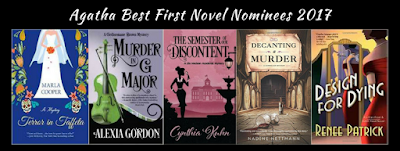
This year’s nominees for Best First Novel are (in alphabetical order by first
name):
Best First Novel:
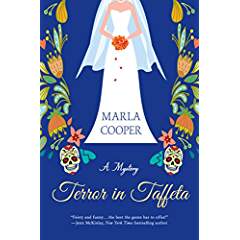
Terror in Taffeta by
Marla Cooper (Minotaur)
Murder in G Major by
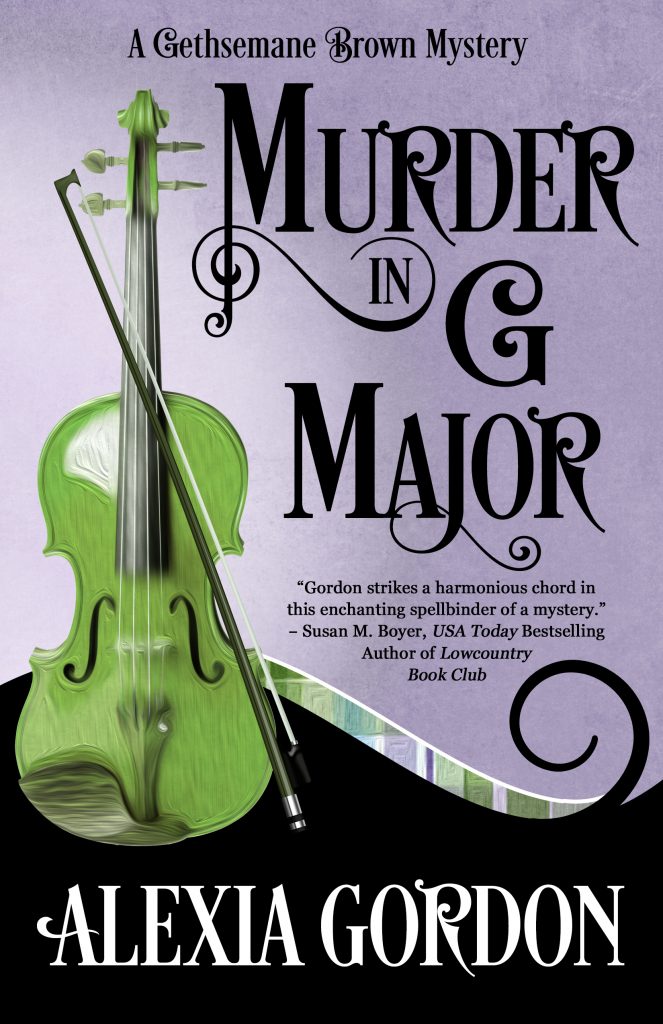
Alexia Gordon (Henery Press)
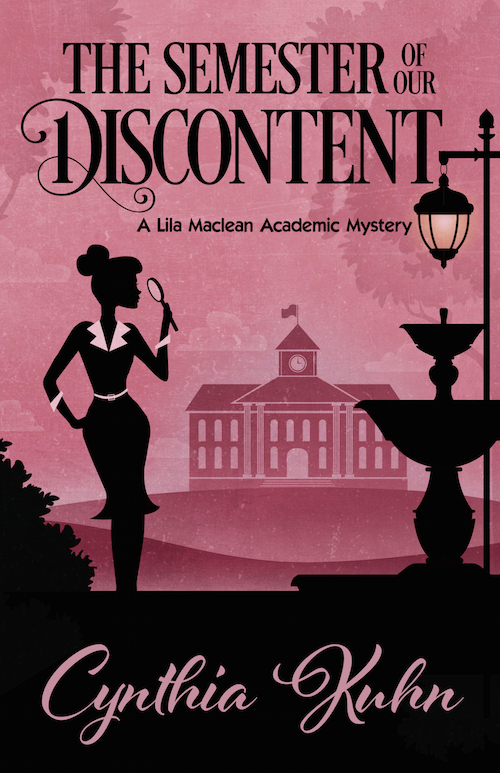
The Semester of Our Discontent
by Cynthia Kuhn (Henery Press)
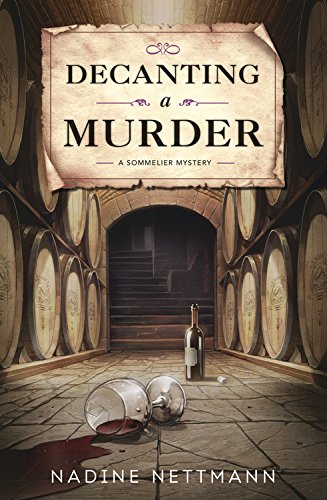
Decanting a Murder
by Nadine Nettmann (Midnight Ink)
Design for Dying by
Renee Patrick (Forge Books)
Today,
the Stiletto Gang welcomes Marla, Alexia, Cynthia, Nadine, and Renee (
the pseudonym for married authors Rosemarie and Vince
Keenan)
. Thanks for stopping by to share your work and thoughts
with us!—Paula
Gail Benson
What writing habits enabled you to
complete a novel?
MARLA:
I’ve
never been one of those writers who gets up two hours early every day so she
can have dedicated writing time. But I did find a handy way to trick myself
into a consistent writing practice. For me, getting started is the hardest
part. So when I’m writing a novel, I make myself sit down and write 50 words
every day. That’s all. Just fifty little words. They don’t even have to be good
words. Most days, I end up getting into my groove and writing a whole lot more
— but just getting myself past the resistance makes all the difference.

ALEXIA:

Having deadlines helps
me. I hate to disappoint (one of my hang-ups) so being accountable to another
person for turning in pages prompts me to get the pages written.


CYNTHIA:
One
thing that’s helped me is to allow the entire first draft to be a kind of a
joyful keyboard pounding, in which I don’t evaluate or second-guess anything; I
just write until I have a complete story. Then comes the deep and intensive
revision phase, in which there is not only second-guessing, but also
third-guessing and fourth-guessing and so on…times infinity (or so it feels).
NADINE:
Besides
the fear of regret, which isn’t really a habit but it feels like one, I would
do writing sprints with a friend. We would text to set a start time and then
write for thirty minutes, checking in with each other when we were done. It was
a great way to hold each other accountable and we both would often keep writing
past the thirty minutes. Currently, I’m trying to do Magic Mornings where I
wake up and write first thing without checking the Internet or my phone. It’s
still an effort but I’m hoping it will become such a habit that I never miss a
morning. I might be hoping for a while as it’s very tempting to look online
when I wake up.
RENEE (Rosemarie and Vince):
We
were both raised Catholic, so we each have two powerful motivational tools on
which we can rely: guilt, and the fear of guilt. They power us through every
endeavor, but when combined they are nigh upon unstoppable. To any and all
aspiring writers out there, we say find yourselves a co-author. Knowing that
you will have to answer to a trusted friend or loved one for missed deadlines,
mixed metaphors and botched jokes will keep you typing until your fingers ache.


What shoes would you, your protagonist, or
another character from your novel wear to the Agathas banquet?

MARLA:

So,
about the shoes: As a destination wedding planner, my main character Kelsey has
to sacrifice style for practicality since she sometimes is on her feet for up
to 8 hours at a time. But for the Agathas, she’d have the night off from
playing party planner, so she’d probably break out the Laboutins in the back of
her closet. (She inherited from a bride who bought them in three different
colors “just in case,” but couldn’t be bothered to return them.)

ALEXIA:

Gethsemane would wear some bad-ass high-heeled boots. Because I
can’t wear them and Gethsemane was born out of wish-fulfillment. 

CYNTHIA:

Lila
would be planning to wear her favorite black Doc Martens lace-up boots, but her
cousin Calista would talk her into some still-in-the-box Jimmy Choo pumps, a
gift from Lila’s mother that has been languishing in her closet.

NADINE:

As
for shoes, I’ll choose Tessa for this question as she loves clothes and fashion.
In Decanting a Murder, Tessa wears a pair of navy blue Manolo Blahnik heels but
I think for the Agathas banquet, she would go for a bright red pair that were
several inches high. Katie Stillwell would probably wear very small heels,
unless Tessa talked her into some tall ones again.

RENEE (Rosemarie and Vince):

Lillian
Frost would choose a high-heeled sandal in sparkling silver but Edith Head
would suggest a more practical black kitten-heeled pump. And thank you for the
invitation but Edith couldn’t possibly attend, she’s much too busy.