Tag Archive for: writing

Bulletproof Ideas


by Bethany Maines

When I started writing professionally it was with the understanding that I was, as my high school English teacher once wrote on a short story, “not very creative.” And ok, later I figured out that said teacher had gone to junior high with my mother and probably hated me (What did you do to her, Mom? What?!), but some things stick with you. So it surprised me when people kept asking me, “How did you come up with your idea?” Oh please, like it never occurred to you to invent a make-up company that saves the world one woman at a time and with extreme prejudice. But it turns out that it hadn’t occurred to most people to do that. Or to invent genetically-engineered glowing-salamander tube lighting. (I thought that one was great – not sure why it got rejected.)

But as I venture further into writing, the bedrock questions remain, “How do I find inspiration? And how do I find it NOW?” I wish I knew how to make inspiration happen on command, but I’m not sure it can. British fantasy satirist Terry Pratchett suggests that ideas sleet through the universe like a meteor shower looking for a receptive brain, and I tend to believe him. The ideas are out there. The trick is to figure out how to make the brain more receptive.

First, do not try to make an idea-catching hat. That would just be crazy. However, do not be afraid to wear funny hats. If you free yourself from the idea that you have to be appropriate all the time, then it means you’ve freed yourself up to be silly, daring, adventurous, and just a little bit crazy. And, in my experience, that’s where the good stuff is.

Second, research is your friend! Ideas lurk in the new and unexpected, so learning something new exponentially increases the chances of having an idea. Which is how I justify my addiction to going on vacation–it’s research!! Learning how to say “apricot” in French from a crêpe dealer? Research! (For the record it’s ap-reh-ko, thank you, and no, you will not be getting your crêpe until you say it correctly.) Following my idiot travel companion onto a tuk-tuk in Bangkok because some stranger on the street said the Temple of the Giant Catfish was THE place to go when clearly he and the tuk-tuk driver were in cahoots? That’s inspiration fuel at its finest! (The catfish were indeed giant, and the neighborhood as shady as expected, but there actually was a temple, and we didn’t get kidnapped and sold into slavery.)

Third, as a wise man from someplace called Ridgemont High once said, “Wherever you are is the place to be.” Yes, new and crazy are good, but sometimes your life is all the inspiration you need. Which is another way of saying, “write what you know.” But besides writing what you’re intimately familiar with, write like your life is important. I know sometimes we all feel like our lives are occasionally dull, horrible, and eye-stabbingly painful (make sure it’s someone else’s eye), but that’s because we’re the ones living through them. Someone else’s life always looks more interesting to us (which is why we read and write to begin with), but we should remember that the world is chock full of someone else’s. Look at your life from the outside and you may be inspired by what you find.

So when the idea meteors are just bouncing off my noggin, I try to use one of these techniques. I hope I’ve helped all of you out there on the intra-web to some fresh inspiration as well. And now, as another wise man said, I will go home and attempt to “Learn it. Know it. Live it.” Thank you Judge Reinhold, and thanks to the Stiletto Gang for letting me visit!

__________

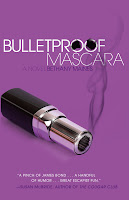
Thank you for visiting, Bethany! You are too funny (and so is your book)! For more scoop on Bethany and her fabulous debut, BULLETPROOF MASCARA, visit her at BulletproofMascara.com.

Because I Feel Like It

Rachel Brady

Last week I took a shine to doing things just because I felt like it. It started with painting my toenails glittery orange. Then there was an impromptu trip to the beach with my little boy. Soon I reversed course and started skipping certain things I didn’t feel like doing. I walked past the dishes in the sink and let the unfolded laundry wait for later. I deleted a few events from my calendar. Decided I’d rather do something else instead.

Gotta say, I liked where this was headed.

Some of you may wonder what the big deal is here. Aren’t we all free-thinking folks with the ability to choose a course for ourselves? Sure. But something about my internal wiring has left me forever reluctant to hop on board the train to Changed My Mind. Seems like any time an activity has ever hit my To Do list, it has been cemented there.

Normally, I wouldn’t have made that beach trip until all the other undesirable chores were finished first. Ditto for settling in at night to read a book or work on my manuscript. Those things feel too leisurely, as if surely some punishment must be completed first. All this stems from my responsibility gene, I’ve decided. The same one that has me attending social functions out of a sense of duty and obligation, even if I’d rather be somewhere else. I’m starting to change my mind about all kinds of things lately, and in most cases I don’t even feel apologetic about it anymore.

It began with a comment from my friend Carrie last February. After asking me to go running with her on the upcoming Saturday, she told me it was okay to just say, “Maybe. If I feel like it.” No yes or no required.

Strangely, this response would never have crossed my mind had she not put it out there. I’d have either said “yes,” and honored that commitment, or I’d have said “no,” and then felt obligated to offer up a really good explanation of why not. And I never would have been so rude as to remain non-committal like she was suggesting. But having her permission, I took her up on it. And I discovered that I liked leaving my calendar open to make last-minute decisions depending on whether or not I felt like doing something.

It started spilling over.

Carrie was the only person in my cast of friends to offer this carte blanche approach to planning, but I started using it with everyone else around me anyway. I said no to requests for volunteer work (don’t judge me!), turned down invitations to do local races with friends, and even (yes… Mom Guilt here) set boundaries with my family.

I learned a few things. My young son can dress himself and brush his own teeth. My daughters can put away laundry and pour their brother’s cereal in the morning. And somebody else around here has been feeding all the pets because I stopped doing it a long time ago and, as yet, none are dead.

What do I feel like doing instead? Writing.

For years, I waited until everyone in my family was asleep before I started to write. I made all their lunches, loaded the dishwasher, picked up toys, and did laundry–all after bedtime–and then turned on my laptop at nine or ten o’clock and wrote if I had anything left to give. I don’t feel like doing it that way anymore.

I want to write a book this year. A whole book, not a few disjointed chapters spread out wide over the course of months and years. So, twice a week I’ve been leaving and going to my local library for about three hours at a time to write. Alone.

Do I feel guilty? You bet.

Is it stopping me? Nope.

Somewhere in here, there must be a balance. I’m still looking for it, just like everyone else. The day may not be far off that I’ll decide my new M.O. is selfish and then revert to my old ways. I’m open to that possibility. But this year I’m serving others less and writing more.

Admittedly, I’m having a little rebellious streak right now. Still, I hope the Stiletto Faithful will also consider what you’d most like to do in life. Once in a while, I hope you’ll pursue those things too, because you feel like it. No apologies required.

Being Medal Worthy

Did you watch the Winter Olympics?

I did. I enjoyed watching most of the events even if I didn’t like the way NBC broadcast them – here, there, everywhere.

Like reading a book, I prefer to start at the beginning and read each page – good, bad, or ugly. I never skip to the back. I even read Tom Clancy’s mechanical descriptions. If I’m going to read a book, I’m going to read it – all of it.

If I’m going to watch an Olympic event, I want to watch all of it. I want to see all the competitors, not just the ones who NBC decides have “medal” potential. How can I judge how good the winners are if I don’t see the losers? Hey, maybe today’s losers will be the winners next time, and I was denied an opportunity to see them when they were inexperienced, awkward, and just starting out. And what about their mothers? Don’t you think they wanted to see their kid on television?

I know there were more than 6 female figure skaters at the Olympics, but the “powers that be” decided I didn’t need to see them. I don’t even know what I missed.

What if “writing” was like competing in the Olympics? What if the major publishers were like the broadcast networks – they only promoted a few books – the ones they decided had “medal” potential? What if the newbie writers, like the young skaters, couldn’t get seen unless they did the writer’s equivalent of a triple axel, triple toe-loop? Or had a compelling story? A perp-walk? A comeback from a terrible injury? A “bad-boy (or bad-girl)” attitude?

Wait.

Writing is like the Olympics. Sigh.

Good starts are vital. Keep a tight form, pay attention to detail, follow the rules so you don’t get disqualified, keep up your speed, keep your cell phone turned on in case your agent/coach calls to tell you about your big break, and finish – always finish.

And it doesn’t hurt to get in front of the camera every chance you get.

Yep.

Writing is like the Olympics.

Sigh.

Evelyn David
(Off to sharpen her skates, uh … pencils.)

p.s. Why do the bobsled athletes wear capri pants?

p.p.s. Please excuse a little self-promotion. Evelyn David won a mini-writing contest this weekend!! The short-short story had to be under 200 words. But don’t be fooled by the length. Mac Sullivan doesn’t need a dictionary to solve the whodunnit. Check it out at the Working Stiffs blogspot.

Five Things I’m Thankful For

Happy Thanksgiving from all of us at The Stiletto Gang!

On Thanksgiving, do you stop to think about all the things you’re thankful for? I do. There are so many, but most can fit into these five categories.

The top five things I’m thankful for:

5. Health and Happiness (knock on wood; we have obstacles, but overall, we’re good!)

4. Writing for a Living (to earn *a meager* living doing what you love is fantastic)

3. The writing and book loving community (truly, they are an amazing group of people)

2. Good Friends and Family (because what would life be without them?)

and number 1 on my ‘Thankful’ list is…

1. My wonderful kids and husband (because they really do give my life meaning)

Have a wonderful day!!

~Misa

Research and the Muse

by Nancy J. Cohen

A reader at one of my author talks recently said she was surprised by how much research I did for my books. She believed fiction writers made up their stories. I was appalled. No wonder some people (not YOU, of course) look down their noses at popular fiction writers. Any author would be dismayed by this observation because we put a lot of work into researching our tales.

As any reader of historical fiction knows, the writer must thoroughly research all details of the era in order to be accurate. Ditto for mysteries. I get people asking me all the time if I had been a hairdresser because my sleuth’s job details are so accurate. When I mention that my background is in nursing, they are astounded. How did you learn enough to write about a hairstylist who solves crimes for your Bad Hair Day series? Well, I interviewed my hairdresser and followed her around the salon. I visited a beauty school and checked out their curriculum. I attended a beauty trade show in Orlando. I subscribed to Modern Salon Magazine. And if I needed to know anything else about hair, I asked my hairstylist or had her read relevant passages in my manuscript for accuracy.

That’s just the beginning. Consider that I also consult a homicide detective for crime details and police procedure, even if forensics doesn’t play a heavy role in my books. Plus each story has its own topics to research. I’ve investigated such diverse subjects as medical waste disposal, tilapia farming, migrant labor smuggling, the dog and cat fur trade, vanilla bean cultivation, and more. Then there is on-site research, i.e. pounding the pavement in Mount Dora to get street details, skulking through a Turkish Bath in my swimsuit, getting a reading from a medium in Cassadaga. I take very detailed notes and photos to use in crafting my story.

Authors who use contemporary settings cannot make things up out of thin air. Besides the location, we may need to research pertinent issues to include in our stories. I always try to include a Florida based issue or something of universal interest (like Alzheimer’s Disease) to give my stories added depth. Newspapers, magazines, the Internet, personal interviews, and on-site visits are just some of the techniques we use. Probably the most fun I’ve had for research was going on a couple of cruises for Killer Knots. I challenge you to fault any of my minute details in that adventure.

But what about the vampire and werewolf fiction out there now, and other paranormal stories? Don’t those authors just make up their imaginary worlds? No, because these worlds must be consistent, and they’re often based on mythology or early Earth cultures.

For example, my proposed paranormal series is based on Norse myths. I have several texts on the subject and took extensive notes so I can understand their creation theory. I wrote down the different gods and goddesses, because they play a part in my story as well. For this tale as well as Silver Serenade, my upcoming futuristic romance, I needed to name spaceships, weapons, and/or military personnel. Using the Internet to look up ranks in our own military gave me a model. I also have a collection of Star Trek and Star Wars Sourcebooks which are great inspiration for weaponry, ships, propulsion and such. So even for fantasy, research is necessary. Science fiction is even more exacting because you’re extrapolating what might be plausible in the future or exaggerating a current issue from the news.

So please have more respect for fiction writers. We do extensive research, and a truly gifted writer will not let it show because you’ll be swept into the story. A good work of fiction is like a stage show, with all the blood and sweat and tears going on behind the scenes. All the audience sees is the fabulous performance.

Nancy J. Cohen
Killer Knots: A Bad Hair Day Mystery
Silver Serenade: Coming soon from The Wild Rose Press
Website: http://nancyjcohen.com/
Blog: http://mysterygal.bravejournal.com/

Going the Distance

In the past Evelyn David has posted two blogs a week at The Stiletto Gang. That was because Evelyn David is really two people: Marian Borden and me, Rhonda Dossett. We write under the pen name “Evelyn David.” Going forward, we will just be writing one blog, on Mondays. We’re hoping to use the extra time to write our next novel. So how do we write together? And why?

In addition to the obvious perils of two people working together on any project, much less a book, we also live half-way across the country from each other – Marian in New York, I’m in Oklahoma. We haven’t met in person. For the past … I’m not sure how long now, five years? Six years since we started writing together? I just know we were both younger when we began and had no idea of the possible pitfalls. Because we were clueless about what could go wrong, we just did it. We wrote a book together. We wrote together just using email. No phone calls until after we had sold our first story. I think that made a difference. Writing to each other is different than placing phone calls. Exchanging emails gave us the time and space to put down our ideas and respond to the other’s questions and concerns in a fuller manner than what happens when we talk on the phone. Plus, with emails you have a record for reference later.

We had fun during the writing process. The pain came later when we got involved with publishers, agents, and the business side of writing. The publishing world is not for wimps! And definitely not for quitters! You have to really want to see your book published to go through the pain of rejections from agents and the sheer mind-numbing, snail’s pace of getting a simple yes or no from a publisher. Four to six months for a response is not unusual. In what other industry or profession is that kind of time delay even a possibility? And royalty payments to authors? If you’re lucky and your publisher pays on time (which is apparently not the norm), you’ll see a check every six months. Often it’s more like nine months between checks. And if you’re not getting four figure advances, that’s a long time between paydays. Don’t quit your day job.

Publishing isn’t fun, but writing is! Especially with someone who shares your sense of humor and work ethic. We divide up the scenes, then pass them back and forth so much that in the end, it’s “Evelyn David’s” writing, not Marian’s or Rhonda’s. We both love writing dialogue – that’s the candy for us. Setting the scene, plotting the action sequences, that’s more difficult and rewarding in another way. I write by seeing and hearing the words in my mind first, much like watching a movie screen in my head playing in my head. Then I put the words down on paper – or rather use a keyboard to type them into a Word document.

We each write all characters, although I confess to having favorites. “Mac Sullivan and Rachel Brenner” are our main human characters, but I love writing “Edgar” and “J.J.” best. It’s always a treat when I get first crack at one of their scenes. If you ever watched the old tv series, Gunsmoke, you’ll understand when I say that “J.J. and Edgar” are Mac Sullivan’s “Doc and Festus.” On the surface they argue and appear to dislike each other. But underneath everyone knows (except maybe the characters) there’s a bond developing.

There’s a bond between co-authors. If you write a book with another person, at the end of the process you will have traveled a journey together that is unique and not completely understandable to friends and family looking on. From start to finish, it takes “Evelyn David” about 8 months to write a book. We both have day jobs and we’re terrible procrastinators, so we probably, if pushed to meet a deadline, could write one in half that time. We dither a lot before we get started, try to solve the world’s problems, angst over the stresses of the publishing world – then finally settle into writing a couple of chapters a week. Around the end of the first third of the book, we crash headlong into a wall (others call this writer’s block). It might take us two or three weeks to get past that wall, or around it. Then things usually move much quicker, with the last few chapters coming in a rush. Believe me, there is nothing better in the world than typing the words “The End” on that last page of your finished novel.

Well, one thing is better … having someone to shares that long journey with you.

Rhonda
http://www.evelyndavid.com

Where Do You Get Your Ideas?

by Susan McBride

One of the questions that writers are asked most frequently has to be, “Where do you get your ideas?” I remember hearing Denise Swanson once tell someone, “I order mine from J.C. Penney,” which I thought was pretty funny. Personally, I pluck mine from the Idea Tree which grows right beside the Money Tree in my backyard (oh, man, don’t I wish!).

Okay, seriously, I find ideas everywhere all the time. It’s almost impossible for me to go out anymore–or to take a shower or get on the treadmill–without the seed for a plot planting itself in my mind. When I first began writing seriously post-college, I’d cut stories from the newspaper that intrigued me, usually those concerning a missing person or a baffling homicide that got me thinking, “What if it had happened this way instead?”

That’s how I wrote AND THEN SHE WAS GONE, my very first published mystery. A little girl had gone missing from a public park in broad daylight in Plano, Texas, with loads of people around watching T-ball games; yet no one had seen a thing. That bothered me to no end until I had to sit down and write about it. The next Maggie Ryan book to follow, OVERKILL, had its plot loosely based on a school bus shooting in St. Louis. Something about being able to control what happened in my fictional tales had a soothing effect on me, like justice did win out (even if it doesn’t always in real-life).

Once I started writing the humorous Debutante Dropout Mysteries, I couldn’t exactly use such heart-wrenching real-life stories as my jumping-off point. I had to tone things down a lot (although there’s no on-the-page violence or much of anything graphic except emotion in either GONE or OVERKILL). BLUE BLOOD, the first in the series to feature society rebel Andy Kendricks, involved the murder of the loathsome owner of a restaurant called Jugs (think “Hooters” with a hillbilly theme). I’d gotten so sick of seeing ginormous Hooters billboards all over Dallas that it felt pretty good to exterminate Bud Hartman, a sexist and hardly beloved character. Next, in THE GOOD GIRL’S GUIDE TO MURDER, I offed a Texan version of Martha Stewart after watching one too many of Martha’s holiday specials and feeling like an inadequate dolt. I must admit, that felt very cathartic, too.

When I was asked to write THE DEBS young adult series, I had to change my mind-set. I mean, I wasn’t going to kill anyone in those books (except maybe with dirty looks and reputation-destroying words). Then I got to thinking about the teens and twentysomethings I know, and I realized that technology might have changed since my high school days but emotions had not. So the ideas for the plotlines in THE DEBS; LOVE, LIES, AND TEXAS DIPS; and the forthcoming GLOVES OFF stemmed from relationship issues. Who hasn’t experienced a friend’s betrayal, a broken heart, a mother’s ultimatum, or a dream dashed? The best part about writing those novels was getting to re-enact some of my high school drama via the characters in the book…and getting to have my debs say all the witty and acerbic things that I wish I’d said in similar circumstances. Ah, sometimes it’s really therapeutic playing God, at least on the page.

When the chance came to write THE COUGAR CLUB, I leapt at it. I’d been dying to write about women my age who happened to date younger men (I only dated one but I ended up marrying him). I’d gotten sick and tired of the way the media portrays “Cougars” as desperate old hags with fake boobs, tummy tucks, spray-on tans, platinum hair, and Botoxed features. My friends in their 40s and 50s who’ve dated and/or married younger guys are smart, successful, classy, and real. So I came up with the idea of three women who’d been friends in childhood but slowly drifted apart through the years because of jobs, marriage, children, and distance. When they’re all 45, they end up coming together again as they each hit huge potholes in their respective roads. What they help each other to realize is that true friendship never dies, the only way to live is real, and you’re never too old to follow your heart. These are the middle-aged (but hardly old) women I know. Heck, the kind of woman I am.

I’ve got a zillion ideas floating around my brain for the next books I need to write (namely, a young adult novel that isn’t a DEBS book and another stand-alone novel to follow THE COUGAR CLUB). The hardest part for me is getting the ideas down on paper for my agents and editors to see in a way that makes sense and conveys all the nuances I’m imagining. But enough about my Idea Tree. I’d love to hear from y’all. Do you order from J.C. Penney like Denise? Cut out pieces from the newspaper? Eavesdrop in restaurants? Inquiring minds want to know!

Slippery Things

Sometimes you lose them forever. Sometimes you just misplace them. Sometimes they aren’t real.

Memories are slippery, amorphous creatures that wiggle through our fingers and disappear under the bed with all the glowing eyed monsters, single rogue socks, and books that are never where you left them.

Unlike other people who profess to remember early life experiences, I’ve never been convinced that I have “real” memories of my life before age four. I have photographs implanted in my mind of events – images that come from actual photographs, home movies, or relatives’ retelling of events. But real memories at ages two or three? I don’t think so. Not me.

Drive-in movie theaters populated the landscape when I was a preschooler. I have a distinct memory of a long car trip from California to Oklahoma. My family was moving home, back to Oklahoma, pulling a trailer, with only enough money for gas and not much else. My dad drove straight through. I lay on a mattress in the packed backseat (remember when cars were big enough you could put mattresses in the backseat?). Level with the windows, I had a 360 degree view of the sky. I remember a string of drive-in movie screens that I could see from my makeshift bed.

I know the trip was real. I know we drove at night. And I also know that no one took photographs and told me about the drive-in movie screens. The adults would have had no reason to talk to me about the flickering images seen from the highway. No one but a bored preschooler would have been fascinated by the quick peeks at scenes from movies as we passed by.

It’s strange to think that my first real memory might have been scenes from B movies. Images moving on a screen without sounds or endings.

That night I discovered the power – I could make up my own stories.

Other people claim to have memories of events at a much earlier age. Maybe they’re real memories. Maybe as a toddler I was just so self-absorbed that I didn’t pay much attention to what was going on around me. To some extent I’ve always lived in my head. From my enthrallment with my grandmother’s stories of talking mice families living in her house, to my discovery of entire worlds hidden in books, to the miraculous glory of movies, I had found a way to leave the here and now. I could be anyone, travel anywhere, and change anything that I wanted – whenever I wanted.

In my mind, I could rewrite the endings to those books, television shows, and movies so that the main characters not only rode off into the sunset together, but had lives afterward. I added scenes that happened after the credits rolled, after the last page was turned. In my mind I wrote the epilogue, the years after Shane came back, the rebuilding of Tara, and the marriage of Candy and Jeremy long after the cancellation of Here Comes the Brides.

About five years ago, with the encouragement of Marian, my co-author and friend, I began putting scenes on paper. The words I heard in my head became dialogue between people I created. The people did what I told them to do.

It was magic. It was powerful.

It was another form of what I’d always done.

Or at least that’s my memory of it.

Evelyn David

Collaboration in the Stygian Swamp

Marilyn Victor – In her real life, Marilyn is an administrative assistant for a construction company. She started her writing career in grade school, penning Dark Shadows, Man from U.N.C.L.E. and James Bond stories for her friends, none of which she ever finished. It wasn’t until years afterward when she started brainstorming on how she could combine her love of writing and love of animals that she and Michael came up with the Snake Jones mystery series.

Michael Allan Mallory – Michael works with computers in the Information Technology field, which must be amusing to his old college professors because he has a degree in English Literature. He also managed to sneak out a degree in Electronics, much to the consternation of those who tried to peg him as only a liberal arts kind of guy. He studies and teaches wing chun kung fu in Minneapolis and trains in Chen style tai chi. His favorite mysteries come from the classic period of the 1930s and 1940s, although he enjoys a good yarn no matter what era it was written

Marilyn: “Hey, our guest blog is due for the Stiletto Gang. What should we write about?”

Michael: “What? Don’t you have an idea? I’m blank.”

Marilyn: “You can’t be blank. We’re writers. Creativity is supposed to flow from us.”

Michael: “Yeah, well, my flowing days are long gone. I got nothing.”

Marilyn: “Me neither.”

Michael: “We’re so screwed.”

Marilyn: “We should be able to talk about our writing. Like how rich and famous “Death Roll” has made us.

Michael: “Except we’re not famous-well, perhaps less obscure. We’re almost recognizable in the vast stygian swamp of authors. And rich? Let’s not go there. Too depressing.”

Marilyn: “Stygian swamps, huh? You like those murky metaphors. Okay. There is a Nancy Drew thread happening on the site. We could talk about that.”

Michael: “Um. I’ve never read Nancy Drew. Have you?”

Marilyn: “Does it have horses?”

Michael: I don’t think so. She had a dog, Togo and a cat, Snowball. They didn’t show up very often.

Marilyn: When other girls were reading Nancy Drew, I was reading Misty of Chincoteaque, King of the Wind and The Black Stallion.

Michael: I bet our own heroine, Snake Jones, grew up reading Nancy Drew. Snake is spunky, resourceful-

Marilyn: And she has a dog.

Michael: We do have one thing in common with Nancy Drew. More than one author wrote the books. The stories were outlined by one person and written by another. Several others as I recall.

Marilyn: Hey, I thought you said you never read Nancy Drew.

Michael: You’ve heard of the Internet?

Marilyn: Ah, instant expertise. Hmm. Does that mean if our Snake Jones mysteries become a huge success, that forty years from now some other author will be writing them and calling themselves Marilyn Victor and Michael Allan Mallory.

Michael: You wish.

Marilyn: Along with a million other authors. Sigh. Ok back to business. Thinking back on all those animal books I read as a kid, it makes me think of how animals have played a part in the genre since the beginning of the modern mystery.

Michel: Good point. Poe’s The Murders in the Rue Morgue featured an orangutan—or ourang-outang as Poe called it. Then we have the title character there’s the horse in the classic Sherlock Holmes tale Silver Blaze. And Toby, a blood-hound, appears in the Holmes stories several times. In the 1920s and 1930s the popular Philo Vance novels by S.S. Van Dine included The Kennel Murder Case and The Canary Murder Case, which leads us to there’s Dashiell Hammett’s masterpiece: The Maltese Falcon. (And will you please stop editing what I’m writing.)

Marilyn: That’s what co-authors are for. Besides, we’re going over the word count. And that wasn’t a real falcon in the story. It was a statue.”

Michael: Still counts. The falcon iconography lends the story intrigue and a sense of danger, like the real bird. Who’d get excited about a book called The Maltese Bunny? The use of animals in the title or as a character helps create a mood.

Marilyn: True, true. (Revenge is not sweet, Michael. Knock it off)

Michael: Hey, you edit me, I edit you, hopefully it makes for better writing.

Marilyn (ignoring him): But things changed in the ‘60s when Dick Francis published Dead Cert, his first horse racing novel. After that, animals often became more than background characters. Stories often centered around them.

Michael: You know what my theory is on that? It coincides with the environmental movement in the late ’60s and ’70s. Since then, people have become more aware of the planet and its wildlife. They care more about animals and what happens to them.

Marilyn: I like that. Which reminds me….

Michael: What?

Marilyn: I have to go feed the dog.

Marilyn Victor and Michael Allan Mallory
http://snakejones.com/