Tag Archive for: writing

What do you want to be when you grow up?

By: Joelle Charbonneau
I have no idea what I want to be when I grow up.  I thought I wanted to be a music theater and
opera performer.  At least, that’s what I
spent my undergrad and post-graduate schooling studying.  And I guess I actually wanted to do that
since I did the professional singing, dancing, acting thing for a number a
years.  While I bellowed arias and show
tunes on stage, I also worked as a systems administrator and report analyst,
which stretched my mind and pushed me to learn new things.  And somewhere along the way I started
teaching and wow do I love it.  Helping
students discover not only their singing voices, but confidence in themselves
and their futures is a pretty amazing thing. 
Oh yeah – and now I write. 
And I love that too.  Some days,
the need to fill the blank page stresses me out.  There are moments where I wonder why I chose
to sit behind a screen worrying about what comes next.  But I wouldn’t give it up for anything.
The funny thing is, I never took a college level English
class.  I never took creative
writing.  And I am a writer. 
I point this out because as a teacher, I work to help prepare
my high school students for college.  The
one thing that strikes me over the years is the notion that high school
students have to *know* what they want to be when they grow up.   From the time students enter their freshman
year of high school, there is a strange notion that they should be working
toward a specific future goal.  Not just
getting into college or having a happy future, but taking the right classes to
get them into a specific college for a future they might not even want to have
when they know more about it.
I *knew* what I wanted to do with my future when I entered
college.  I wanted nothing more than to
spend my life singing and dancing on the stage.  And I still love that.  But I have grown and changed and learned so
much since those high school days.  I’m
not longer that person.
So, I guess my point to this rant is that I hope we all work
to encourage our children to study something they love.  To strive to learn things that matter to them
because those are the things that shape their lives.  I believe that filling the soul is just as
important as filling the mind.  When we
fill both—amazing things can happen.
So—dare I ask?  What did you want to be when you graduated high school and what are you doing now?
Heavy Cloud, No Rain

by Bethany Maines
It’s fall again. In Washington State that usually means a
return of gray skies, cold weather, and a persistent morning mist that makes it
feel like the your day is starting off with a little bit of a smokers
cough.  This is when I burrow under
a pile of blankets, shove my feet under a dog and return to writing.
Unfortunately for my writing, and for the wild fires raging over my state, the
weather has been unrepentantly sunny. 
The last time we had measurable rainfall was July 22.  We have now passed the 1951 record of
51 days without rain.
What the heck is going on!  If I wanted blue skies I’d move to California!  My running shoes should be caked in mud
by now; instead, they’re leaving a fine silt of dust between my toes at every
jogging opportunity.  That’s just…
it’s just not normal.  I’m having
mud withdrawals.  And writing
withdrawals.
During the summer I try not to worry too much about how much
I am or am not writing.  After all
the season is so short, I need to cram in all the outdoor activity I can.  But I’m starting to have that feeling I
call The Looming Fat. 
Think of The Looming Fat as that feeling you get after
having spent a month on vacation eating nothing but gloriously fatty foods, and
then you return home.  And you know
the fat’s there, but as long as you don’t step on the scale you can pretend the
fat hasn’t settled into a permanent home on your rear end. But still the fat
looms behind the door and prepares to jump out at you when you least expect it
– like when you try on a pair of slacks for the first time before going back to
work. 
Only in this case, it’s the Looming Brain Fat.  Having spent most of the summer
watching the Olympics and reading “trashy” (aka fun) novels my writing muscles
may have developed a little bit of spare tire.  And instead of settling down, like they should, and plotting
out a new novel, they seem to be requesting more trashy novels and continuing
episodes of Grimm.  “This is not
productive!” I yell at them.  They
give me the stink eye and tell me to come back when it’s cold out. 
The good news is that Friday’s forecast says, “chance of
rain.”  Make that a “chance of
writing” and maybe I’ll make it to winter.

Bethany Maines is the author of Bulletproof Mascara, Compact With the Devil and Supporting the Girls.  Catch up with her at www.bethanymaines.com or check out the new Carrie Mae youtube video.

Writing Books and Maintaining Friendships

by Linda
Rodriguez
I have become a terrible friend. I
spend all my time writing books, taking care of the business of books
(research, tours, conferences, accounting, and correspondence with editors, agents,
publicists, and fans), and promoting my books (blogs, guest blogs, interviews,
signings and readings, Facebook, Twitter, email newsletters, etc.). There’s
little time left over even for my family and my own physical and spiritual needs.
Making time for a friend involves
carving a hunk out of an already over-committed day, and the problem is that I
have a lot of friends. They’re wonderful people with whom I love to spend a
leisurely lunch or afternoon coffee/tea break while engaged in delightful,
intelligent conversation. I’m lucky if I can manage this with one of them every
few months. So I have many friends I only “see” on Facebook. This is one thing
with friends I love who live far away. Facebook is a great way to keep in touch
with them when we know we’ll only see each other once a year at some
conference. It’s quite another kettle of fish with friends who live in the same
town.
I’ve been thinking about this
situation lately—and my thoughts have not been happy ones. I miss my friends,
and I hate responding to an invitation to get together with a list of three possible
dates four months in the future. I worry that the message that sends is not at
all the one I want to send, that they will incorrectly feel I don’t value their
friendships. As for a spontaneous “Mary’s in town for two days, so let’s have
lunch with her and catch up,” I’m almost never in a position to join in.
This situation all came to a head
for me recently. A friend sent me a chain email that talked about a sister who
would never spontaneously go to lunch and had recently died without ever going
to lunch with her sister. (I wonder why they chose to send that email to me?)
Right after that, I received an email from one of my oldest friends to tell me
she’d had surgery and was laid up at home in bed, going stir-crazy. My first
thought was, “I should drive out there and visit with her.” This friend lives
on the other side of town out in the country, entailing an hour-long highway drive
there and and another hour-long highway drive back. That visit would eat up an entire afternoon, so my first
thought was immediately followed by a list of the things I have to do, many of
which have imminent deadlines. “I’ll send her a card and some flowers to wish
her a quick recovery and finish some of these urgent tasks,” was my next
thought. “I’ll visit her later when I have time.” As if I would ever have an
open afternoon to go see her without creating it!
That quick dismissal of my friend’s
situation in order to get back to the always-present workload left me wondering
what was wrong with me? When had I become the kind of person who would begrudge
a few hours to visit a friend at home alone on bed rest? If a wonderful
professional opportunity suddenly presented itself, and I needed to make major
adjustments to my schedule to accommodate it, I knew I would. Why not for an
old, dear friend?
I sat down and made a list of all
the good friends I’ve had to put off for lunch or other meetings. I decided I
had to do something about this. I’m trying to build a whole new career with my
books, and it’s demanding and time-consuming, as it is for any small
businessperson. But I don’t want to ignore my friends. So I made up a schedule
that allows me to meet someone for lunch every week. I’m going to work my
way through my list of friends that way. It means finding some other time to do
some critical tasks. They’re also important and can’t be skipped. It won’t
be easy, at all. But I know the kind of person I am, the kind of person I long
ago decided to be, a person to whom people are more important than things. If
my career takes a little longer to get going, at least I won’t have achieved it
at the cost of becoming someone different from who I truly am.
And yes, dear reader, I’ll be slow
responding to your comments today because I’m spending the afternoon taking
lunch to my dear friend who’s recuperating from surgery, and we’ll be making
bad jokes and laughing hysterically at them.

Mimicking Life?

by Bethany Maines

A few weeks ago I posted a photo on my FB page that said, “If you
were in my novel, I’d have killed you off by now.” I’d like to say that was a
joke, but the unfortunate part (for everyone else) of being a writer is that I
really do use a large chunks of life for my writing. I just don’t use the parts
people think I’m going to… or should.
Over the years I’ve had several people offer me “really
great” suggestions about what to include in a novel and I’ve taken absolutely
none of them. What I have taken, or pilfered, as the case may be, are people’s
stories, experience, and random bits of dialogue. Don’t tell me that pine
needle basket weaving is a skill you keep up in case of the zombie apocalypse
if you don’t want that included in a piece of Maines fiction. Don’t invent
clever catch phrases about basic life principles if you don’t want them written
down (I’m looking at you Dad aka Ray “Lugnut Rule” Maines).
But when it comes to using an actual person, I try not to do
that. For one thing, I know some pretty complex people and capturing them in
fiction sounds hard.  And for
another… I’m mean.  I really will
kill people off, or worse.  I made
one of my favorite characters the villain in my first novel what do you think
I’d do to someone that annoyed me in real life.  Next thing you know, snooty waitress, you’re going to be a
drug mule for an incompetent Norwegian drug lord and TSA will be all up in yer
bidness.
That’s not to say I’ve never done it, but it seems like
those “characters” never make the final cut; they get edited out before the
final draft.  I think it’s because
fictional revenge might be fun, but it doesn’t make a good story. It’s hard to
draft a solid plot around the impulse to bash an acquaintance in the head,
unless the plot is “writer kills client who looks like Toad from Wind in theWillows.”
But that got me to thinking, if I was going to put someone
in a novel, who should it be?  My
grandmother? My business partner? The annoying neighbor with the miniature
horse? Or the highly suspicious old dudes across the street who might be running a chop
shop?  Who would you put in a
novel?

The Dog Was Doing What in the Bathroom?

From the cat who literally swallowed the canary (and then threw it up on your aunt’s antique Persian rug) to the dog who ran away, we at the Stiletto Gang put our collective heads together and thought: what could be better than walking down memory lane with thoughts of some of our favorite–and not-so-favorite–pets? Join us for the next two weeks as we reminisce about the animals we loved and those who loved us.

by Bethany Maines

If you’re friends with me on Facebook then you know of my
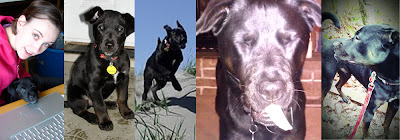
picture-snapping obsession with my dog Kato.  He’s a two-year old Lab Rottweiler mix with a belief that
people-chairs are really dog beds and that dishwashers are where we put the
silverware to be licked. We named him after Inspector Clouseau’s surprise
attacking valet, so that we could yell, “Kato, now is not the time!” whenever
he jumps out at us, which he does frequently. My friends, acquaintances, and
frequently strangers are forced to listen to my “hilarious” dog stories and
occasionally shown the “baby” photos on my phone.  Yes, I’m that “pet parent.”  I try not to be, but my dog is just that darn cute.  (See photographic evidence below.) 

However, it occurred to me, as I tried to integrate a dog
into my latest manuscript that pets are rather like the bathroom in most books
– they never get mentioned. That is, unless they’re important to the plot line
or they ARE the plot line (see The Cat Who
series by Lillian Jackson Braun). Both bathrooms and pets are important
features of everyday life. Pets require feeding and water and are generally
greeted immediately upon entering a house, as well having a host of other
little ways of integrating themselves into their owner’s lives. Bathrooms, for
obvious reasons, are visited multiple times a day and usually have their own
attendant routines of make-up, showering, and dressing. But both rarely rate a mention in most
books. What gives?
Well, like all the strangers I accost with my Kato stories,
most readers probably just aren’t that interested in the heroine’s pet. And
really, who wants to spend that much time with a protagonist in the restroom?
And of course, with space at a premium, it’s a bit hard to justify giving
paragraphs of space to the pet while the plot languishes about looking for a
little attention. But is a well-written story with a fast moving plot mutually
exclusive with pets and bathrooms? 
Can’t a character blurt out, “I have to pee,” when faced with shocking
news? Can’t the dull routine of feeding the dog, feed a characters wish for
excitement and adventure? Why should the pets and restrooms not at least get
the recognition they deserve for being a meaningful part of our lives?
All of which makes me want to write a story that takes place
in the bathroom… with a dog. I just need a plot and some characters and I’m
golden.

Writing Emotionally

by Bethany Maines

Just so you know, I’m writing this blog under duress. I have
this great idea for a story where I give one of my characters a heart attack
(literally) and instead I’m having to do other, actual work. The horror! How
dare real life interfere with the creation of fiction? This is exactly the kind
of feeling that leads to me receiving emails from my boss saying things like
“For an illustrator, you sure type a lot.” Of course I type a lot! I’m writing
a whole novel over here. 
Sheesh.  Oh wait, you’re not
paying me to write a novel? Rigghhhhht. Got it. I will attempt to remember that
and to actually care. Fortunately, these days I’m more or less self-employed (I
have a business partner who eyes me suspiciously if I start to wander off too
much), but it’s still surprising how much the pursuit of a second career
interferes with the first one.
Meanwhile, as excited as I am about my new idea, it occurs
to me that many of my ideas lately have involved a strong element of hospitals,
death and dying. I attribute this to the fact that my friends and I, in the
last year or so, have been experiencing the loss of parents and grandparents at
a rate that I think is rather alarming. However, my hair cutter described the
issue with humorous sangfroid as just a light bulb problem. “Well, it’s like
light bulbs, if you put them in all at once they all tend to, you know, go out
all at once.” True enough, and I even laughed, but it’s always different when
they’re your light bulbs.
They say that art imitates life, or vice versa, but I think
fiction imitates therapy. I can’t afford to go see a therapist about my
unresolved feelings about people dying and all life eventually ending, but I
can make my characters suffer and come to some sort of emotional resolution for
me. It works great, and it’s so much cheaper. Not to mention, that it let’s me
indulge my God complex without a therapist calling me on it. It does make me
wonder about other authors though. Shakespeare for instance – that’s a lot of
killing and cross-dressing for one dude. 
And what’s up with Beattrix Potter?  Can we say bunny fixation? But we love both those authors,
so maybe mental issues are cathartic to read as well as write?  I guess I can only hope.

They Always Ask: What Comes After THE END?

       By Laura Spinella     
It’s itchy palms and a cold sweat, a compulsive urge
that a team of interventionists couldn’t thwart. That’s what I’m down to.  No, don’t be ridiculous, I haven’t quit
drinking. I said compulsive not insane. But what I have done is turn in a
manuscript. It leaves me with time, a gaping hole from 7 a.m. until noon. Initially,
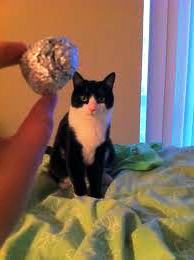
I’m dazzled by the prospect—think cats and a tinfoil ball. By living in the
mainstream I can get things done, big and small.  I’ll chase time until it lodges itself under my sunroom sofa, moving something like this: Instead of
brushing by old newspapers and dirty toilets, I take the papers to the recycle
bin, scrub the toilets until I’ve drowned the Ty-D-Bol man. I make every bed and vacuum the
floor of my closet. Afterward, I’m surprised but only marginally alarmed to
find that morning has two hours left. 
Not a problem. I have a 30%-off Kohl’s coupon. By noon everyone has new
underwear and I have half-a-dozen potential outfits for a trip that’s three months
away.   On day two, dinner is a planned
event.  My usual incidental dash to the microwave
morphs into a Julia Child effort, one that involves béchamel sauce and a 1,000
calorie French dessert.  By day three, my
real jobs are organized as if they
are my goal. Newspaper stories are booked weeks in advance; my editor is dazed
but delighted.  Normally, I’d segue from my
WIP to my cyber-gig needing a shower and wearing pajama pants with a
hole in the crotch. Not now. Now I show up in makeup and clothing that does not
involve an elastic waist. Day four I surprise my son and pop in at track
practice. I bring brownies for the hardworking boys. From across the field, his
head pivots sharply. It’s as if he smells something repugnant in the air. I
wave. He trots steadily in my direction, glancing right at a gaggle of girls
who, apparently, also stopped by to watch.
            “What are you doing here?
Is someone dead?”
            “I had free time. Can’t
a mother watch her son practice?”
            “Seriously, why are you
here? It’s track practice. I’m perfectly safe.”
I assume he’s alluding to his younger years when I tended to hyper-fret
about things like child abduction. I decide it’s still plausible. “You never
know who’s lurking.”
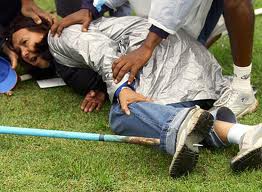
What happens if you’re not careful with your javelin
              “I have
a black-belt in Taekwondo and a javelin in my hand.  Go home; go write something.”  He darts across the field, taking his
position. Only for a moment do I think he’s considering hurling the javelin at
me.
            And this is where dazzle
turns to disaster. I’m not the mom who goes to practice. The thrill of a
three-course meal can only satisfy for so long. I hate shopping and my day jobs
function fine on the fly.  Twenty-four
hours later, I stare at my sunroom writing chair. It’s wrapped in metaphoric
yellow caution tape.  I may not enter; I
have no business there.  There’s a hard
rule about revisiting a manuscript that’s no longer in my possession. I’d only see
a thousand missteps, unable to change anything. Rationally, I should look
forward to this break. Downtime is supposed to be beneficial, an opportunity to
recharge the muse. Well, clearly, my muse is an addict. I sit and write a blog,
thinking it’s a quick fix.  Two paragraphs
in and I find my knee bouncing like a drunk with a Dixie cup. It’s not enough.
This is not to say the muse has anything remotely brilliant to relay. In fact,
it’s the very reason I equate it to an addiction. A wiser person would seek
help. Besides, what would I write?  The
muse has a suggestion.
            “Remember that idea I spun
a year ago? We were driving. Instead of the license plate game we played the what if game.  What if that girl, the one with the crummy
newspaper job and the psychic gift, landed in your lap top?  Come. Sit. You know you want to.”
            “No I don’t. What I want
is for you to quit delivering half-baked ideas, expecting me to fill in the
blanks.”
            “Sorry, if you wanted a thorough
muse your last name should have been Rowling or Roberts. I work with what
they give me.”
            “Do you have any idea
how much time and commitment your ideas take? Someday I’ll regret it, the
endless hours I’ve wasted on you.”
            “And still, you would have
spent more time sleeping. You’re not getting that time back either. So come, sit. Just try it. One sentence, a character
name, the way he looks at her—focus, you’ll see it.  And I haven’t even told you the best part of my
idea.”
            “Ha! I’ve lived your
ideas, holistic designer, rock star, a rogue man on a motorcycle.  They’re absurd.”  Yet, ruefully, I inch into the room.
“Maybe. But the motorcycle man worked out fine. I heard
he’s up for a few nifty awards.  Besides,
what are your options?  Plant a garden,
take up golf, stalk the high school cafeteria?”
“Shut up.” But as I speak, I’m fighting temptation and
gravity.  I move closer.
“That’s it. Ease your way in. We’ll go slow. We’ll talk.
Hell, maybe I’ll even float you some backstory.”
My fingers move past the cautionary yellow tape. The
leather chair does feel good.  It’s only
been a week, but there’s dust is on the keyboard. We can’t have that.  Okay, I’ll sit—but only for a minute…  

Laura Spinella is the author of Beautiful Disaster, a 2012 RITA Finalist, Best First Book; NJRWA Winner, Best First Book; Wisconsin RWA Write Touch Finalist, Best Mainstream Novel; Desert Rose RWA Finalist, Best First Book and a Favorite Book of 2011 at SheKnows.com. Visit her at www.lauraspinella.net


Traveling in the Spicoli Way

by Bethany Maines
Next week I will be making, what is turning out to be an
annual pilgrimage to New York City to visit my editor and watch a friend
graduate from Columbia (Goooo… Lions?). When I started this whole writing thing
I specifically targeted LA agents because I thought it would be a heck of a lot
easier to fly from the Evergreen State to the Golden State. I was absolutely
correct, of course – travel out to the Empire State (that’s your nickname New
York, seriously?) kind of bites, particularly since some dude invented the shoe
bomb. Or the Underwear Bomb.  Next
thing you know there’ll be the Hair Bomber and we’ll all have to shave. And I
swear the 3oz liquid debacle is fully sponsored by the water vendors on the
other side of security, but that is beside the point.
The point is that I didn’t want an agent in New York, but
Fate, as per its usual modus operandi, had other plans and now mocks me with
every trip to the East Coast. Which isn’t to say I don’t heart my agent with
big googly eyes (little hearts going pwap! over my head), and I’m not extremely
grateful to be able to visit NYC, because I am. I just keep thinking that maybe
this
year my vacation will be someplace
more palm tree oriented than the Big Apple. I miss palm tree vacations – they
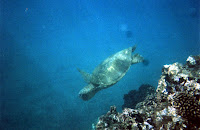
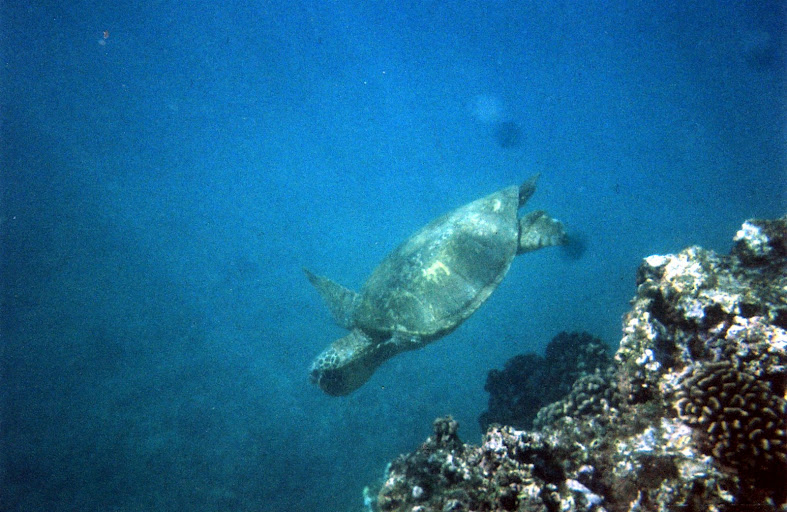
come with coconuts and beaches and sometimes giant turtles (See the picture? That turtle swam right by me!).
But there are benefits to visiting a place repeatedly. For
one thing, you know when it’s being faked on television. OK, maybe that’s not
the primary benefit, but it is a good one (Don’t think I don’t remember you Ally McBeal and all your fake Boston sets). Traveling is always a window onto
another place and by visiting it repeatedly you start to really understand the
cultural ecosystem of that town and how far that ecosystem spreads.
It wasn’t until my second visit to New York that I
understood just how very New York Sesame Street was. From Oscar’s crappy garbage can, to the street sign, to the Brown
Stone houses, the main street in every toddlers life is a New York street.  Or the bizarre rubber boot fetish that
currently holds sway in fashion. The that makes a lot more sense when you
realize that even in the summer, New York City is home to a billion disgusting,
fetid puddles waiting to envelop sandal clad feet. Each visit reveals some
further facet of how New York is different, but also how it’s connected to
me.  And while it may not have a
lot of palm trees, the mai tais still taste good, and as Fast Times at Ridgemont High pointed out – “Wherever you are, that’s the place to be.”

Villainy!

or How a Gas Cap Helped Me Write
by Bethany Maines
 

So today as I was driving to the Starbucks (because I was too lazy to make my own oatmeal) I saw a woman driving with her gas cap perched on the hood of her car. I was going to honk and try and indicate the issue when I realized that little door covering the gas hole was completely missing.  So I didn’t honk.  I figured that clearly this wasn’t the first time she had a problem like this and it might be better for her if she just rid the car of all accessories that weren’t bolted on.  Less to keep track of.
Facebook friend reaction says this was not the appropriately kind, good-Samaritan thing to do.  I should have honked and pointed, or pulled up alongside and yelled my message.  My reaction to such ideas?  Meh.  What would be the point?  She’d probably just do it again three weeks from now.  Some people are just Teflon coated against help.  And then I realized… I was the villain! Admittedly, the villain on a very small scale in a very tiny drama, but still, I was the bad guy!
Maybe I shouldn’t be so excited, but when I’m writing I sometimes I have a problem with villains. What excuse could possibly be enough to justify the villainous behavior of the bad guy? If my villain isn’t a sociopath or someone with a personality disorder of the highest degree, then they have to have a reason for doing what they do. At some point, they have to choose to do the bad things. And that where I struggle – coming up with reasons of sufficient validity to actually kill someone (or any of the other dastardly deeds they do). I remember a villain in one of my early attempts a novel writing seemed to have been cut from a Dickens novel – abused, with an evil uncle, penniless and starved as a child he set out to seek his revenge on all and sundry. He was one twirling moustache away from being Snidely Whiplash. My writer’s group told me in kind and restrained terms that just like my hero couldn’t exhibit all the traits and talents of herodom, possibly it would be more realistic if my bad guy acted like a human being.
In The Wild One Marlon Brando was asked “What are you rebelling against?” and he replied “What do you got?” Maybe that’s closer to the truth of villainy. It’s not that they’re not bad for a particular reason; maybe some villains are bad because they just don’t care.

Writing is Like Getting Punched in the Face

or
Your Sensei-ism of the Day

by Bethany Maines

A member of my writer’s group, who is at the relative beginning of her writing journey, recently turned in a story for critique and my response was that clearly the middle sucked and it needed to be totally restructured, but other than that the story was great. Or at least, that’s probably what I sounded like to her. She understood that I wasn’t trying to be mean, but, as another member of our group pointed out, she probably hadn’t been expecting a critique of that magnitude, and was probably more hoping for a stamp of approval, with maybe a “just change a few lines here or there.”  And then I had a sharp memory that I used to feel the same way (and occasionally I still do).
One of the other things I study, besides writing, is karate. Now, the first thing everyone asks is, “What belt are you?”  So let’s just get this out of the way now. I’m a third degree black belt. Most people have no idea what that means, but it sounds impressive, so they give enthusiastic nods. (Or if you’re that dillhole trying to date a black belt, you make an ineffectual grab and say, “What would you do if I did this?”  Um…. Throw you on the floor and then watch how you never call again?  Right, that’s what I thought.)  There are many belts between white (absolute beginner) and black, and each one is an achievement that is worthy of being bragged about. Sadly for poor karate students talking to random acquaintances, if it ain’t black, it ain’t nothin’.  So if you know a karate student and they say “green,” congratulate them on their hard work and, unless they’re six, please don’t ask them to show you anything. If they’re six, then ask away, because that’s just plain adorable. But, word to the wise, if you’re a dude protect your crotch (unless you’ve got the video camera rolling and want to win $10,000 on America’s Funniest Home Videos), because we all know how coordinated your average six year old is.
Anyway, back to the point (why does everyone always doubt I have one?). I’ve been a sensei (teacher) for long enough that I’ve started to see trends or traits in the course of a karate student’s journey. One of the most common beginner traits is that once a student has learned a technique, say reverse punch, they consider it complete. Why would we revisit the topic? And then I have to break it to them that I’ve been learning my reverse punch for about eleven years now. And I’ll learn some more about it tonight when I go into the dojo. Each time I cross the threshold and bow to the dojo, whether or not I’m teaching the class, I’m there to learn.
But when you’re a white belt, you’d really just like to get your reverse punch signed off so you can test for the next belt. Being told to go back and do it again can be very disheartening, but from the black belt perspective it can also be very freeing. I’m free to get the first one wrong (and the third, and the fifth, and the twenty-fifth) because I’m going to do it again.  With karate, and with writing, there is always the opportunity to go back the next day and do it again.
I know that when I started writing, I didn’t want to edit.  And then I rewrote my first novel 9.5 times.  And believe me, I wanted to stop at about 6.  But after awhile, I started to think that a novel is a fluid thing with endless permutations of how it can be put together. I can’t be hamstrung by the idea that the first draft has to be the finished draft; by accepting that I’m going to be wrong I free myself to create something better.
They say there are very few masters in karate, but many students – meaning that, while some may be more advanced, we are all still learning.  I believe the same can be said of writing.