

The Short and Sweet Elevator Pitch
From 2015 to 2020, I worked as the marketing director at Cave Art Press. One of my weekly tasks was writing a blog called Five-Minute Writing Tips, which eventually became the book Do You Have a CATHARSIS Handy? The book was orphaned when the company closed. Lately, I’ve been thinking about resurrecting both the blog and the book. That’s when I rediscovered an older post titled, “How to Write a Grabbing Elevator Pitch.”
Did you know that the term “elevator pitch” is often attributed to Elisha Otis, the founder of the Otis Elevator Company? He invented the first safety elevator in 1853 and installed it in a New York City department four years later. At the New York World’s Fair, he demonstrated his safety device to the public. Instead of explaining how it worked, he showed the crowd by raising a platform to a third-floor level, then slicing the cable with an ax. The platform dropped a few inches, but the safety brake engaged, preventing the elevator from crashing to the bottom. He then said, “All safe.” This event became known as the first elevator pitch because he said very little but conveyed a lot. Later, elevator pitches gained popularity in Hollywood, where writers had mere seconds to sell a movie script to a studio executive.
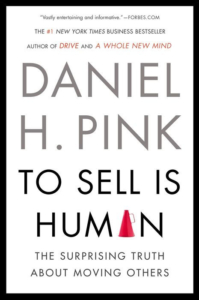
Author Daniel Pink dedicates an entire chapter to elevator pitches in his book To Sell Is Human. Pink identifies six types: the one-word pitch, the question pitch, the rhyming pitch, the subject-line pitch, the Twitter/X pitch, and the Pixar pitch. Years ago, I created pitches for some of our books, using Pink’s techniques.
- One-word pitch for Cape Horn: One Man’s Dream, One Woman’s Nightmare: “Pitchpole.”
- Question pitch for Do You Have a Catharsis Handy?: “Tired of reading boring grammar books?”
- Rhyming pitch for Cave Art Press: “Egress with Cave Art Press.”
- Subject line use for the blog: “Mike the Dog Talks Books.”
- X pitch for Youth and War: “Endurance and survival, compassion and brutality; ordinary people caught in the maelstrom of global conflict.”
- Six-sentence pitch for A Long Way from Brooklyn: Once upon a time, there was a young homeless boy named John who lived on the streets of Brooklyn. Every day, John searched for food, shelter, and work, but each day, the challenges grew tougher. One day, in a desperate moment, John lied about his age to get a job with a new government program, the Civilian Conservation Corps. He was eventually sent across the country to a place where he knew no one and knew nothing about. John was assigned to help build the Deception Pass Bridge. His determination, hard work, and eagerness to learn earned him the respect of his employers, and he ultimately became a successful engineer whose wealth helped establish several community programs in Anacortes, Washington.
Inspired by revisiting these forms, I created pitches for Murder at the Pontchartrain, one of my Sydney Lockhart mysteries:
- One-word pitch:
- Question pitch: “Ready for buried war secrets, mystic murders, swampy shenanigans, and a little New Orleans voodoo spice?
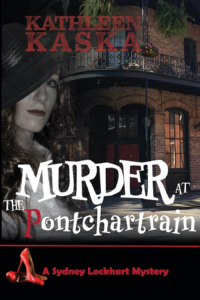
- Rhyming pitch: “Sydney Lockhart slams head-on into a New Orleans rampart.”
- Subject line: “Sydney Lockhart Turns New Orleans on Its Ear.”
- X pitch: “In New Orleans for her wedding, Sydney Lockhart ends up chasing murder suspects in search of the truth surrounding the crime, while her fiancé may be hiding the biggest lie.”
- Pixar pitch: Private detective Sydney Lockhart travels to New Orleans for her wedding, but the Big Easy has other plans. Her friend Rip Thigbee vanishes after exploring a disturbed crypt. A local voodoo queen warns of dark forces, and a woman is found murdered in Sydney’s hotel room. When a second body is discovered, Dixon gets arrested. On the hunt to find the real killer, Sydney races through the French Quarter alone, dodging bad guys, the Ku Klux Klan, and her meddling cousin Ruth. To free Dixon and survive the city’s shadows, Sydney must untangle a web of lies—starting with the one told by the man she’s about to marry.
Elevator pitches are fast, fun, and flexible—and with a little creativity, they can become compelling book blurbs. Try your hand at writing one: What’s your best elevator pitch?







That was a pitch-perfect post, Kathleen! ;-D
Thanks, Lois!
Love the history of the elevator pitch and the different examples – I’d never thought of the different ways the pitch can be approached.
I own a copy of “Do You Have a Catharis Ready?” It’s brilliant. And funny (haha, not peculiar). Reformat, get a new cover and self-publish it — OR, add to it and republish with old and expanded content (like including this elevator pitch info) and a new title. Go for it!! And if you need help on self-publishing…I happened to have written a book about that 🙂
For the reason that the admin of this site is working, no uncertainty very quickly it will be renowned, due to its quality contents.