
Before the Internet Search by Saralyn Richard
When I was a junior in college, as an English major, I was required to take a course in John Milton. Taught by a professor who had made Milton his life’s work and who strove to model himself after the legendary poet, the course had the reputation for being the hardest one on campus. I believed it at the end of the first session of class, when Professor Boyette gave us more than fifty topics to research at the library for homework.
The topics were as pedestrian as the Elizabethan world order, the cycle of sin and redemption, Christian allegory, Dante’s circles of hell, and many others I can’t recall. If the assignment were made today, the homework could be done in an hour or so, courtesy of the Internet, but then we had to trek to the library and find reference books, drag them to the carrels, read about the topic, take notes….you may remember those days, not so fondly.
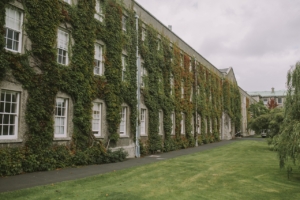
Image by alison updyke at Pixabay
The research paid off, back then, and the Milton course became my most intellectually challenging and charming—a favorite. In fact, I chose to write and defend an honors thesis on Milton as a capstone course my senior year.
Not surprisingly, then, when I had an opportunity to visit England the summer after graduation, I became fixated on finding things that related to Milton. I saw his bust, but no grave, at Poet’s Corner in Westminster Abbey. I saw his famous mulberry tree on campus at Cambridge University. I asked around and nobody seemed to know where Milton was buried.
That shocked me. One of the most famous Renaissance poets in the world, and I couldn’t find out where he’d been interred. The British are essentially friendly to tourists, and almost everyone I asked had a theory. And every theory sent me on a wild goose chase all over London.
In the end, I had to leave England before finding out the truth. A few years later, my in-laws went to England. They asked me what I would like them to bring back for me, and I replied, “The location of John Milton’s grave.”
Sure enough, when they returned, they had brochures and pictures of themselves next to Milton’s grave, which is in the churchyard of St. Giles without the Cripplegate, Milton’s father had been the pastor of that church. Thus, a three-year treasure hunt came to a successful end, and I had my destination. (I was able to visit, myself, a few years after that.)
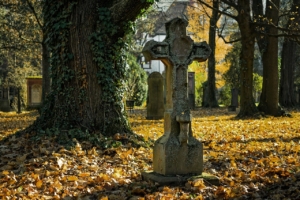
Today, just for kicks, I consulted findagrave.com and asked for John Milton’s gravesite. This is what it gave me in a matter of seconds:
John Milton Famous memorial
Birth
9 Dec 1608
Bread Street, City of London, Greater London, England
Death
8 Nov 1674 (aged 65)
London, City of London, Greater London, England
Burial
St. Giles Cripplegate Churchyard
London, City of London, Greater London, EnglandShow MapGPS-Latitude: 51.5187642, Longitude: -0.0938894
Oh, the power of the Internet, and how it’s changed our lives! One last example—I’m writing the historical mystery I started researching at the library when I was fifteen years old. The aftermath of the Great Storm of 1900 is a big part of the setting, and I had extensive notes taken from primary sources over a ten-year period. For various reasons, I was unable to complete that novel until now, and ta-da! The Internet is such a boon to the story-telling. For example, I can find out how many kopecks to a ruble or what a person could buy with five dollars in 1903 in a New York Galveston minute!
The experience makes me wonder—all the time—what we would do if we lost the Internet, the ability to ask Siri or Alexa, or even the ability to photograph objects for later use.
How about you? Do you have a favorite pre-Internet search to share? I’d love to hear about it.
Saralyn Richard is the author of The Detective Parrott mystery series, The Quinn McFarland mystery series, A Murder of Principal, and the children’s book, Naughty Nana. Subscribe to her monthly newsletter for contests, prizes, surveys, and other fun content at https://saralynrichard.com.


Saralyn, I, too, took a Milton course in college and remember it fondly. We didn’t have the amount of research you describe, but I remember doing my paper on the bee imagery in Paradise Lost. You’re right. Research on the internet has made our lives different!
Oh, Paula, we must chat sometime! Bees in Paradise Lost sounds like a honey of a topic! Thanks for reading and weighing in.
Gosh, not just pre-internet, today! Researching my current WIP true crime (1937 unsolved murder), my co-author and my first step was to read through a binder of newspaper clippings compiled from microfiche archives at the local library. Let’s just say we are very glad that most newspapers are now digitized! And we have used findagrave.com multiple times.
I can imagine how much research you and your co-author are doing with technology. Hurray for time-saving inventions.
Speaking of research tools, do you remember the card catalog? I recently spoke at the opening a beautiful new library and they have a room filled with computers for internet research. In the middle of the room, against the wall, is a card catalog. Children had no idea what it was.
I know. I have fond memories of the card catalog and tiny pencils and paper scraps to write down call numbers. I love libraries and considered getting a master’s in library science. That was before library studies became media studies. 🙂
I can’t say I have any fond research memories from before computers. They were all a pain in the patootie! I sometimes wonder if I’d ever have written my first book without the use of a computer, especially when I think back to all those term papers I typed and retyped to get the footnotes to fit correctly!
I think of that typing and retyping all the time. How easy we have it now! (Soon people won’t even have to type. They can just think something and it will go on the page.)
Like you, Saralyn, I also wrote a senior honors thesis. My subject was the Theatre of the Absurd, a genre especially relevant to French theater of the time (and super-relevant in today’s political climate). I’d attended several great performances and read every play and theater criticism I could put my hands on. I just looked up the subject online to see what kind of research I’d find today, and I have to say, I’m delighted there was no internet back then. The convenience of having every sliver of information at your fingertips is alluring, but I’m always in danger of losing myself down rabbit hole is a real problem for me. One click leads to another click, and another, and another…
I’d like to talk with you about your honors thesis one day. Sounds fascinating. And, yes, there are those rabbit holes. I’m right there in them with you.
I think of that typing and retyping all the time. How easy we have it now! (Soon people won’t even have to type. They can just think something and it will go on the page.)
Wonderful story. I knew you were a great fan of Milton. I’m glad you continue your pursuit.
I must admit, I miss those ancient college libraries. The University of Texas had just built a modern library before I enrolled. It was all plastic with bright orange decor—too sterile for me. Then I found the old science library in the Tower Building. This became my home while on campus. I used to do all my studying there because there were no distractions. You could hear a pin drop. Of course, there were also no cell phones in those days.
Thanks, Kathleen. Your library story resonates with me. I preferred the old medieval library on campus at University of Chicago. Their new “plastic” library, Regenstein, seemed cold and unwelcoming.
Love the intel and the photos, Saralyn! I have a Milton connection as my mother’s ancestry traces back to Mary Powell’s family. And speaking of searching prior to the internet those genealogical searches are so much easier with digital records. However, much like all internet searches information while easy to find is extremely difficult to verify. Now I’m off to research ice sculptures for the current WIP. Much more mundane but essential to the storyline. 🙂
Thank you for sharing your lineage, Mary Lee. Mary Powell was a very impactful figure on Milton’s writing, and the daughters they had provided important relationships for Milton as he raised them without their mother and as he grew blind. Is your name, then, a family name passed down the generations? Have fun with the ice sculpture research. Sounds cool!
Wow! Before the internet, indeed. What terrific in-laws you have, Saralyn. And what a beautiful headstone and fitting resting place. Yes, I remember carting books back and forth and taking laborious notes. Makes me respect and appreciate the scholars and literary greats who came before us all the more.
Thanks, Donnell. I agree about my in-laws. And about how the information age has transformed our lives completely. Sometimes I feel downright spoiled. And I also find myself looking up ‘way more things, just because it’s easy to find the answers.