

What’s your favorite thing about September?
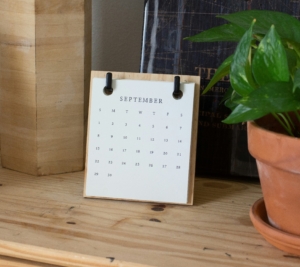 September has finally arrived, but here in the Midwest it’s not feeling very much like Fall. Between the triple-digit heat index we’re currently experiencing and the packed-to-the-gills summer that felt like it was on fast-forward, it’s hard to believe that it’s September already.
So we’re not going to talk about football games and fall leaves. Or cool evenings and cozy sweaters. We just aren’t feeling it yet. We’ll get there but in the meantime, we’re thinking about one of the other things we love about September.
September means the kickoff to a new season of some of our favorite murder mystery shows. Two of our favorites will be returning. First the Marlow Murder Club, with retired archeologist Judith Potts and her friends Suzie and Becks. Also coming back is Madame Blanc, with antique expert Jean White and the entertaining residents of Saint Victoire.
Plus there will be a final installment in Anthony Horowitz’s Susan Ryeland series with the Marble Hall Murders. Such a brilliant storyline blending real life murder with fictional detective, Atticus Pund. And though it doesn’t look as if we’ll see Season 2 until October, we’re also looking forward to the return of Ludwig, which is already airing in the U.K. This one features a brilliant puzzle master twin. We don’t want to ruin it for you if you’ve not seen the show so we’ll just say – you really need to watch season 1 first.
 Eventually the days will be cooler and the leaves will change color and we’ll get to enjoy all the things we love about September and fall in the Midwest. But in the interim, we’ll be inside enjoying the air-conditioning and watching new episodes of some of our favorite mystery shows.
What’s your favorite thing about September? Do you have a show you’re looking forward to watching? Or is there something else that’s your favorite thing about September?
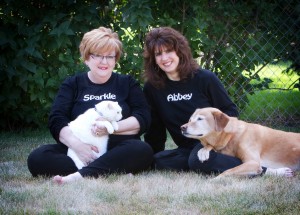
Sparkle Abbey is actually two people, Mary Lee Ashford and Anita Carter, who write the national best-selling Pampered Pets cozy mystery series. They are friends as well as neighbors so they often get together and plot ways to commit murder. (But don’t tell the other neighbors.)
They love to hear from readers and can be found on Facebook, Twitter, and Pinterest, their favorite social media sites. Also, if you want to make sure you get updates, sign up for their newsletter via the SparkleAbbey.com website.
And if you’d like to know more about Mary Lee’s books, visit her website at MaryLeeAshford.com

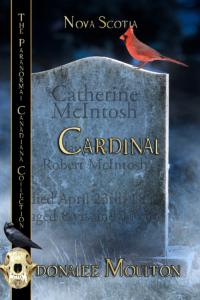 Cardinal took flight, in paper and digital formats, in February. The book is part of the Paranormal Canadiana Collection from BWL Publishing. There is a paranormal mystery for each province and territory in Canada. When my publisher approached me about writing the story for Nova Scotia, I didn’t hesitate to say yes. Then I turned to my friend Lynn, and said, “What does paranormal mean?”










 Bethany Maines is the award-winning author of action-adventure and fantasy tales that focus on women who know when to apply lipstick and when to apply a foot to someone’s hind end. She participates in many activities, including swearing, karate, art, and yelling at the news. She can usually be found chasing after her daughter or glued to the computer working on her next novel (or screenplay). You can also catch up with her on
 Because February is the month of love, we thought this was the perfect time to tackle the debate among mystery readers, as well as mystery authors, as to whether romance belongs in crime fiction. Or not.
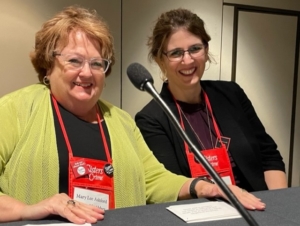


 I’m Being Judged… by the Derringer Awards
 donalee Moulton
 Judy Penz Sheluk
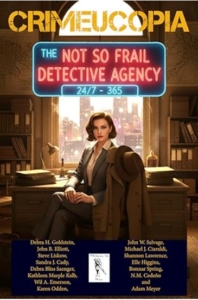 Debra Goldstein
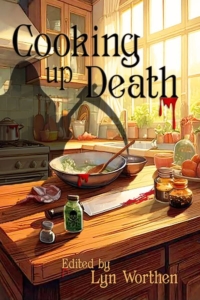 Bethany Maines