Book Clubs, By Saralyn Richard

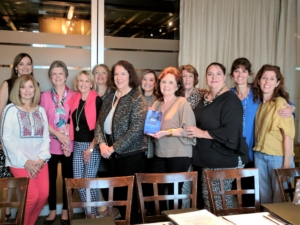
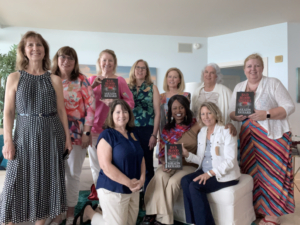
I’ve been thinking a lot about book clubs, and I’ve known a lot of them over the years. Big ones, small ones, literary ones, social ones, online ones, in-person ones. I’ve belonged to a few, myself, but in recent years I’ve attended mostly book clubs where my books were being discussed.

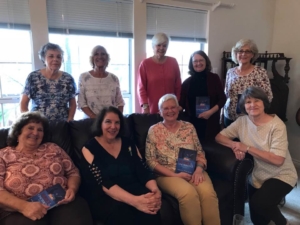
And even those have been varied. Some are book review clubs, where the audience has not yet read the book, but would like to hear about it in anticipation of reading. One of these has been in existence for over 75 years and is still going strong.

Some are into dressing up like the characters in the book and decorating the room with artifacts from the book.


Some are serious readers and love discussing the book using Socratic questions.


More than a few serve meals and like to model the menu after the foods mentioned in the book.

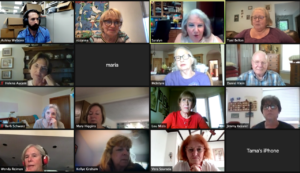
Many of them are in farflung places and meet online, or they meet in person, but stream me into the fun. These are no less exciting and fun.

I feel so fortunate when I’m invited to lead or participate in a book club meeting. It’s an honor to be able to discuss my book with readers in an intimate setting, where all questions and answers are enlightening and welcome. Getting to know my readers makes the writing of the next book more exciting, as well. Since I have a sharper image of who is reading, what they like, and how they think, I can communicate better with them.

All in all, I think book clubs are the best “invention” since—well, you know, books, themselves. How about you? What is your book club experience like?


Saralyn Richard is a multiple award-winning author of seven mystery novels, a children’s book, and numerous short stories, poems, and essays published in anthologies and magazines. Her works include the Detective Parrott Mystery Series, the Quinn McFarland Mystery Series, A Murder of Principal, and Naughty Nana. Saralyn is an active member of Mystery Writers of America and International Thriller Writers, and she has taught literature and creative writing to high school students and adults through the Osher Lifelong Learning Institute. Saralyn and her husband live in Texas in the house she grew up in.

Full Circle Moments

By Saralyn Richard

Once in a while in the writers’ journey, serendipitous moments occur, and they seem magical. I’ve had three such moments recently and will share them with you.

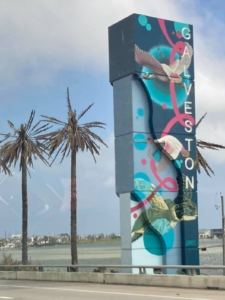
First of all, I’m writing an historical mystery that takes place in my hometown, Galveston, Texas, after the 1900 Storm, which is still the deadliest natural disaster in the history of America. In the information-gathering stage, I invited newsletter subscribers to send me names and/or stories of relatives from that place and time.

While I waited for responses, I worked on making burial arrangements for my cousin, Jill Jacobson, a Hollywood actress who grew up in nearby Beaumont, Texas. The plan was to bring Jill’s remains to Beaumont for burial in the family plot.

One of my newsletter subscribers sent me an email saying that I would be hearing from her friend, Betty, who had some 1900 Storm stories. Betty and I ended up chatting on the phone for more than an hour about her family’s experiences in the storm. During the conversation, Betty mentioned growing up in Beaumont, so I asked her if she knew my cousin Jill, and I told her what I was setting up with the cemetery.

To my surprise, and Betty’s, we realized that Jill is Betty’s cousin, too, on the opposite side of the family. So Betty is going to come to the memorial service, which she wouldn’t have known about if not for my work-in-progress.

The second full circle moment occurred last week at Then and Now Bookshop during ArtWalk. I was selling books at a table in the bookstore, when a mother and her nineteen-year-old daughter came over to look at my books.

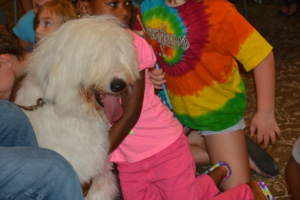
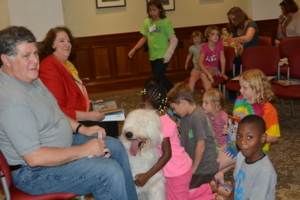
The cover of Naughty Nana, the children’s book narrated by the real Old English sheepdog puppy, Nana, caught their eyes. “Oh, we remember Nana! We’re big Nana fans!” the mother said. “We were at the library when you brought Nana there to do a reading a long time ago, and we’ve followed Nana ever since.”

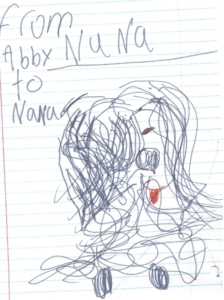
They were sad, but not surprised, that Nana crossed the Rainbow Bridge two years ago, but we reminisced about Nana’s many appearances in parades, on tv, at schools, etc. They purchased some of my other books, signed up for my newsletter, and left. The next day, I sent the mother an email with pictures from that long-ago library event they attended. Something made me include a drawing that one of the children did for Nana that day.

The next day I received a return email. The daughter was indeed one of the children in the picture, and she was the one who drew that treasured note to Nana. Thirteen years later, I still have the original!

The third full circle moment happened that same day at the same bookshop. One of the customers came up to my table asking if I was a local author, and if I was “BOI” (born on island). Being a BOI locks you into an immediate fraternity of special people. In fact, there are pregnant women who insist on delivering their babies in Galveston, so the babies can attain that status.

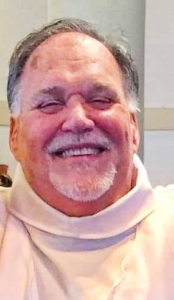
Turned out that customer was also a BOI, and she mentioned her connection to Dominican High School, a Catholic girls’ school here. I said, “I’m sure you knew my dear friend, Father Frank Fabj.”

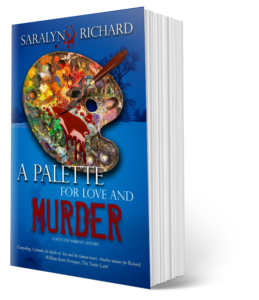
That opened up a squealing that galvanized the entire bookshop. Yes, she knew Father Frank well. He was important to her and her family through several life cycle events. She was astounded to see that I dedicated A Palette for Love and Murder to him. She clutched the book to her chest, the same way I do sometimes when I think of and miss Frank’s presence.

The two of us, complete strangers moments before, bonded over the dedication in a book, and we ended up shedding tears and hugging together.

Recently, an interviewer asked me what surprised me most about becoming a writer, and I answered something about the network of readers and fellow authors I’ve met and the friendships I’ve made. The books that I’ve published are only the vehicles. The transmission of thoughts and feelings and ideas that comes from being a writer and a reader is what really counts—that is the basis for these magical, delightful, and, yes, thrilling connections with others.

I’d love to hear about one of your full circle moments.


Saralyn Richard writes award-winning mysteries, including the Detective Parrott mystery series, Bad Blood Sisters, Mrs. Oliver’s Twist, A Murder of Principal, and Naughty Nana, a children’s book. An active member of International Thriller Writers and Mystery Writers of America, Saralyn has taught creative writing and literature. Her favorite thing about being an author is interacting with readers like you. For more information, check https://saralynrichard.com.

Killer Nashville Redux by Saralyn Richard

The Killer Nashville conference is coming up next month, and I’m going. Getting ready has brought back memories of my first KN conference, and this article I wrote afterwards. It explains why, like the swallows to Capistrano, I’m eager to return.
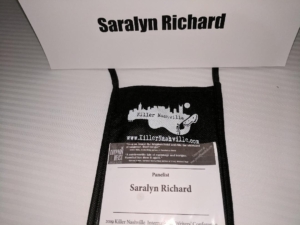
How the Killer Nashville Conference Changed My Life as an Author

The benefits of professional conferences are unquestionable. I attended dozens as an educator, and I participated in hosting some when I was a school improvement consultant. I know what goes into planning them, and I consider myself an authority when evaluating them.

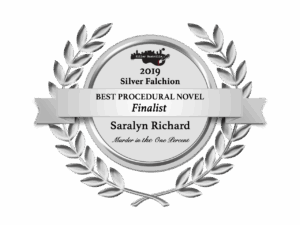
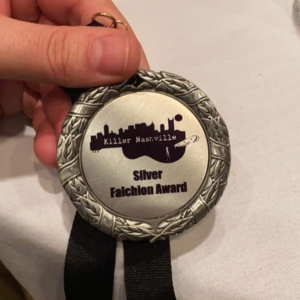
That said, I had high expectations when I attended my first-ever writing conference, Killer Nashville, in 2019. I had heard good things about Killer Nashville. I was expecting to learn a lot from the assemblage of diverse and qualified speakers—authors, agents, and others in the publishing industry. I knew I would meet people and participate on panels and have a good time. My first mystery novel, MURDER IN THE ONE PERCENT, was up for a Silver Falchion for police procedurals and as the readers’ choice. So I packed my suitcase and hopped on an airplane, full of anticipation.

What I didn’t expect was that this conference would change my life as an author. I know that’s high praise, but it’s not hyperbole. What did Killer Nashville do to ignite my professional growth? I’m bursting with examples, and they all have to do with people.

In 2019, the guest authors were Joyce Carol Oates, David Morrell, and Alexandra Ivy. As a conference participant, I had the opportunity to observe and interact with each of these authors numerous times. The quality of content in their interviews and workshops was high, and the environment was cozy enough to allow for meaningful dialogue. I had admired Joyce Carol Oates’s writing for many years. I’d even taught many of her short stories. It was a special thrill to learn that so many big ideas had emanated from such a petite person, a writer focused not on her past works, but on her future ones. “Write about what matters,” she expounded. Her utter lack of timidity was inspirational. David Morrell continued to inspire. He pointed out that “reading is the only way to develop empathy,” and it is the writer’s obligation to evoke the best human emotions from readers. Alexandra Ivy spoke about the fear many authors struggle with, but she said, “Writing from your heart is the only way to find your voice.”

Here I am, years later, still quoting these acclaimed authors, but, more importantly, I’ve taken to heart their advice. My subsequent mystery novels march boldly into areas and topics that have relevance to society—PTSD, LGBT, me too, race relations—to name a few. The guest authors’ remarks showed me how important it is to write from the soul.

The guest authors weren’t the only people who had a positive effect on my writing. Also on board were five friendly and helpful literary agents. I chatted informally with several of them at the Friday night “Shine ‘n’ Wine” event, and I attended a session in which they explained how they work and what they look for in submissions. I also attended a pitch session where I received a personalized critique from two agents. Although these sessions didn’t result in my snagging an agent, they provided me with something more important—a critical view of the process of moving a story to publication in a highly competitive market. Now I’m much more conscious of voice and deep point of view than I was before, and I have a broader view of my audience.

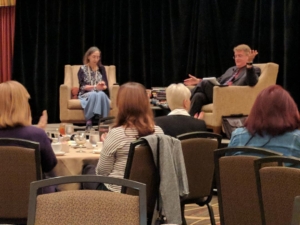
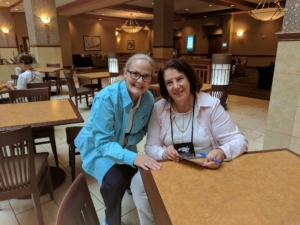
Next, I participated in scores of special sessions and panel discussions. Most of these were in small group settings, so I was able to get to know the presenters and ask questions. I presented at several sessions, as well, and was the group leader for one. Through these sessions I met a lot of fellow authors. We exchanged cards and contact information, shared common experiences, and formed networks. My social media platform exploded, and when the time came to seek authors to read my next books with an eye toward writing review blurbs, these were my go-to people. I have done a lot of cross-promoting with authors I met at Killer Nashville, and we have continued to encourage each other and celebrate victories together.

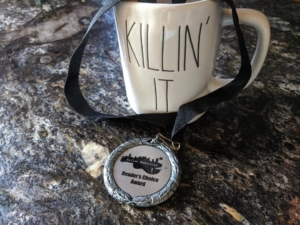
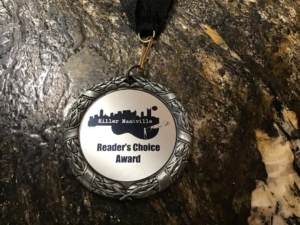
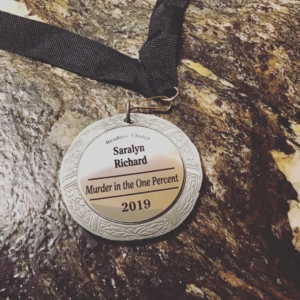
Speaking of victories, the awards ceremony at Killer Nashville was thrilling. So many contending books were represented as finalists in various categories, and so many authors received warm attention for their writing. That moment when my name and my book title were called out in two categories—it felt like the culmination of a lifelong dream. That Murder in the One Percent won the Reader’s Choice Silver Falchion for 2019 was the ultimate acknowledgment that I’d achieved something meaningful as an author. The honors went a long way toward motivating me to work harder to improve my craft, to connect with readers again and again.
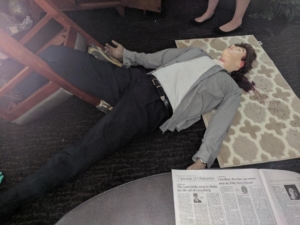
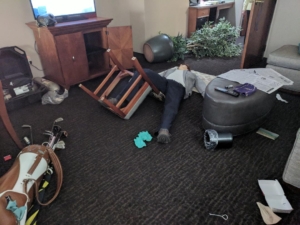
One special feature of Killer Nashville was the mock crime scene set up by Dan Royce, formerly of the Tennessee FBI. Throughout the conference, participants were invited to examine clues laid out in a hotel suite. The murder scene represented a real case, and it was my job to identify which items were pertinent to solving the case, decide which tests needed to be performed on these items, and form a conclusion as to who killed the victim, how the killing occurred, and what the motive was. It was a real-live game of Clue. It was fun to compete with other mystery authors to solve the murder correctly, but I also learned a lot about forensics, the precision required during investigations, and the costs of the crime-solving methodology. I was able to transfer this knowledge to my writing, as well.
All these experiences combined to make my time at Killer Nashville one of the most worthwhile weekends of my writing career. I would be remiss if I didn’t mention the glue that held all of the components of the conference together, the Killer Nashville staff. Each staff member was friendly and helpful, throughout the conference, but Liz Gatterer did so many things to make my experience go smoothly from start to finish. Her organizational skills and people skills really shone. Finally, huge accolades went to Clay Stafford. His vision and commitment to Killer Nashville have made everything else work together like a perfectly performed play. Clay’s energy and enthusiasm were contagious, and he made every one of us feel like family.

What was the secret recipe for a life-changing writers’ conference? Equal parts of class, spirit, inspiration, support, and Southern hospitality. Stirred until smooth. Gently baked with caring hands. Rendered super cool, and served repeatedly over time. Can you tell—I can’t wait to go back!

Have you ever been to a writers’ conference? Will I see you at KN 2025? Hope so!


Award-winning mystery and children’s book author, Saralyn Richard loves being a Stiletto Gang member. A former urban high school educator, she’s living the dream, connecting with readers through her books: the Detective Parrott mystery series, the Quinn McFarland mystery series, A Murder of Principal, and Naughty Nana. Saralyn participates in International Thriller Writers and Mystery Writers of America, and she teaches creative writing. Website: https://saralynrichard.com.



Book Clubs by Saralyn Richard

One of the many tasks an author tackles when she has a new book released is to develop a list of discussion questions for book clubs. While I enjoy every part of researching, writing, revising, publishing, and marketing a book, creating discussion questions is one of my favorites.

Years of doing lesson plans, creating assessments, and interacting with students around the literature they’ve read have given me the tools.  I also helped teachers develop higher level questions when I was an administrator. And, for the trifecta, I took Junior Great Books training, which helps leaders craft Socratic questions that have more than one right answer and whose answers prompt more questions. All of these gave me excellent experience in working with book clubs.

Before I get into details, I must say that no two book clubs are alike. In fact, even the same book club can differ from its last session with a different book, a different leader, a slightly different crowd, or a different context for discussion. For example, I just returned to a fabulous local book club that had discussed my book, BAD BLOOD SISTERS, a year ago, and this time they were discussing MURDER IN THE ONE PERCENT. A different book, a different series, and this time there were men in the group. Furthermore, the person who hosted the second session turned it into a party to simulate the elegant party in the book. The whole atmosphere was charged with festivity, and, although I had prepared higher level discussion questions to go with the book, no one wanted to hear them. Instead, the readers had questions of their own to ask me. I was cool with that. I wanted everyone to enjoy the discussion, and I wouldn’t want anyone to leave empty-handed, with unanswered questions.

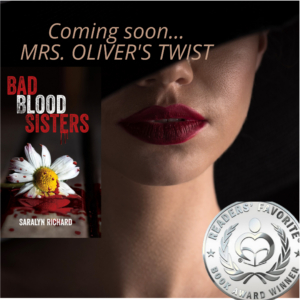
Two days later, I had the first book club discussion of the new release, MRS. OLIVER’S TWIST. I sat down to prepare the questions, and that old familiar sense of joy flooded through me. I loved writing the book, and I would love setting the platform for discussing it. What would I want to revisit? The characters? The plot? The setting? The theme?

I crafted between fifteen and twenty questions, printed them out, cut them into strips, folded them neatly, and placed them into a jar. When it came time for the discussion, I led with a five-to-ten-minute talk about the inspiration for the book, and then opened the floor for questions. Everyone had to take a turn asking or answering a question. If a person didn’t have a question to ask, she could pull a question from the jar. She would read the question and take the first crack at answering it. Or she could pass and let someone else answer it.

At the end of the evening, everyone had contributed to the discussion several times, and everyone went home happy—including the book’s author!

I’m always amazed at what comes from readers at book clubs. My philosophy is that the book belongs to me when I’m writing it, but it belongs to the reader once it’s published. So I don’t claim to have all the “right” answers, and I enjoy hearing different responses.

Sometimes I attend these book clubs in person, and sometimes by FaceTime or Zoom. Either way, it’s an honor and a joy to be invited to discuss my book with a new group.

How about you? What is the most interesting, unusual, or fun book club meeting you’ve ever attended?


Saralyn Richard is the author of the Detective Parrott mystery series, the Quinn McFarland mystery series, A MURDER OF PRINCIPAL, and the children’s book, NAUGHTY NANA. If you’d like to invite Saralyn to your next book club or organization meeting, contact her at saralyn@saralynrichard.com.

Interiority by Saralyn Richard

Interiority by Saralyn Richard

I recently attended a virtual meeting at which the author, Mark Stevens, spoke. He claimed the main reason a reader likes a fiction book is interiority. Since all writers aim for readers who like our books, I paid attention.

Mark did an excellent job of explaining what interiority is—masterful, in fact, because interiority, like voice, is difficult to nail down. Basically, interiority is the multi-dimensional way in which an author provides the internal thoughts, feelings, and attitudes of a character, so that the character comes alive on the page.

Mary Kole gives another thorough explanation of interiority in fiction here.

When I’m writing, the chief vehicle for character interiority is point of view. Each time I write another book, I learn more about point of view and how critical it is for giving readers the best story.

Here are some of the things I’ve learned:

  1. The perfect POV to serve the story is like the batter’s sweet spot. It can make the difference between a foul ball or a home run.
  2. Having too many POV characters in one book can cause “head-hopping” for the author and the reader. There are ways to accomplish multiple POVs gracefully, but they require a lot of writing finesse.
  3. The problem with having only one POV character is that character has to be “on stage” in every scene. Everything in the story is seen through that character’s interiority, or it isn’t seen.
  4. There used to be only two types of third person POV—omniscient and limited. Now there is a third person deep POV that allows access to the POV character’s thoughts and feelings.

Mark Stevens said readers, especially mystery readers, care less about plot points and more about the people who are living within those plots. I’m sure he’s right, because when I think of all the Agatha Christie books I’ve read—with multi-varied plots and settings—what do I recall most? Hercule Poirot, Miss Jane Marple, Tommy and Tuppence Beresford. And Connelly’s Harry Bosch and Renee Ballard. And Patterson’s Alex Cross.

My own writing experience bears this out. When MURDER IN THE ONE PERCENT came out, the most consistent feedback I received was about Detective Parrott. Not the wealthy and powerful partygoers who had occupied my thoughts when plotting out motivation, weapon, and opportunity. Detective Parrott, the Everyman protagonist, captured readers’ attention and hearts way more.

When Quinn McFarland appeared in BAD BLOOD SISTERS, she was the only POV character. Everything in the book was filtered through her eyes and ears, and she shared a lot of her thoughts and feelings with readers. Throughout the writing process, I identified so closely with Quinn that certain chapters caused me physical discomfort. Readers have told me they felt the same thing.

I’ve read many books where a character’s interiority left an indelible imprint on me. One example is Kya Clark, the Marsh Girl in WHERE THE CRAWDADS SING.

What examples can you think of where POV characters have stayed with you long after you finished the book?

Saralyn Richard is the award-winning author of seven mystery novels, including the Detective Parrott mystery series, and the children’s book, Naughty Nana. Her newest book, Mrs. Oliver’s Twist, is the sequel to Bad Blood Sisters. Look for it soon.


Book Trailers

By Saralyn Richard


I’m not sure when book trailers became “a thing,” but now the internet is flooded with video teasers that make prospective readers want to buy books in all genres. Some are professionally done; others are created with easy-to-use software, such as Canva, MovieMaker, and VistaCreate.

What I like about successful book trailers is that they crystallize the essence of the book into short, pithy artistic statements. The selected text, graphics, and video make the book description come alive with aesthetics, movement, action, sound, and emotional appeals.

The cover is hot, but the trailer is even hotter.

The advertising potential is vast, and, assuming the trailer is widely viewed, it becomes a valuable marketing tool for the book.

A lesser realized, but no less important outcome is what the trailer does for the author. In writing seven novels and one children’s book, I’ve found it easier to write a hundred-thousand-word work of fiction than to write a book description or blurb. Condensing the book into its essential parts and highlighting its purpose is extremely difficult and frustrating. What to include? What to leave out, because it’s a spoiler? What to emphasize?

Brevity may be the soul of wit, but for a novelist, brevity can suffocate. Figuring out what to put into a book trailer, both in images and words, simplifies the task. While writing is a left-brain activity, movie-making is right-brain.

Even if the trailer is “hired out,” the author must give the artist the basic information: characters, setting, and plot. If the book is a mystery, the trailer needs to capture the elements of suspense, suspects, clues, and mood, all provided by the author

. The trailer requires a script and storyboard, and a great hook at the beginning.

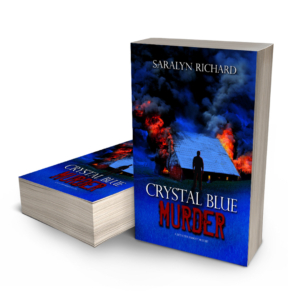
The video for my book, CRYSTAL BLUE MURDER, is an example of a trailer that helps the audience get a feel for the book. It also helps me clarify the important plot points and messages of the book. You can currently view the trailer here:

Crystal Blue Murder Book Trailer v2

Does it make you want to read the book? Do book trailers in general appeal to you when you are deciding what to read next? I love hearing from you!

Saralyn

Figures of Speech

Figures of Speech

by Saralyn Richard

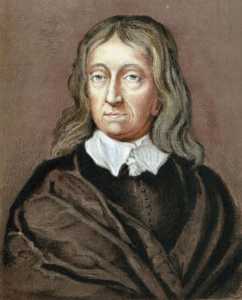
An English major in college, I was required to take courses in Chaucer/medieval lit, Shakespeare, Milton, 18th and 19th century literature, and American literature, among others. Of these, the dreaded subject was Milton, mainly because the brilliant poet and author of Paradise Lost took full advantage of the vast body of history, philosophy, religion, politics, and literary criticism of the day, and analyzing and interpreting even a few lines of his work could send a person down a rabbit hole for eons.

I had read excerpts from Milton’s works in high school, and I’d found them dry and uninteresting, but when I arrived in my Milton class junior year in college, I had a whole different experience. Call it an awakening, a challenge, a puzzle—whatever—I delighted in the intrigue and purpose of Milton’s language, and I couldn’t get enough.

After the semester, I decided to continue studying Milton by undertaking two semesters of work, researching and writing an honor’s thesis. My focus of study was figures of speech.

Most people understand the function of figurative language and can identify and explain similes, metaphors, personifications, and analogies. Few, however, realize that these represented only a miniscule number of the figures of speech available for Milton and other writers of the Elizabethan and Puritan eras.

I could write treatises—or an honors thesis—about what I learned from books, such as George Puttenham’s The Arte of English Poesie, or Henry Peacham’s The Compleat Gentleman, but for this blogpost, I’ll say that I was astounded by the more than 456 figures of speech used by Renaissance writers of poetry and prose.

The literary devices included repetitions, inversions, comparisons, and rhetorical devices to tickle the ear and tempt the mind. Some of the more obscure, but popular, figures of speech were anastrophe, litotes, and anadiplosis.

Once I learned about them, I had fun hunting for them in Milton’s verse. Each find unlocked a bit of the magic that made Milton’s writing so memorable.

Fast forward to the 21st century, and I was teaching creative writing to students aged 55 and older at the Osher Lifelong Learning Institute. I introduced a unit in figures of speech, and we dug into definitions and examples of a variety of the lesser-used devices. I challenged learners to use some, like synecdoche and metonymy in their writing, and the results were amazing.

Also, when I read a work of fiction by an author like Poe, Tartt, Kingsolver, or Irving, and I find a turn of phrase that is particularly appealing, I love to deconstruct the language. Do you do the same? What is your favorite figure of speech, and which author do you think is especially adept at using figurative language?

Saralyn Richard writes award-winning humor- and romance-tinged mysteries that pull back the curtain on people in settings as diverse as elite country manor houses and disadvantaged urban high schools. Her works include the Detective Parrott mystery series, two standalone mysteries, a children’s book, and various short stories published in anthologies. She also edited the nonfiction book, Burn Survivors. An active member of International Thriller Writers and Mystery Writers of America, Saralyn teaches creative writing and literature. Her favorite thing about being an author is interacting with readers like you. If you would like to subscribe to Saralyn’s monthly newsletter and receive information, giveaways, opportunities, surveys, freebies, and more, sign up at https://saralynrichard.com.
 

Reading the Same Book Twice

Reading the Same Book Twice

by Saralyn Richard


I’m always surprised when a reader tells me he’s read one of my books multiple times. As a voracious lifelong reader, I find myself muttering, “So many books, so little time.” I’m on a personal mission to read as many new books as I can, and I don’t take the time to re-read any of them.

I feel the same way about movies. I’m stunned by the number of times my husband can watch a classic movie favorite. I recently asked him how many times he thought he’d seen “Casablanca,” and he estimated more than 100. “Do you continue to see new things in it each time?” I asked. “Absolutely,” he said, and, as a viewer, he is moved by the story in different ways each time, too.


That thought gave me pause. I wonder if I re-read Gone with the Wind today, would I have a whole different take on it than I did when I read it at the age of sixteen? Or how about Catcher in the Rye, or To Kill a Mockingbird?

One of my loyal readers, a dear friend, makes it a point to read my books three times. I’m honored that she spends so much time with my characters, and I’m intrigued, too. I asked her over lunch if she would elaborate as to why she does this, and what she gets out of it. Her answer was enlightening.

She said, “The first reading is a light, quick skip through the story, mainly following the plot. The second reading is more intense. That’s where I pay close attention to the clues and the path on which they are leading me. The second reading is more process oriented. The third reading is more holistic. By this time, I’m able to enjoy the whole package of the story. I can see how the setting, characters, plot, and theme work together to form a perfect whole.”

“Wow,” I said, flattered that she has taken the time to analyze, synthesize, and evaluate each of my books. Her higher-level thinking makes my heart sing.

And it makes me re-think what it means to be a reader, rather than a consumer of books. For many years I taught a literature course entitled, “Literary Tapas.” The class read short pieces of literature and analyzed them using Socratic questioning. Through the questioning, we were able to get at some incredible insights and meanings, no matter what genre or time period the literature came from. And we always read it twice.

Now that I think about it, I might enjoy reading a few favorite books again, savoring the journey as I go. How about you? Are there any books you’ve read or would like to read twice?


Saralyn Richard writes award-winning humor- and romance-tinged mysteries that pull back the curtain on people in settings as diverse as elite country manor houses and disadvantaged urban high schools. Her works include the Detective Parrott mystery series, two standalone mysteries, a children’s book, and various short stories published in anthologies. She also edited the nonfiction book, Burn Survivors. An active member of International Thriller Writers and Mystery Writers of America, Saralyn teaches creative writing and literature. Her favorite thing about being an author is interacting with readers like you. If you would like to subscribe to Saralyn’s monthly newsletter and receive information, giveaways, opportunities, surveys, freebies, and more, sign up at https://saralynrichard.com.
 

Magic Carpet Ride by Saralyn Richard

Photo by DESIGNECOLOGIST on Unsplash

At a recent interview, I was asked whether I’ve always been attracted to mysteries, even as a child. That’s not the first time I’ve answered the question, but the more experience I have as a mystery writer, the more I’ve seen the power of mysteries, and I want to share my thinking.

I’m an eclectic reader and teacher of literature. I like to read all genres and nonfiction, plays, poems—you name it. But mysteries draw me in more than any other genre, and I think that’s because in no other type of book are the reader and writer so closely connected.

The intellectual puzzle of a mystery novel is a carefully planned path laid out by the author and followed by the reader. The steps, the clues, the evidence, the red herrings—all are set forth in a grand treasure hunt, and the reader is invited to join in. In accepting the invitation, a reader becomes complicit with the scheme. He enters the story as an ally or a sidekick of the sleuth, and he solves the mystery along with the character.

In order to enjoy the mystery fully, the reader must pay attention, not only to the intellectual puzzle, but also to the emotional puzzle. How do the characters relate to one another? What motivates one or more of them to commit a crime? How will the truth be discovered, and how will justice be administered?

The mystery is less about the actual killing of a person and more about the process of decision-making and problem-solving that will restore order to the world of the book. Yes, bad things happen in life, but clever people can overcome these bad things and find stability again. And if characters in books can achieve successful outcomes, people in real life can, also.

When I’ve read a good mystery, I feel I’ve connected with the author’s heart and soul. I know she’s an upright person who believes in doing the right thing. She’s taken me along with her on the journey, and, even if she’s dazzled and bewildered me, even when she’s twisted my thinking into knots and tossed me around the landscape of the novel, she’s held my hand throughout, and she’s taken pleasure in the fact that I’m still with her at the end.

I know these things because my favorite part of being a mystery author is doing those same things with my readers. The writer-reader connection is central to the mystery, and that’s what makes both reading and writing so much fun. Let’s hop on the magic carpet together and go for a ride.

ABOUT THE AUTHOR

Saralyn Richard writes award-winning humor- and romance-tinged mysteries that pull back the curtain on people in settings as diverse as elite country manor houses and disadvantaged urban high schools. Her works include the Detective Parrott mystery series, two standalone mysteries, a children’s book, and various short stories published in anthologies. She also edited the nonfiction book, Burn Survivors. An active member of International Thriller Writers and Mystery Writers of America, Saralyn teaches creative writing and literature. Her favorite thing about being an author is interacting with readers like you. If you would like to subscribe to Saralyn’s monthly newsletter and receive information, giveaways, opportunities, surveys, freebies, and more, sign up at https://saralynrichard.com.

Parrott and Tonya Sitting in a Tree by Saralyn Richard


Literary detectives rarely work alone. Sherlock had Watson. Nero Wolfe had Archie Goodwin. Poirot had Captain Hastings. Then there are Nick and Nora Charles, Tommy and Tuppence Beresford, Lincoln Rhyme and Amelia Sachs, and Lord Peter Wimsey and Harriet Vane.
Authors make good use of the sidekicks throughout the series. The sidekick provides a sounding board for the detective, someone to help with collecting evidence and processing clues. Sometimes the sidekick offers an insight that might turn out to be a red herring—or not. The dialogue and interaction between the detective and his sidekick add interest and humanity to the story.

The Detective Parrott mystery series features Detective Oliver Parrott, a young, smart, organized person who’s well-grounded and dedicated to finding the truth. An outsider in the wealthy community he serves, he has a sixth sense about sniffing through subterfuge and barriers, and he’s undaunted by rich and powerful people. He just wants to do the right thing and make way for justice to be served.

That’s a big job for one guy to do, and the work can become frustrating and lonely. That’s why Parrott has a sidekick—his lovely fiancée (and then wife) Tonya.  College sweethearts, Parrott and Tonya have similar backgrounds. Both come from single parent homes in underprivileged neighborhoods. They had scholarships to Syracuse, where Parrott was a football star. Tonya majored in political science, while Parrott majored in criminal justice.

When the series opens in MURDER IN THE ONE PERCENT, Tonya is on a tour of duty in Afghanistan with the Navy. Parrott visits with her on Skype, and, while she can’t tell him much about her work, and he can’t tell her much about his, they both provide significant encouragement and support for each other.

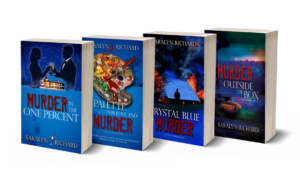
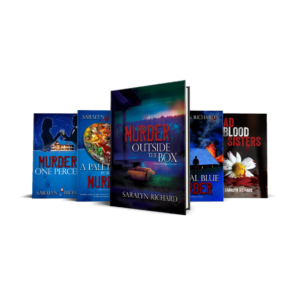
By the time of the second book, A PALETTE FOR LOVE AND MURDER, the Parrotts are married and living in Parrott’s small house with their pet cockatiel, Horace. They have a loving marriage, but from the start, their lives are complicated by Tonya’s PTSD. Without spoiling the plot of this and subsequent books, I’ll say that Tonya’s story becomes inextricably entwined with Parrott’s investigation, and from then on, the Parrotts’ personal lives and the detective’s professional life cross paths.

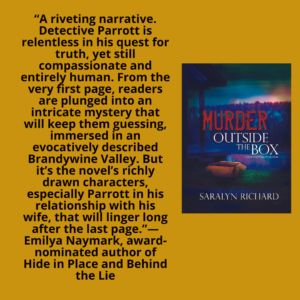
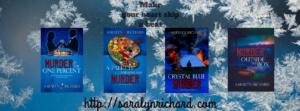
The pattern continues in CRYSTAL BLUE MURDER and MURDER OUTSIDE THE BOX. At times the elements of humor and romance tip the plots into scenes unusual for a police procedural. Readers and reviewers apparently enjoy the dynamics between the two characters, and I’ve been present at many book clubs where people remark about it. One reader stopped me at the theater to plead with me never to let Parrott and Tonya divorce.

I doubt that will ever happen, although the Parrotts have to go through rough times, just like the rest of us. Right now, Parrott and his lovely wife are getting ready for the holiday celebration in their home, and they’ve asked me to wish each and every one of you the best of the season, and a happy new year. Let me echo those chirpy good wishes. May you have good health, friendship, love, peace, and happy reading!


MURDER OUTSIDE THE BOX will be available January 5. For other books, check out Saralyn Richard’s website here or Amazon page here.