
My Path to Fiction Began with The Master of Suspense
My path to fiction began in the early 1990s, when trivia books were popular, and nonfiction was easier to sell than fiction. I wrote a proposal for my first book, What’s Your Agatha Christie I.Q.?, later retitled The Agatha Christie Triviography and Quiz Book. The first agent I queried accepted the project, and three weeks later, I had a publishing contract.
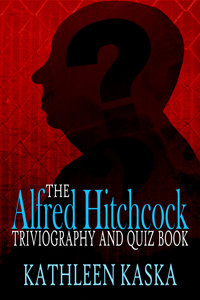
That success led to The Alfred Hitchcock Triviography and Quiz Book and later The Sherlock Holmes Triviography and Quiz Book. I enjoyed writing all three, but the Hitchcock book was especially memorable. I spent an entire summer watching every Alfred Hitchcock film ever made, all 53 of them.
What an education that was. Hitchcock was a master of suspense and one of cinema’s greatest directors, creating some of the most memorable films and unforgettable characters in movie history. Even his villains could be charming, and his stories kept audiences guessing until the final scene. It was impossible to study his work without learning valuable lessons about pacing, suspense, and storytelling—lessons that would later influence my own fiction.
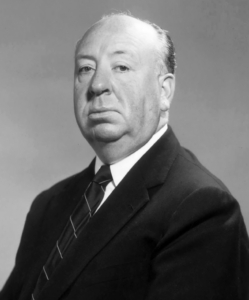
Intertwining the nuances of suspense and surprise, Alfred Hitchcock (1899-1980) always kept his audience on the edge of their seats—right where he wanted them. Hitchcock/Truffaut (1983), by Francois Truffaut, details Hitchcock’s views on the difference between these two elements and how their proper use could make a thriller a triumphant work of art. Hitchcock’s technique was knowing exactly what to tell an audience and when. For the sake of surprise, he felt the audience should know very little about what was to occur. In his conversations with Truffaut, Hitchcock gave the example of a bomb exploding without any warning. There was no anticipation of the event. It just happened, and the audience then had to deal with its bewilderment. Surprise alone did not make a thriller more clever unless it was used as a twist at the end.
Hitchcock believed that suspense took place when the audience was aware a bomb was near and an explosion was imminent. The audience always saw the events unfold as they happened, but the characters in the film remained oblivious. The inability to warn the characters of their fate left the audience feeling completely powerless. However, it also drew the audience into the story, creating an intimacy between the audience and the screen characters. Nevertheless, unable to help, the audience could only watch the events unfold before their eyes. This technique was used in many of Hitchcock’s films: in Easy Virtue (192.7), the suspense centered on an offer of marriage made while a telephone operator listened intently for the woman’s reply; while in Rear Window (1954), the audience held its breath as the villain of the piece, Thorwald, entered his apartment while the heroine, Lisa, was searching his bedroom for clues to a possible murder.
Alfred Hitchcock’s masterful weaving of suspense and surprise always gave his audience bone-chilling thrills before flattening them with his typically shocking endings.
Now for an Alfred Hitchcock quiz: What if several of Hitchcock’s notorious and psychotic characters were committed to a mental hospital? Here are six character profiles from six movies. Can you identify the characters and the actor who played them?
- This character suffers from schizophrenia and amnesia triggered by trauma from discovering his mother in bed with a stranger. It is believed that he murdered them and subsequently assumed his mother’s identity. He failed to develop mature, healthy attitudes toward sex. His anger is deeply suppressed, and his denial of his mother’s sordid past is reflected in his references to her as his best friend.
- The character is a cold-blooded murderer. He killed a college friend he deemed dispensable. He’s an egocentric psychopath without a conscience. He suffers from delusions of grandeur and considers murder a privilege reserved for a few exceptional humans, such as himself.
- At age five, the character witnessed her mother’s brutal attack by one of her tricks. Trying to protect her mother, she accidentally killed the man by striking him with a fireplace poker. This traumatic experience led to a psychoneurotic condition that developed into amnesia and kleptomania.
- A retired San Francisco police detective, this character suffers from vertigo and recurring amnesia stemming from a fall he sustained while chasing a suspect. Soon after his accident, he became involved in two sordid affairs with a woman who posed as two different women. He often confuses fantasy with reality. His mental condition worsened when he witnessed his lover fall to her death, a nightmare he constantly relives because of his initial accident.
- The source of this character’s psychosis resulted from a near-fatal injury as a child, but the link between that accident and his crimes as an adult remains uncertain. He is a misogynist. He especially hates wealthy widows. He believes he has the right to murder them and steal their “undeserved” money. His anger often becomes uncontrollable.
- A perpetrator of sexual crimes against women, this character’s sexual perversions eventually led to the brutal murders of his victims. Needless to say, he feels sexually inadequate. He is a very dangerous man.
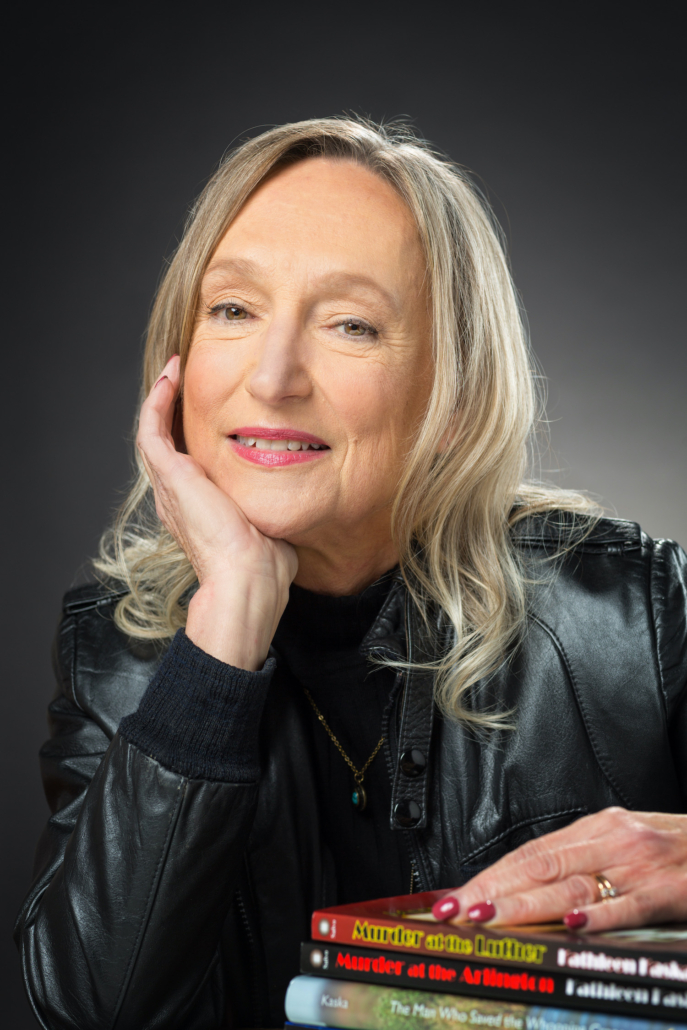
Kathleen Kaska is the author of the Sydney Lockhart Mysteries, winner of the 2025 PenCraft Award for Best Mystery Series, the Kate Caraway Animal-Rights Mysteries, and the Mystery Trivia Series.
Kathleen’s hardboiled detective novel, Death Without Dignity, won the Amity Literary Award and is scheduled for publication in spring 2027. Across genres, her work is known for character-driven suspense, socially conscious themes, and a generous touch of humor. She lives in the Pacific Northwest and continues to write both series and standalone crime fiction.
Her latest Sydney Lockhart mystery, Murder at the Faust, will be out in print on September 8. The eBook now available.
https://www.smashwords.com/books/view/2050034
Smashwords: https://shorturl.at/mDuyO
Barnes and Nobel: https://shorturl.at/g89CU
Amazon: https://shorturl.at/gPLfV


I never watched more than a few Hitchcock movies and really only remember all of one and some of another, but I did guess the first.
Hitchcock’s movies are favorites in our house. During COVID, we watched them all. And I would like to have a copy of your Hitchcock trivia book, please.
Thanks, Saralyn. I’m sad to say that it is out of print now. I can send you a PDF if you want.
I am embarrassed how few of these I know for sure:
1) Norman Bates — Anthony Perkins
3) Marnie — Tippi Hedren
4) Scotty (I think last name Ferguson??) — Jimmy Stewart
I think 2) is one of the two psychopaths in Rope, but can’t remember either character’s name and only know that one of them was Farley Granger.
Great quiz!!
You get an “A,” Marjorie!
This was a fun blog – mainly because I knew so few of the answers. I’m going to have to look for your trivia books as I know I would enjoy them. Hope you will be giving us the answers at some point :).
Thanks, Debra. I will give the answers tomorrow.
Super interesting- I have Hitchcock to thank for several of my ongoing nightmares.
Hitchcock was a master. What fun projects you’ve had, Kathleen!
53 Hitchcock movies? Kathleen, I bow at your feet. I think I’ve seen ten. And I’ve never seen the movie commenter Marjorie gets an A in. I must find it! Another spectacular blog. Thank you.
I spent one entire summer watching the movies in chronological order. What an education!
Here are the answers to the quiz:
1. Norman Bates in “Psycho,” played by Anthony Hopkins
2. Brandon Shaw in “Rope,” played by John Dall
3. Marnie Edgar in “Marnie,” played by Tippi Hedren
4. John Ferguson in “Vertigo,” played by James Stewart
5. Charlie Oakley in “Shadow of a Doubt,” played by Joseph Cotton
6. Bob Rusk in “Frenzy,” played by Barry Foster.
I thought I’d responded but nope, missed it.
Kathleen, you should seriously consider releasing both of these titles again (self-publishing). You could update a bit, add some new movie adaptations (at least for Christie’s works) if you wanted to include some fresh content. There is a huge appetite for trivia again (I listen to a 3 hour radio program every Sunday called…Sunday Morning Trivia — used to be 2 hours, now 3 hours. AND the host now does gigs around Toronto).