
The Lost Art of Letter Writing
The Lost Art of Letter Writing: When was the last time you wrote a letter, or received one?
With texting, email, and Facebook messaging as popular (and expedient) forms of communication, people rarely write letters today. Why bother, you might ask? I was fortunate to have had a friend who preferred to communicate this old-fashioned way. We met several years ago when I interviewed her for a book I was writing about her father. Although she used email, she did so mainly for business. We chatted on the phone, but we also wrote letters to one another. I have kept every letter she wrote me, as well as copies of those I wrote to her.
I think letter writing is rare because it takes time and effort.
Getting started is especially hard. I could begin with a comment on the weather, how I’m feeling, or what I’ve been up to, but those topics seem humdrum. What helped me get past “Dear Alice,” was a reminder to start with a quirky thought that’s been brewing in my brain—something like why I choose two olives with my martini one night and three the next. Or whine about an annoying neighbor who reads her mail in her car while parked next to my bedroom, listening to loud music. After that first paragraph, I’m off and running, pounding out three or four pages in a few minutes.

Electronic communication fosters little forethought as to what to say, or how to say it.
“I have a question; here it is.” Or, “I have some information you need; read this quickly.” I also find that when I send an email with too many questions, most go unanswered. No one seems to have the patience to read lengthy emails. I once had a publisher who consistently ignored most of what I asked. I soon learned to ask just one question per email.
Letter writing, on the other hand, takes thought, creativity, and consideration for the recipients.
You don’t want to bore your recipients with mundane information. You want to make them laugh, share the quirky thoughts going on in your head and your life. I look back on the first letters I wrote to my friend; most contained questions about her father’s activities. But after my book was published, The Man Who Saved the Whooping Crane: The Robert Porter Allen Story, Alice Allen and I began communicating on a more personal level, and a true friendship developed. I enjoyed reading her letters, holding them, and carrying them in my purse so I could reread them later. I knew she put time and effort into her letters to me—and that made me feel special. I hope she felt the same way when she received one of mine. When the pandemic struck six years ago, I could no longer visit a close friend because she was sequestered in the home of an elderly lady, who was also a friend, whom she was caring for. I started writing them letters to cheer them up and bring some light to their isolated world.
I’m not sure what I’ll do with all of Alice Allen’s letters, but I’m glad I kept them. My friend passed away almost three years ago, but rereading her letters allows me to feel her presence.
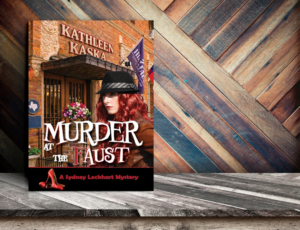
Kathleen Kaska writes the award-winning Sydney Lockhart Mystery Series set in the 1950s and the Kate Caraway Animal-Rights Mystery Series. She also writes mystery trivia, including The Sherlock Holmes Quiz Book. Her Holmes short story, “The Adventure at Old Basingstoke,” appears in Sherlock Holmes of Baking Street. She founded The Dogs in the Nighttime, a scion of The Baker Street Irregulars.