
A Voice That Resonates
A Voice That Resonates
If asked to name writers with a distinct voice, I could rattle off a list: F. Scott Fitzgerald, Karen Blixen, Raymond Chandler, Jane Austen, Harper Lee, Stephen King, John Irving, Anne Rice. Defining “voice,” however, is far more elusive.
When I first started writing fiction, I went to a writers’ conference where the presenter described voice as the emotional connection between the writer and the reader. That idea stayed with me—and clarified something I had experienced but hadn’t named.
Early on, I focused on plot because I didn’t know how to build one. Voice barely registered until I picked up a novel by an unfamiliar author. It was his fourth book—and a bestseller. The characters carried me through more than four hundred pages. I immediately bought his earlier novels and struggled through them, finishing out of curiosity. The difference was unmistakable. In the fourth book, I could hear the characters’ voices. In the first three, I couldn’t. He hadn’t found it yet—or hadn’t learned how to sustain it. Since then, I’ve read everything he’s written. He’s now a favorite.
Voice isn’t plot, character, or setting—though it brings all three to life. It’s the writer’s way of seeing and presenting the world on the page.
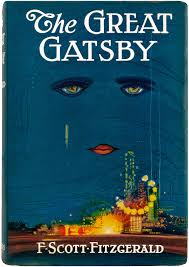
Consider The Great Gatsby. From its opening lines, Nick Carraway speaks with an intimate, reflective ease, as if confiding across a café table. That conversational authority draws the reader in and keeps them engaged.
In To Kill a Mockingbird, Scout Finch views injustice through a child’s honest, questioning perspective. Her voice not only narrates the story— it amplifies its moral impact.
And in the novel Rebecca the narrator—the second Mrs. de Winter—voice carries a quiet melancholy that settles over the entire novel, shaping how we experience Manderley before we fully see it.
Last night I dreamt I went to Manderley again. It seemed to me I stood by the iron gate leading to the drive, and for a while I could not enter, for the way was barred to me. There was a padlock and a chain on the gate. I called in my dream to the lodge-keeper and had no answering and peering closer to the rusted spokes of the gate I saw that the lodge was uninhabited.
A strong plot, character, and setting are essential. But voice is what makes a story personal—what transforms pages into an experience. It’s the difference between a book we finish and one we remember. It’s the icing on the cake.
What are your favorite books with strong voices that speak to you?