by Paula Gail Benson
The Bethlehem Writers Group (BWG), originally based in Bethlehem, Pennsylvania, but now having members across the United States, has done a great deal to support writers at all levels. Its quarterly online publication, the Bethlehem Writers Roundtable (BWR), pays contributors and sponsors an annual short story contest.
I have a special place in my heart for this group because it published my first online story. When I was offered the opportunity to join the critique partners, I didn’t hesitate.
The information in this post and a related interview that will appear tomorrow in Writers Who Kill, show how this group has rallied behind one of its own to publish his young adult novel and cheer on his success. Carol L. Wright, Marianne H. Donley, and Dianna Sinovic are the organizers, formatters, and editors behind the scenes who worked so diligently to turn Peter J. Barbour’s excellently written Fifteen Keys into a published work. Here’s a few words with this remarkable team of writers.

What is the BWG?
CAROL L. WRIGHT: We call ourselves “a community of mutually supportive authors,” and, at our heart, we are a critique group that meets regularly to give feedback to fellow members on their writing. We’ve stayed small so we can be sure to give everyone an opportunity to share their work. At our meetings, we review entire short stories or chapters of works in progress. If a member wants us to review an entire manuscript, we call special “long-form” meetings where we go chapter-by-chapter, or page-by-page, giving feedback on the whole work: pacing, characterization, story arc, etc. As we critique the work of others, we become better writers ourselves.
As our mission grew to include publishing books and a literary magazine and running an annual Short Story Award competition, we realized we had to formalize our critique group into an LLC. We’ve now published eight of our trademarked “Sweet, Funny, and Strange” anthologies as well as several other books, including our latest: Fifteen Keys, by BWG member Peter J. Barbour.

Carol L. Wright
How was BWG formed?
CAROL L. WRIGHT: In the spring of 2006, the manager of the Bethlehem, PA Barnes & Noble asked me if I would like to start a writers’ group for the store. I had been a book editor some years before, had one published book, and had taken several writers’ courses and workshops, so I figured, why not? At that first meeting, four people came. Only one of them ever returned, but more people continued to join us. Over time we outgrew Barnes & Noble and became the independent group we are today. See more about us at: https://sites.google.com/view/bethlehemwritersgroupllc/home.
What is the BWR?
CAROL L. WRIGHT: In the fall of 2011, we began publishing an online literary magazine: Bethlehem Writers Roundtable (BWR). We currently publish quarterly and seek unpublished short stories (2000 words or fewer) and poetry. Each issue also has several features including interviews and “Literary Learnings.” Currently, we offer $50 for featured stories, $20 for additional stories, and $10 for the poems we publish. For more information, see our submissions page at: https://bwgwritersroundtable.com/submissions-contacts/
Tell us about the annual short story contest.
CAROL L. WRIGHT: Each January, we open our annual Bethlehem Writers Roundtable Short Story Award competition on a specific theme. We recruit a guest judge to select our winners who receive a cash award and an offer of publication either in a forthcoming anthology or in Bethlehem Writers Roundtable. We recently announced our 2025 winners selected by our guest judge, author Adrian Tchaikovsky. You can see the winner list at: https://bwgwritersroundtable.com/short-story-award-2/
Our next contest opens on January 1, 2026, on the theme of science fiction and fantasy for our upcoming anthology, Illusive Worlds: Sweet, Funny, and Strange Tales of Science Fiction and Fantasy due to come out in late 2026. More details about our 2026 competition will be available in our fall issue of Roundtable.
How did you contribute to Fifteen Keys?
CAROL L. WRIGHT: There are myriad tasks required to put out a book, and I’ve been privileged to work with a wonderfully talented team to bring out Fifteen Keys. My role was primarily organizational, making sure everything worked together to produce a book of high quality and appearance, at a price that would be both competitive and profitable, on our optimal timeline. I am so grateful to our BWG publishing team, especially Marianne H. Donley and Dianna Sinovic, and to our author, Peter J Barbour, who was not only terrific to work with, but was a true partner in the publishing process.
What is your hope for Fifteen Keys?
CAROL L. WRIGHT: I’ve been extremely gratified about the excitement generated by the publication of Fifteen Keys. It is not only an Amazon bestseller but has received some very high praise in reviews. Of course, any publisher wants the books they publish to sell, but this one is very special. My hopes for it are that it will not only entertain its readers but will help middle-grade and early teens to navigate the sometimes-turbulent years of adolescence when they struggle with their identities and values. The story and its lessons can help teens, and adults, as they figure out who they want to be and what kind of life they hope to live
What anthologies has the BWG produced and have they won awards?
MARIANNE H. DONLEY: BWG has published eight Sweet, Funny, and Strange Anthologies. They include:
** A Christmas Sampler: Sweet Funny, and Strange Holiday Tales,
* Once Around the Sun, Sweet, Funny, and Strange Tales for All Seasons,
* A Readable Feast: Sweet, Funny, and Strange Tales for Every Taste,
Once Upon a Time: Sweet, Funny, and Strange Tales for All Ages,
*** Untethered: Sweet, Funny, and Strange Tales of the Paranormal,
** Fur, Feathers and Scales, Sweet, Funny, and Strange Animal Tales,
*** An Element of Mystery: Sweet, Funny, and Strange Tales of Intrigue,
And our newest: *Season’s Readings: MORE Sweet, Funny, and Strange Holiday Tales
We are working on our 9th Anthology Illusive Worlds: Sweet, Funny, and Strange Tales of Science Fiction and Fantasy
Those marked with one * were finalists in the Next Generation Indie Book Award
Those Marked with two * won TWO Next Generation Indie Book Award
Those Marked with three * were finalists in both the Next Generation Indie Book Award and Killer Nashville Silver Falchion Award

How were the anthology stories selected?
MARIANNE H. DONLEY: All members of BWG are eligible to submit stories to our anthologies. These stories MUST be workshopped at one of our regular BWG critique meetings before being submitted to the anthology.
Stories from authors who are not BWG members are submitted to our annual Short Story Award. We have a celebrity judge each year who selects the winners. First Place always gets considered for publication in our anthology. Sometimes we consider Second and Third Place as well.
Has the BWG published other fiction besides the anthologies?
MARIANNE H. DONLEY: Besides the Sweet, Funny, and Strange Anthologies we have publish Bethlehem Writers Roundtable and online magazine. We publish four issues every year and two of them are open to non BWG authors (and we pay for fiction and poetry). Submissions for our Winter 2026 issue will open on July 1, 2025.
We have also published, Let It Snow a collection of stories from Bethlehem Writers Roundtable, Off the Rails: A Collection of Weird, Wicked, and Wacky Stories by Jerome W. McFadden and Fifteen Keys by Peter J Barbour.
How did you contribute to Fifteen Keys?
MARIANNE H. DONLEY: I formatted Fifteen Keys for both print and ebook. I used a very handy program called Vellum, but still placing the illustrations was a bit tricky. Carol, Pete, and I did a final Zoom call where I shared my Vellum screen. They could weigh in on where a particular illustration looked best. That Zoom call was very helpful.
Using Pete’s painting, I also formatted the front cover. Carol used that design and completed the back cover and the spine. Fifteen Keys was very much a group project.
What is your hope for Fifteen Keys?
MARIANNE H. DONLEY: I hope every child between the ages of 10 to 99 reads and enjoys Fifteen Keys. It’s an entertaining, positive, and uplifting story that is appealing to adults as it is to kids.
I also hope Pete sells a bazillion copies and gets an interview from Oprah Winfrey.

Dianna Sinovic
You have special training as a journalist and writing coach. Why did you decide to become a writing coach?
DIANNA SINOVIC: I’ve been an editor for pretty much my entire career and enjoyed the one-on-one aspect of it. When I heard about book coaching, it seemed like the next logical step—to do more than edit, to help a writer bring their ideas to the page.
How has your training as a journalist and writing coach helped you with your own writing?
DIANNA SINOVIC: My training as a journalist has helped in doing research for my fiction, since research is second-nature for a reporter. My training as a book coach has definitely helped with my own writing. I’m less of a pantser than I used to be and see the value in taking time to tease out aspects such as the point of my story and the big picture before I dive into writing individual scenes and chapters.
When did you begin working with Peter on Fifteen Keys and in what capacity, as coach or editor or both?
DIANNA SINOVIC: I served as copyeditor for Fifteen Keys; the book had gone through several rounds of editing on Pete’s part, based on feedback from BWG members who read the entire manuscript in a “long-form” session.
Do you provide developmental editing as well as line editing, copy editing, and proofreading?
DIANNA SINOVIC: Yes, for my own business, Diasin Books, I provide developmental editing and manuscript evaluations, as well as line editing, copy editing and proofing.
What is your hope for Fifteen Keys?
DIANNA SINOVIC: My hope for the book is that it read and enjoyed widely by teens and parents in discussions about the 15 lessons laid out within it.
When did you join BWG?
PETER J. BARBOUR: I joined BWG approximately 2018.
How did joining BWG affect your process in writing Fifteen Keys?
PETER J. BARBOUR: BWG has had a positive influence on all of my writing. I value the kind critique I receive when we read a piece I wrote at our bimonthly meetings. Show don’t tell has made my prose come alive. I think I’ve learned a lot since I joined the club.
How did you decide to seek publication through BWG?
PETER J. BARBOUR: I watched BWG produce several anthologies. I trusted that my work would be treated professionally and with a personal touch. I was right.
Did you do the illustrations after the writing was complete or while it was ongoing?
PETER J. BARBOUR: I did the drawing after the writing was complete. I didn’t originally plan on illustrating the book. Carol and Marianne suggested I illustrate it. I’ve written and illustrated three children’s books, so I had experience with that.
BIOS:
Carol L. Wright escaped a career in law and academia to write Mysteries and More. Among other works are an award-winning traditional mystery, DEATH IN GLENVILLE FALLS, an award-winning novelette, Apple, Table, Penny . . . Murder, and a collection of short stories in a variety of genres, A Christmas on Nantucket and other stories. She is a founding member of the Bethlehem Writers Group, LLC, a life member of Sisters in Crime and the Jane Austen Society of North America, and a member of SinC Guppies and Pennwriters. Find out more on her website, http://carollwright.com/.
Marianne H. Donley writes fiction from short stories to funny romances and quirky murder mysteries fueled by her life as a mom and a teacher. She makes her home in Pennsylvania with her husband, son, and fluffy dog. Marianne blogs at A Slice of Orange. She is an editor of BWG anthologies. She’s also a member Sisters in Crime and Charmed Writers.
Dianna Sinovic is an author of speculative fiction, horror, and mystery, as well as a certified book coach and editor. Her short stories have been published in a number of anthologies, including those from the BWG, and her flash fiction appears monthly on the blog A Slice of Orange. Her paranormal thriller, SCREAM OF THE SILENT SUN, is slated for release in 2025. She’s a member of the Horror Writers Association, Sisters in Crime, and the National Association of Memoir Writers. In BWG, she serves on the executive committee. Connect with her via her website, www.dianna-sinovic.com, or on Instagram, @dsinovic94.

Peter J. Barbour
Neurologist Peter J Barbour, M.D. retired his reflex hammer to become a full-time writer and illustrator. He is actively involved in Mussar, an ancient study of Jewish ethics, virtues, and mindfulness leading to character development. He participates in the process as a group facilitator and brings Mussar’s timeless wisdom to the writing his latest publication, FIFTEEN KEYS, an action-adventure, coming-of-age novel for middle grade and young teens. His other works include a memoir, LOOSE ENDS, three illustrated children’s books: GUS AT WORK, OSCAR AND GUS, and TANYA AND THE BABY ELEPHANT, and over forty short stories that have appeared in e-journals and magazines. One of them, “The Fate, of Dicky Paponovitch,” earned him Raconteur of the Month from Susan Carol Publishing Company. He belongs to the Bethlehem Writers Group, LLC, and the Society of Children’s Book Writers and Illustrators. He lives in Oregon with his photographer wife. They enjoy traveling and the outdoors.


 I called that a Happy Happenstance.


 Creatures of Habit – An Author’s Writing Habits by Debra H. Goldstein
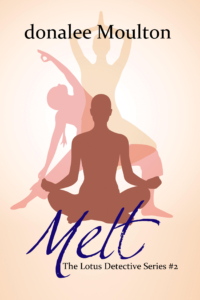
 Ten yogis are in various stretches, twists, meditations, and yawns when Kristi walks back into the studio. She forces a smile, and the smile spreads of its own accord into her muscles, her bones, her heart. This is her sanctuary. She is at home here. The rawness she feels is still there, but it has moved to the edges now.
Today’s bind is a yogi squat. One leg is extended; the other is bent. One arm goes under the bent leg; the other goes around the back until they meet. In theory. Lexie can’t wait until this mont
Kristi takes this opportunity to explain the benefits of binds. “These poses allow muscles to release, relax, and open. You can go deeper. You can also focus on alignment and flexibility while building strength.” She breathes in.
“Dear God,” thinks Lexie, “there’s more.”
“If you make her stop,” Bonnie says to her higher spirit, “I will give you my first born.”
Kristi continues to talk, and smile. “Remember to breathe when you’re in the bind. Don’t tighten. And come out of the bind if you feel any pain. Go to your edge, but no further.”
Archina isn’t sure where her edge is, but she fears she left it behind several minutes ago. Woo Woo unbinds. She believes in the mind, body, spirit philosophy of yoga, but enough of this shit.
If it’s one thing Kristi knows, it’s how to read a room full of yogis. The edge has been reached. She tells everyone to stand up, give themselves a hug, and as a special treat, this morning there will be an extended savasana that includes a meditation. (Kristi always has a guided meditation on her phone.) The room smiles, even Bhodi. Eleven bodies move from the vertical to the horizontal. Archina grabs a blanket; Lexie puts a bolster under her knees; Kevin, the newest member of the group, reaches for his socks.
The Dalai Lama is midway through his 13-minute meditation on the disturbed mind when the studio door opens. Twelve faces turn to look at the human who belongs to the shoes that just clomped into their zen-like state. All twelve agree, zen is overrated. Standing at the entranceway to the studio is a 6’2” man with ripped muscles, ebony skin, and a three-day stubble. “He can bind with me any time he wants,” Kevin thinks.
It takes the intruder less than a second to realize he has interrupted the class at an inopportune time. “I’m so sorry,” he says. “I thought class was over.”
“We’re running a little late,” says Kristi in a voice the class has not heard before.
“Please continue,” says Ripped. “I will come back.”
“Too late now,” says Bhodi. He gets the evil eye from most of the class.
“How can we help?” says Kristi introducing herself.
Ripped steps forward, hand extended. “My name is Michael …”
Before he can continue, Woo Woo interjects. “No, it isn’t. Your name is Lewis.”
The demi-god looks at her in surprise. He’s not alone. The whole class stares at Woo Woo.
“I’m so sorry,” Woo Woo says turning a deep magenta. “I don’t know why I said that.” But she does. Sometimes a thought, an image, a tickertape runs through Woo Woo’s mind. She knows it’s a message, and she usually tries to convey it. On this occasion, she wishes she hadn’t.
Michael turns back to Kristi, leader of the pack. “Terrell. Michael Terrell.”
“Did you want to join the class?” Bhodi asks. The snark is obvious.
“Please,” thinks Kevin. “Please join.”
Terrell smiles. “It’s on my bucket list, but today I’m here for a less pleasant reason. I’m a detective with the Halifax Police Department. I’m looking into a watch that seems to have gone missing from the gym.”
Kristi tries to control her breathing. No one else tries to control anything. Lexie’s eyes fly wide open. Charlene gasps. Bonnie recoils.
Honey farts.
Ten yogis are in various stretches, twists, meditations, and yawns when Kristi walks back into the studio. She forces a smile, and the smile spreads of its own accord into her muscles, her bones, her heart. This is her sanctuary. She is at home here. The rawness she feels is still there, but it has moved to the edges now.
Today’s bind is a yogi squat. One leg is extended; the other is bent. One arm goes under the bent leg; the other goes around the back until they meet. In theory. Lexie can’t wait until this mont
Kristi takes this opportunity to explain the benefits of binds. “These poses allow muscles to release, relax, and open. You can go deeper. You can also focus on alignment and flexibility while building strength.” She breathes in.
“Dear God,” thinks Lexie, “there’s more.”
“If you make her stop,” Bonnie says to her higher spirit, “I will give you my first born.”
Kristi continues to talk, and smile. “Remember to breathe when you’re in the bind. Don’t tighten. And come out of the bind if you feel any pain. Go to your edge, but no further.”
Archina isn’t sure where her edge is, but she fears she left it behind several minutes ago. Woo Woo unbinds. She believes in the mind, body, spirit philosophy of yoga, but enough of this shit.
If it’s one thing Kristi knows, it’s how to read a room full of yogis. The edge has been reached. She tells everyone to stand up, give themselves a hug, and as a special treat, this morning there will be an extended savasana that includes a meditation. (Kristi always has a guided meditation on her phone.) The room smiles, even Bhodi. Eleven bodies move from the vertical to the horizontal. Archina grabs a blanket; Lexie puts a bolster under her knees; Kevin, the newest member of the group, reaches for his socks.
The Dalai Lama is midway through his 13-minute meditation on the disturbed mind when the studio door opens. Twelve faces turn to look at the human who belongs to the shoes that just clomped into their zen-like state. All twelve agree, zen is overrated. Standing at the entranceway to the studio is a 6’2” man with ripped muscles, ebony skin, and a three-day stubble. “He can bind with me any time he wants,” Kevin thinks.
It takes the intruder less than a second to realize he has interrupted the class at an inopportune time. “I’m so sorry,” he says. “I thought class was over.”
“We’re running a little late,” says Kristi in a voice the class has not heard before.
“Please continue,” says Ripped. “I will come back.”
“Too late now,” says Bhodi. He gets the evil eye from most of the class.
“How can we help?” says Kristi introducing herself.
Ripped steps forward, hand extended. “My name is Michael …”
Before he can continue, Woo Woo interjects. “No, it isn’t. Your name is Lewis.”
The demi-god looks at her in surprise. He’s not alone. The whole class stares at Woo Woo.
“I’m so sorry,” Woo Woo says turning a deep magenta. “I don’t know why I said that.” But she does. Sometimes a thought, an image, a tickertape runs through Woo Woo’s mind. She knows it’s a message, and she usually tries to convey it. On this occasion, she wishes she hadn’t.
Michael turns back to Kristi, leader of the pack. “Terrell. Michael Terrell.”
“Did you want to join the class?” Bhodi asks. The snark is obvious.
“Please,” thinks Kevin. “Please join.”
Terrell smiles. “It’s on my bucket list, but today I’m here for a less pleasant reason. I’m a detective with the Halifax Police Department. I’m looking into a watch that seems to have gone missing from the gym.”
Kristi tries to control her breathing. No one else tries to control anything. Lexie’s eyes fly wide open. Charlene gasps. Bonnie recoils.
Honey farts.