

I Failed a Lie Detector Test
I’ve confessed this to only a couple of people, but I’m now making it public: I failed a lie detector lie detector (polygraph) test.
This happened in the early ’80s, when I was young and naïve—long before I began writing crime fiction. Back then, I believed lie detector tests were infallible. When I failed, I didn’t just feel embarrassed—I questioned my own sanity. Was I a chronic liar and didn’t know it?
Years later, as a mystery writer, I know better.
It started when a friend asked me to bartend Sunday nights at a pricey hotel in downtown Austin. Someone had quit without notice, and he was in a bind. I’d bartended in college, so I agreed to help.
There was just one catch: new employees had to take a lie detector test.
No problem, I thought. It might even be interesting.
It was—but not in the way I expected.
I was sent to a private company across town. My internal alarms went off the moment I saw the man who would administer the test. “Creepy” is putting it mildly. He had greasy, dyed-black hair, dirt under his fingernails, and a stained dress shirt unbuttoned halfway down, exposing a thicket of chest hair. Cheap rings crowded his fingers.

At the time, I didn’t yet have the instincts of a crime writer—but I had enough sense to feel uneasy.
When he took my hand to attach the sensors, I shivered.
The questions began.
Had I ever stolen from an employer? No.
Had I ever been convicted of a crime? No.
Had I ever taken illegal drugs? No.
Then he lingered on the drug question, circling back again and again, rephrasing it each time. Today, I’d recognize that tactic immediately—pressure the subject, unsettle them, look for physiological spikes. But at the time, I was simply confused.
Finally, he asked if I was currently using drugs. I said I’d recently taken antibiotics and occasionally used Motrin.
He moved on, then returned to the same line of questioning.
If I were writing this scene today, I’d have my detective note the repetition, the shifting language, the way the examiner controlled the rhythm of the interrogation. I’d build tension there—because that’s where it lives.
But back then, I was just irritated—and certain of one thing: I had told the truth.
The following Sunday, as I was getting ready for work, my friend called.
I had failed the test.
If this were fiction, that would be the inciting incident—the moment everything tilts. The innocent protagonist accused. The system revealed as flawed. The first crack in what’s supposed to be objective truth.
My friend told me not to worry, said I could come to work anyway, maybe even retake it later.
I told him not to bother. I wasn’t coming back.
Years later, after writing crime novels and researching investigative techniques, I learned what I wish I’d known then: lie detector tests don’t always detect lies. They detect stress.
And stress can come from many places:
- Anxiety
- Fatigue or illness
- Medication
- Confusing or manipulative questioning
- Even the examiner’s own bias
In other words, the very conditions designed to “find the truth” can distort it.
That realization changed the way I think about interrogation scenes. In fiction, a lie detector can be a powerful tool—but not because it reveals truth. Because it reveals vulnerability. Because it can be wrong.
And wrong can be dangerous.
I recently discovered that lie detector tests were actively used in courtrooms in the 1950s—the world of my Sydney Lockhart mysteries. Which raises a delicious possibility.
What happens when Sydney—sharp, observant, and far less naïve than I was—is strapped into that chair? When she knows the machine is flawed, but the people watching believe it isn’t?

That’s not just a test.
That’s a setup.
And in crime fiction, setups are where the real story begins. I can’t wait to put Sydney in this uncomfortable situation and then watch her wiggle out of it. She’d do a much better job than her creator.
Have you ever been falsely accused?


 In my new act, I could deliver zingers about the idiots who, after scraping tidbits from my website and other urls where my author info resides, still get it wrong. Yes, “Rachel,” I did once work at a prestigious film organization, but it was not the American Academy of Dramatic Arts.
 All of this seemingly unceasing, unscrupulous, and pitiful effort to scam unsuspecting authors is big a waste of time, especially my time, when I could be working on my next book instead of having to daily flush this spam down the toilet. Anyone with a working idea of how to eliminate the constant barrage, please let me know. There may even be a free book in it for you.
 … and
… and 


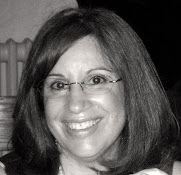 USA Today and Amazon bestselling and award-winning author
 After venting my frustration over a personal relationship, an older and wiser woman of few words, responded, “When you argue with a fool, there are two fools arguing.” She saved me from allowing an untenable situation to ruin my life. It’s been a lesson I’ve returned to time and again.
 “Why not resolve to do things that you really secretly want to do,” he asks, like “eat some chocolate every day?” Wise man.
 By Lois Winston
 I called that a Happy Happenstance.


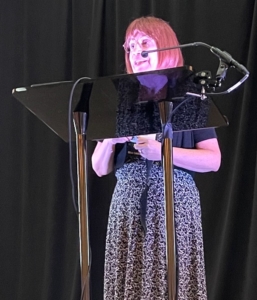
 A Day in the Life of Cozy Mystery Author Lois Winston
 By the time I skim all the emails and answer the ones that need answering, it’s time for a second cup of coffee. But there are days when I need that second cup before I’ve finished with the overnight emails. While the coffee is brewing, I throw in a load of wash.
 USA Today and Amazon bestselling and award-winning author Lois Winston writes mystery, romance, romantic suspense, chick lit, women’s fiction, children’s chapter books, and nonfiction. Kirkus Reviews dubbed her critically acclaimed Anastasia Pollack Crafting Mystery series, “North Jersey’s more mature answer to Stephanie Plum.”