Killer Nashville Redux by Saralyn Richard

The Killer Nashville conference is coming up next month, and I’m going. Getting ready has brought back memories of my first KN conference, and this article I wrote afterwards. It explains why, like the swallows to Capistrano, I’m eager to return.

How the Killer Nashville Conference Changed My Life as an Author

The benefits of professional conferences are unquestionable. I attended dozens as an educator, and I participated in hosting some when I was a school improvement consultant. I know what goes into planning them, and I consider myself an authority when evaluating them.

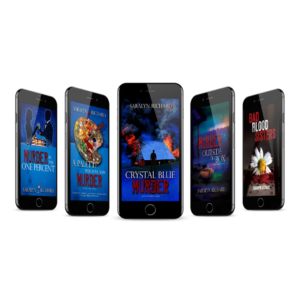
That said, I had high expectations when I attended my first-ever writing conference, Killer Nashville, in 2019. I had heard good things about Killer Nashville. I was expecting to learn a lot from the assemblage of diverse and qualified speakers—authors, agents, and others in the publishing industry. I knew I would meet people and participate on panels and have a good time. My first mystery novel, MURDER IN THE ONE PERCENT, was up for a Silver Falchion for police procedurals and as the readers’ choice. So I packed my suitcase and hopped on an airplane, full of anticipation.

What I didn’t expect was that this conference would change my life as an author. I know that’s high praise, but it’s not hyperbole. What did Killer Nashville do to ignite my professional growth? I’m bursting with examples, and they all have to do with people.

In 2019, the guest authors were Joyce Carol Oates, David Morrell, and Alexandra Ivy. As a conference participant, I had the opportunity to observe and interact with each of these authors numerous times. The quality of content in their interviews and workshops was high, and the environment was cozy enough to allow for meaningful dialogue. I had admired Joyce Carol Oates’s writing for many years. I’d even taught many of her short stories. It was a special thrill to learn that so many big ideas had emanated from such a petite person, a writer focused not on her past works, but on her future ones. “Write about what matters,” she expounded. Her utter lack of timidity was inspirational. David Morrell continued to inspire. He pointed out that “reading is the only way to develop empathy,” and it is the writer’s obligation to evoke the best human emotions from readers. Alexandra Ivy spoke about the fear many authors struggle with, but she said, “Writing from your heart is the only way to find your voice.”

Here I am, years later, still quoting these acclaimed authors, but, more importantly, I’ve taken to heart their advice. My subsequent mystery novels march boldly into areas and topics that have relevance to society—PTSD, LGBT, me too, race relations—to name a few. The guest authors’ remarks showed me how important it is to write from the soul.

The guest authors weren’t the only people who had a positive effect on my writing. Also on board were five friendly and helpful literary agents. I chatted informally with several of them at the Friday night “Shine ‘n’ Wine” event, and I attended a session in which they explained how they work and what they look for in submissions. I also attended a pitch session where I received a personalized critique from two agents. Although these sessions didn’t result in my snagging an agent, they provided me with something more important—a critical view of the process of moving a story to publication in a highly competitive market. Now I’m much more conscious of voice and deep point of view than I was before, and I have a broader view of my audience.

Next, I participated in scores of special sessions and panel discussions. Most of these were in small group settings, so I was able to get to know the presenters and ask questions. I presented at several sessions, as well, and was the group leader for one. Through these sessions I met a lot of fellow authors. We exchanged cards and contact information, shared common experiences, and formed networks. My social media platform exploded, and when the time came to seek authors to read my next books with an eye toward writing review blurbs, these were my go-to people. I have done a lot of cross-promoting with authors I met at Killer Nashville, and we have continued to encourage each other and celebrate victories together.

Speaking of victories, the awards ceremony at Killer Nashville was thrilling. So many contending books were represented as finalists in various categories, and so many authors received warm attention for their writing. That moment when my name and my book title were called out in two categories—it felt like the culmination of a lifelong dream. That Murder in the One Percent won the Reader’s Choice Silver Falchion for 2019 was the ultimate acknowledgment that I’d achieved something meaningful as an author. The honors went a long way toward motivating me to work harder to improve my craft, to connect with readers again and again.

One special feature of Killer Nashville was the mock crime scene set up by Dan Royce, formerly of the Tennessee FBI. Throughout the conference, participants were invited to examine clues laid out in a hotel suite. The murder scene represented a real case, and it was my job to identify which items were pertinent to solving the case, decide which tests needed to be performed on these items, and form a conclusion as to who killed the victim, how the killing occurred, and what the motive was. It was a real-live game of Clue. It was fun to compete with other mystery authors to solve the murder correctly, but I also learned a lot about forensics, the precision required during investigations, and the costs of the crime-solving methodology. I was able to transfer this knowledge to my writing, as well.

All these experiences combined to make my time at Killer Nashville one of the most worthwhile weekends of my writing career. I would be remiss if I didn’t mention the glue that held all of the components of the conference together, the Killer Nashville staff. Each staff member was friendly and helpful, throughout the conference, but Liz Gatterer did so many things to make my experience go smoothly from start to finish. Her organizational skills and people skills really shone. Finally, huge accolades went to Clay Stafford. His vision and commitment to Killer Nashville have made everything else work together like a perfectly performed play. Clay’s energy and enthusiasm were contagious, and he made every one of us feel like family.

What was the secret recipe for a life-changing writers’ conference? Equal parts of class, spirit, inspiration, support, and Southern hospitality. Stirred until smooth. Gently baked with caring hands. Rendered super cool, and served repeatedly over time. Can you tell—I can’t wait to go back!

Have you ever been to a writers’ conference? Will I see you at KN 2025? Hope so!


Award-winning mystery and children’s book author, Saralyn Richard loves being a Stiletto Gang member. A former urban high school educator, she’s living the dream, connecting with readers through her books: the Detective Parrott mystery series, the Quinn McFarland mystery series, A Murder of Principal, and Naughty Nana. Saralyn participates in International Thriller Writers and Mystery Writers of America, and she teaches creative writing. Website: https://saralynrichard.com.


Do You Play Games?

In my ongoing effort to declutter, I’ve been taking books to the Family Garden in the park and filling the Little Library there. I’m always thrilled when the last batch I loaded has been taken, and I’m happy to fill it up again. 

But on occasion, there are a few oldies I just can’t part with, like my very yellowed paperback edition of Games People Play, by Eric Berne. I recently spotted it on a shelf behind two other rows of books. (Yes, my bookcases are overburdened, no matter how much I try to lighten the load.)

Mind Games

Berne’s New York Times bestseller was based on his theory of Transactional Analysis, a cultural psychology phenomenon he introduced in the early 60’s. I encountered the book years later when it was assigned reading for an acting class, and again just recently, among other text books from my early days as a theater nerd.

Inside its yellowed cover, I had dutifully underlined paragraphs of Berne’s theories with a red ink pen. Over the years, several pages became unglued. But they were all accounted for, and chock-full of the kind of mind games that define unhealthy interpersonal transactions (or, in non-psychobabble: toxic relationships).

There are 36 “games” identified in its chapters, spread among seven classifications. “Life Games” include Kick Me, Now I’ve Got You, You SOB, and See What You Made Me Do, among others. These are followed by “Marital Games,” “Party Games” (not the children’s party variety) and “Sexual Games,” followed by three more categories. You can see some of them listed on the book’s back cover.

As a treatise on psychotherapy, the point is to get patients to recognize harmful patterns of mind games that are present in their own lives, and eventually, to learn how to stop them, whether the patient is the player or the played-upon. In acting class, it was meant to help us decode the depths of a character’s motivation.

The book is way too technical to be anything but a slog. But on reflection, I realize that I’ve internalized much of its wisdom over the years. It definitely helps me create more fully rounded characters in my writing, especially for villains like E.B. Odom in The Body Business.

And in real life, thankfully, I’ve managed to avoid—or at least identify and remove myself from—most situations in which I might be feeling “played.”

Fun Games

Speaking of more pleasant games, my favorite is the one I play with my husband almost every day at lunch, when I take a break from writing. As I wind down the morning, he’s making a delicious chopped salad which we share over a backgammon table. We’re pretty evenly matched at this game, and the competition’s friendly. Afterward, I’m refreshed for the rest of the afternoon.

Any kind of healthy game can serve as an antidote to any toxic thought gremlins that invade our tranquility. Lots of people I know play Wordle or some variation of it to relieve stress. Group games like Bridge, Poker, and Mahjong are popular again, too.

It may be impossible to permanently shut the woes of the world away, but there’s no harm in trying to raise the fun quotient for a few moments of peace.

Of course, you could also lose the blues by reading a good book!

When you’re plagued by toxic mind games, what do you do to stay calm?

Gay Yellen’s award-winning writing career began in magazine journalism.  She later served as the contributing editor for the international thriller, Five Minutes to Midnight (Delacorte), which debuted as a New York Times “Notable.”

Her multi-award-winning Samantha Newman Mystery Series is full of suspense, with touches of romance, heart, and humor. Available on Amazon or through your favorite bookseller.

A Labor of Love: Working to Publish a Fellow Author’s Book

by Paula Gail Benson

The Bethlehem Writers Group (BWG), originally based in Bethlehem, Pennsylvania, but now having members across the United States, has done a great deal to support writers at all levels. Its quarterly online publication, the Bethlehem Writers Roundtable (BWR), pays contributors and sponsors an annual short story contest.

I have a special place in my heart for this group because it published my first online story. When I was offered the opportunity to join the critique partners, I didn’t hesitate.

The information in this post and a related interview that will appear tomorrow in Writers Who Kill, show how this group has rallied behind one of its own to publish his young adult novel and cheer on his success. Carol L. Wright, Marianne H. Donley, and Dianna Sinovic are the organizers, formatters, and editors behind the scenes who worked so diligently to turn Peter J. Barbour’s excellently written Fifteen Keys into a published work. Here’s a few words with this remarkable team of writers.

What is the BWG?

CAROL L. WRIGHT: We call ourselves “a community of mutually supportive authors,” and, at our heart, we are a critique group that meets regularly to give feedback to fellow members on their writing. We’ve stayed small so we can be sure to give everyone an opportunity to share their work. At our meetings, we review entire short stories or chapters of works in progress. If a member wants us to review an entire manuscript, we call special “long-form” meetings where we go chapter-by-chapter, or page-by-page, giving feedback on the whole work: pacing, characterization, story arc, etc. As we critique the work of others, we become better writers ourselves.

As our mission grew to include publishing books and a literary magazine and running an annual Short Story Award competition, we realized we had to formalize our critique group into an LLC. We’ve now published eight of our trademarked “Sweet, Funny, and Strange” anthologies as well as several other books, including our latest: Fifteen Keys, by BWG member Peter J. Barbour.

Carol L. Wright

How was BWG formed?

CAROL L. WRIGHT: In the spring of 2006, the manager of the Bethlehem, PA Barnes & Noble asked me if I would like to start a writers’ group for the store. I had been a book editor some years before, had one published book, and had taken several writers’ courses and workshops, so I figured, why not? At that first meeting, four people came. Only one of them ever returned, but more people continued to join us. Over time we outgrew Barnes & Noble and became the independent group we are today. See more about us at: https://sites.google.com/view/bethlehemwritersgroupllc/home.

What is the BWR?

CAROL L. WRIGHT: In the fall of 2011, we began publishing an online literary magazine: Bethlehem Writers Roundtable (BWR). We currently publish quarterly and seek unpublished short stories (2000 words or fewer) and poetry. Each issue also has several features including interviews and “Literary Learnings.” Currently, we offer $50 for featured stories, $20 for additional stories, and $10 for the poems we publish. For more information, see our submissions page at: https://bwgwritersroundtable.com/submissions-contacts/

Tell us about the annual short story contest.

CAROL L. WRIGHT: Each January, we open our annual Bethlehem Writers Roundtable Short Story Award competition on a specific theme. We recruit a guest judge to select our winners who receive a cash award and an offer of publication either in a forthcoming anthology or in Bethlehem Writers Roundtable. We recently announced our 2025 winners selected by our guest judge, author Adrian Tchaikovsky. You can see the winner list at: https://bwgwritersroundtable.com/short-story-award-2/

Our next contest opens on January 1, 2026, on the theme of science fiction and fantasy for our upcoming anthology, Illusive Worlds: Sweet, Funny, and Strange Tales of Science Fiction and Fantasy due to come out in late 2026. More details about our 2026 competition will be available in our fall issue of Roundtable.

How did you contribute to Fifteen Keys?

CAROL L. WRIGHT: There are myriad tasks required to put out a book, and I’ve been privileged to work with a wonderfully talented team to bring out Fifteen Keys. My role was primarily organizational, making sure everything worked together to produce a book of high quality and appearance, at a price that would be both competitive and profitable, on our optimal timeline. I am so grateful to our BWG publishing team, especially Marianne H. Donley and Dianna Sinovic, and to our author, Peter J Barbour, who was not only terrific to work with, but was a true partner in the publishing process.

What is your hope for Fifteen Keys?

CAROL L. WRIGHT: I’ve been extremely gratified about the excitement generated by the publication of Fifteen Keys. It is not only an Amazon bestseller but has received some very high praise in reviews. Of course, any publisher wants the books they publish to sell, but this one is very special. My hopes for it are that it will not only entertain its readers but will help middle-grade and early teens to navigate the sometimes-turbulent years of adolescence when they struggle with their identities and values. The story and its lessons can help teens, and adults, as they figure out who they want to be and what kind of life they hope to live

What anthologies has the BWG produced and have they won awards?

MARIANNE H. DONLEY: BWG has published eight Sweet, Funny, and Strange Anthologies. They include:

** A Christmas Sampler: Sweet Funny, and Strange Holiday Tales,

* Once Around the Sun, Sweet, Funny, and Strange Tales for All Seasons,

* A Readable Feast: Sweet, Funny, and Strange Tales for Every Taste,

Once Upon a Time: Sweet, Funny, and Strange Tales for All Ages,

*** Untethered: Sweet, Funny, and Strange Tales of the Paranormal,

**  Fur, Feathers and Scales, Sweet, Funny, and Strange Animal Tales,

*** An Element of Mystery: Sweet, Funny, and Strange Tales of Intrigue,

And our newest: *Season’s Readings: MORE Sweet, Funny, and Strange Holiday Tales

We are working on our 9th Anthology Illusive Worlds: Sweet, Funny, and Strange Tales of Science Fiction and Fantasy

Those marked with one * were finalists in the Next Generation Indie Book Award

Those Marked with two * won TWO Next Generation Indie Book Award

Those Marked with three * were finalists in both the Next Generation Indie Book Award and Killer Nashville Silver Falchion Award

How were the anthology stories selected? 

MARIANNE H. DONLEY: All members of BWG are eligible to submit stories to our anthologies. These stories MUST be workshopped at one of our regular BWG critique meetings before being submitted to the anthology.

Stories from authors who are not BWG members are submitted to our annual Short Story Award. We have a celebrity judge each year who selects the winners. First Place always gets considered for publication in our anthology. Sometimes we consider Second and Third Place as well.

Has the BWG published other fiction besides the anthologies?

MARIANNE H. DONLEY: Besides the Sweet, Funny, and Strange Anthologies we have publish Bethlehem Writers Roundtable and online magazine. We publish four issues every year and two of them are open to non BWG authors (and we pay for fiction and poetry).  Submissions for our Winter 2026 issue will open on July 1, 2025.

We have also published, Let It Snow a collection of stories from Bethlehem Writers Roundtable, Off the Rails: A Collection of Weird, Wicked, and Wacky Stories by Jerome W. McFadden and Fifteen Keys by Peter J Barbour.


How did you contribute to Fifteen Keys?

MARIANNE H. DONLEY: I formatted Fifteen Keys for both print and ebook. I used a very handy program called Vellum, but still placing the illustrations was a bit tricky. Carol, Pete, and I did a final Zoom call where I shared my Vellum screen. They could weigh in on where a particular illustration looked best. That Zoom call was very helpful.

Using Pete’s painting, I also formatted the front cover. Carol used that design and completed the back cover and the spine. Fifteen Keys was very much a group project.

What is your hope for Fifteen Keys?

MARIANNE H. DONLEY: I hope every child between the ages of 10 to 99 reads and enjoys Fifteen Keys. It’s an entertaining, positive, and uplifting story that is appealing to adults as it is to kids.

I also hope Pete sells a bazillion copies and gets an interview from Oprah Winfrey.

Dianna Sinovic

You have special training as a journalist and writing coach. Why did you decide to become a writing coach?

DIANNA SINOVIC: I’ve been an editor for pretty much my entire career and enjoyed the one-on-one aspect of it. When I heard about book coaching, it seemed like the next logical step—to do more than edit, to help a writer bring their ideas to the page.

How has your training as a journalist and writing coach helped you with your own writing?

DIANNA SINOVIC: My training as a journalist has helped in doing research for my fiction, since research is second-nature for a reporter. My training as a book coach has definitely helped with my own writing. I’m less of a pantser than I used to be and see the value in taking time to tease out aspects such as the point of my story and the big picture before I dive into writing individual scenes and chapters.

When did you begin working with Peter on Fifteen Keys and in what capacity, as coach or editor or both?

DIANNA SINOVIC: I served as copyeditor for Fifteen Keys; the book had gone through several rounds of editing on Pete’s part, based on feedback from BWG members who read the entire manuscript in a “long-form” session.

Do you provide developmental editing as well as line editing, copy editing, and proofreading?

DIANNA SINOVIC: Yes, for my own business, Diasin Books, I provide developmental editing and manuscript evaluations, as well as line editing, copy editing and proofing.

What is your hope for Fifteen Keys?

DIANNA SINOVIC: My hope for the book is that it read and enjoyed widely by teens and parents in discussions about the 15 lessons laid out within it.

When did you join BWG?

PETER J. BARBOUR: I joined BWG approximately 2018.

How did joining BWG affect your process in writing Fifteen Keys?

PETER J. BARBOUR: BWG has had a positive influence on all of my writing. I value the kind critique I receive when we read a piece I wrote at our bimonthly meetings. Show don’t tell has made my prose come alive. I think I’ve learned a lot since I joined the club.

How did you decide to seek publication through BWG?

PETER J. BARBOUR: I watched BWG produce several anthologies. I trusted that my work would be treated professionally and with a personal touch. I was right.

Did you do the illustrations after the writing was complete or while it was ongoing?

PETER J. BARBOUR: I did the drawing after the writing was complete. I didn’t originally plan on illustrating the book. Carol and Marianne suggested I illustrate it. I’ve written and illustrated three children’s books, so I had experience with that.

BIOS:

Carol L. Wright escaped a career in law and academia to write Mysteries and More. Among other works are an award-winning traditional mystery, DEATH IN GLENVILLE FALLSan award-winning novelette, Apple, Table, Penny . . . Murderand a collection of short stories in a variety of genres, A Christmas on Nantucket and other stories. She is a founding member of the Bethlehem Writers Group, LLC, a life member of Sisters in Crime and the Jane Austen Society of North America, and a member of SinC Guppies and Pennwriters. Find out more on her website, http://carollwright.com/.

Marianne H. Donley writes fiction from short stories to funny romances and quirky murder mysteries fueled by her life as a mom and a teacher. She makes her home in Pennsylvania with her husband, son, and fluffy dog. Marianne blogs at A Slice of Orange. She is an editor of BWG anthologies. She’s also a member Sisters in Crime and Charmed Writers.

Dianna Sinovic is an author of speculative fiction, horror, and mystery, as well as a certified book coach and editor. Her short stories have been published in a number of anthologies, including those from the BWG, and her flash fiction appears monthly on the blog A Slice of Orange. Her paranormal thriller, SCREAM OF THE SILENT SUN, is slated for release in 2025. She’s a member of the Horror Writers Association, Sisters in Crime, and the National Association of Memoir Writers. In BWG, she serves on the executive committee. Connect with her via her website, www.dianna-sinovic.com, or on Instagram, @dsinovic94.

Peter J. Barbour

Neurologist Peter J Barbour, M.D. retired his reflex hammer to become a full-time writer and illustrator. He is actively involved in Mussar, an ancient study of Jewish ethics, virtues, and mindfulness leading to character development. He participates in the process as a group facilitator and brings Mussar’s timeless wisdom to the writing his latest publication, FIFTEEN KEYSan action-adventure, coming-of-age novel for middle grade and young teens. His other works include a memoir, LOOSE ENDS, three illustrated children’s books: GUS AT WORKOSCAR AND GUS, and TANYA AND THE BABY ELEPHANTand over forty short stories that have appeared in e-journals and magazines. One of them, “The Fate, of Dicky Paponovitch,” earned him Raconteur of the Month from Susan Carol Publishing Company. He belongs to the Bethlehem Writers GroupLLC, and the Society of Children’s Book Writers and Illustrators. He lives in Oregon with his photographer wife. They enjoy traveling and the outdoors.

Rabbit Holes & Root Beer

Help! I’ve burrowed down another rabbit hole, and I’m stuck in a warren full of of too many possibilities. So deep am I into the research for my next book that I lost track of time. Which is to say, I almost forgot to write this post.

With no plan for what to post today, I turned to a holiday calendar for inspiration. Maybe this date in history would spark and idea. Boy, did it ever, though it sent me burrowing even deeper.

Turns out, today is National Black Cow Day. Curious as to why we should celebrate dark bovines, I clicked and learned that today’s Black Cow hoopla is all about a drink I’d always known as a root beer float—that delicious concoction of vanilla ice cream melting inside a tall, icy glass of root beer.

Okay, I thought, a fun subject, but not meaty enough to write about—until I read more, and discovered sassafras.

Sassafras is an incredibly fun word to say out loud. (Try it!)

It’s also the original ingredient in root beer, first marketed in America in the 19th century by Philadelphia pharmacist Charles Hires. But that’s not what kept me deep inside that rabbit hole.

When I discovered how important sassafras was to native tribes across the eastern half of what became America, I had to read on.

Here’s why: Attentive readers of my Samantha Newman Mystery Series may recall a mention in Book 3, The Body in the News, of the discovery of a possible ancient Native American campsite on Carter Chapman’s Serenity Ranch. With the idea of that as a plot point in the next book, I’ve been researching indigenous people who may have once inhabited the region.

Cornell Botanic Gardens

Who were these people? What did they eat? What tools did they use? Were they peaceful, or warlike? What might they have left behind at the campsite? I’ve already done a ton of research based on those questions, with more to go. And, to that, I now add this question: Did sassafras trees grow on their land?

Today I learned that every part of the sassafras tree was used by Native Americans from the east coast to west of the Mississippi into Central Texas. Roots from which root beer flavoring is derived were used as toothbrushes. An emetic made from bark was used in purification after funeral ceremonies. Leaves, rubbed onto bee stings, wounds, cuts, sprained ankles, and bruises, were thought to have healing properties.

Ground Sassafras/Cornell Botanic Gardens

Timber from the sassafras tree was used in construction, furniture making, and—when explorers learned of its utility— shipbuilding. By the early 18th century, sassafras became the second-most exported American product, right behind tobacco.

I could tell you everything I’ve learned about sassafras and the possible tribes who may once have hunted on what’s now Carter Chapman’s Serenity Ranch in my books, but I’m running out of time to get this posted.

Also, I have to get back to my research.

bittersoutherner.com

But I’ll leave the foodies among you with one more sassafras fact: its leaves were also dried and pulverized for use as a thickening and flavoring agent. If you’ve ever had true Cajun gumbo, you’ve enjoyed the flavor of filé, made from ground roots or leaves of the sassafras tree.

All of which makes me hungry for some gumbo right now. Maybe I’ll chase it with a few frosty swigs of a root beer float.

Happy National Black Cow Day to you, and may your day be full of fun adventures, down rabbit holes or wherever you roam.

Gay Yellen is the author of the award-winning

Samantha Newman Mystery Series including:

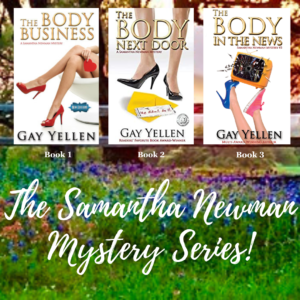
The Body BusinessThe Body Next Door, and The Body in the News!

Guest Author M.E. Proctor Bops into Historical Fiction Waters

Bopping in Historical Waters

By M.E. Proctor

When I was a kid, I wanted to be an archeologist. I had romantic notions about digging in the Valley of the Kings, excavating the ruins of Troy, or following Percy Fawcett in his search for the lost city of Z—David Grann’s book had not been published yet or I would have known that was a no-no … the critters … yikes.

Adventure books contributed to my vocabulary (quirky), grasp of world geography (off the beaten track), and crossword cracking (obscure). They also developed a long-lasting interest in history. To this day, these are the bookshop shelves I go to first. Logically, I should write historical fiction instead of contemporary crime.

I know why I don’t. The problem is twofold.

First, I’m an impatient obsessive. It’s not as contradictory as it sounds. A few months ago, I wrote a piece for an anthology. The story takes place in 1640 C.E. in Ireland. I spent two months hopping from one rabbit hole to the next, gathering documentation, deeper and deeper. All for what ended up being a 6,000 words story. That’s the obsessive in me. Imagine what would happen if I decided to write a book. My impatient self shivers at the thought. Forty months of research? Before writing the first line? The historical fiction writers reading this will probably say that it isn’t that bad, that once the material is assembled the sailing is smooth, or that I need to be more focused, more organized in the search.

That’s where my second problem kicks in. I’m curious. If something smells good in that rabbit hole, I’ll go for it. What happened in that place a hundred years before, or a hundred years later? What about this character? I don’t picture historical research as an academic pursuit. To me, it’s the most tempting of candy stores, a place of delights where I want to pitch my tent and stay. I might never put a line on paper.

And that’s why I will never write a historical fiction book.

Yet, Bop City Swing is out in the world.

I was tricked.

Russel Thayer contacted me last year and suggested we write a short story in collaboration. We had both published pieces set in California in the 1940s and 50s, classic crime, inspired by the ‘noir’ movies we both love. His recurrent character is gun-for-hire Vivian, nicknamed Gunselle, and I had stories with SFPD homicide detective, Tom Keegan. Let’s bring them together. We didn’t think it would turn into a book.

I didn’t consider 1951 ‘historical fiction’. It isn’t a hundred years old—the marker for antiques—and women’s skirts didn’t sweep the floor, a visual cue that says ‘costume drama’.

Russell and I talked about plot and locations, decided to build the story around a political assassination, didn’t know what would happen next, and started writing.

The need for research became obvious right away. We needed an election year in San Francisco. That set the date, 1951, when incumbent mayor Robinson ran for a second term. We also needed a realistic scene for the crime and chose the Palace Hotel, still standing downtown. A stroke of luck delivered period-accurate floor plans. We didn’t know it yet, but these plans would be critical for the plot. We also gathered city maps and photographs.

Compared to my excursion to the 17th century, none of the work done for Bop City Swing was time-consuming, and the rabbit holes were few. Because we let the plot and the characters dictate the story. When we bumped into an anachronism or a historical impossibility, we adjusted the narrative. Minor modifications: change of address, different music selection. Ironically, the trickier part was shedding some of the language flotsam movies left behind. In the final draft, period slang and hardboiled expressions that leaned too much into Chandlerian back alleys were cut. They’re period-correct, but 2025 readers might blink.

Bop City Swing is neither an homage nor a pastiche, its ambition is just to be a damn good crime story. Historical? Maybe.

Bop City Swing

San Francisco. 1951.

Jazz is alive. On radios and turntables. In the electrifying Fillmore clubs, where hepcats bring their bebop brilliance to attentive audiences. In the posh downtown venues where big bands swing in the marble ballrooms of luxury hotels.

There the story begins, with the assassination of a campaigning politician during a fundraiser.

Homicide detective, Tom Keegan, is first on the scene. He’s eager, impatient, hot on the heels of the gunman. Gunselle, killer for hire, flew the coop, swept away in the rush of panicked guests. They both want to crack the case. Tom, because he’s never seen a puzzle he didn’t want to solve, no matter what the rules say. Gunselle, because she was hired to take out the candidate and somebody beat her to it. It was a big paycheck. It hurts. In her professional pride and wallet.

Buy links

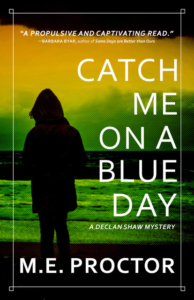
M.E. Proctor was born in Brussels and lives in Texas. The first book in her Declan Shaw PI series, Love You Till Tuesday, came out from Shotgun Honey, with the follow up, Catch Me on a Blue Day, scheduled for 2025. She’s the author of a short story collection, Family and Other Ailments, and the co-author of a retro-noir novella, Bop City Swing. Her fiction has appeared in VautrinToughRock and a Hard PlaceBristol NoirMystery TribuneShotgun HoneyReckon Review, and Black Cat Weekly among others. She’s a Derringer nominee.

Website: www.shawmystery.com

Substack: https://meproctor.substack.com


Russell Thayer’s work has appeared in Tough, Roi Fainéant Press, Mystery Tribune, Close to the Bone, Bristol Noir, Cowboy Jamboree Press, Shotgun Honey, Rock and a Hard Place Press, Revolution John, Punk Noir Magazine, Expat Press, The Yard Crime Blog, and Outcast Press. He received his BA in English from the University of Washington, worked for decades at large printing companies, and lives in Missoula, Montana.

Clicking Our Heels – Secret Passions

Clicking Our Heels Featured ImageClicking Our Heels – Secret Passions

Judy Penz Sheluk – I’m addicted to watching competition baking shows, though bran muffins out of a boxed mix is about as adventurous as I’ve gotten. But I’d love to learn to create wonderful cakes and cookies.

Mary Lee Ashford – Not really a secret passion or at least not in terms of a hidden talent or something I could reasonably pursue. I love music and sure wish I had some talent there. But sadly, that gene skipped me. I will say that I’ve always loved to travel and while we took trips when we could, careers and raising a family took priority. So now in retirement, I’m hopeful that maybe that passion for exploring the rest of the world can take on a new life.

Debra H. Goldstein – To write the great American novel – or at least to keep writing books and stories readers enjoy for a long, long time.

Anita Carter – I enjoy cooking and baking when I have time, but I’m not great at either. Maybe when I retire I should take lessons.

Gay Yellen – I’ve done my share of exciting things in life, and I hope there are more to come. But if I had one wish, I’d love to win the biggest lottery in history and use all the money to improve education and healthcare in this country.

Donalee Moulton – I would love to be a rock star. One problem: I can’t sing.

Lois Winston – Two, but neither will ever come to fruition. I’ve always wanted to go up in space, but I’m too prone to motion sickness for that to ever happen. I also wanted to star on Broadway, but Broadway isn’t interested in singers who can’t sing, dancers who can’t dance, and actors who can’t act.

T.K. Thorne – I think I always wanted to be a visual artist. I never considered I could do it, actually. Until Covid, that was a dormant desire, but I tried it, and no one was more surprised than I was by what has come from it!

Saralyn Richard – My passion for writing had to take a back seat for decades, when I was a teacher, administrator, and school improvement consultant. Finally, in 2013, passion and aptitude met opportunity, and eight books later, I’m living my best life.

Donnell Ann Bell – Not really. I’m a pragmatist. I would like to meet a former critique partner who I lost contact with years ago. He was such a mystery in the first place I would have no idea where to start. He belonged to my online mystery critique group and simply disappeared. He was a great critique partner – helped many of us out, especially when it came to geopolitics and geography.

Bethany Maines – I don’t know about dormant, but I would like to do more travelling, but the budget does not always accommodate my desires.

Paula G. Benson – I’m fortunate to have indulged in my secret passion of performing, writing, and directing theater productions. I’m grateful my church allows me to organize its drama ministry.


Oops! After 15 Years I Killed My Killer Crafts & Crafty Killers Mystery Blog

By Lois Winston

Sometimes the universe sends you a signal. Last month, I received one. It began when I was uploading a guest post to Killer Crafts & Crafty Killers, the blog I’d created in 2010 because my editor wanted me to join Facebook, and I had refused. I told her I’d instead join Twitter and create a blog.

I rarely posted on Twitter and eventually closed the account, but I kept up the blog. It changed over the years. At first, I posted new content five days a week. After a few years, I reduced my blogging to three days a week, then once a week. I began having more and more guests because coming up with fresh content, even once a week, is time-consuming, and I also belong to two multi-author blogs. I blog once a month here at The Stiletto Gang and once every seven weeks at Booklover’s Bench. For the last year, I was posting once a month on Killer Crafts & Crafty Killers and hosting guests the other weeks.

Then one day about a month ago, I was uploading a guest post, and Blogger wouldn’t let me add the jpeg of the guest’s cover. I rebooted my computer. Multiple times with no success. I searched the Internet and found various reasons why the jpeg wouldn’t load. I tried other jpegs with no success, and after eliminating all the other suggestions, I tried the only one left. I deleted my cookies. Suddenly, I could no longer get onto my blog dashboard, even after signing in.

I’ve always had a love/hate relationship with Google, leaning heavily toward the hate. Google doesn’t play well with my Mac. Never has. And, of course, it’s impossible to get human help from Google, especially for Blogger, which they stopped supporting years ago. Did I want to waste more hours, days, even weeks trying to get back into my blog, knowing the chances of success were infinitesimal? I’d already wasted hours, the result being that the initial minor problem had grown to a major one. I also wasn’t about to pay a tech expert hundreds of dollars, only to have him or her fail as well.

Maybe the time had come to bid a fond farewell to Killer Crafts & Crafty Killers. The fact that I wasn’t panicking about losing my blog, told me this was an option I should consider. Maybe Killer Crafts & Crafty Killers had run its course after fifteen years. All good things must come to an end. Would anyone even notice or care? Do I care? The more I thought about it, the more I realized I didn’t. Instead, I was looking forward to the time it would free up in my writing schedule and my life.

So, fare thee well, Killer Crafts & Crafty Killers. I bid you adieu as you take your place in the huge expanse of dead blogs floating around somewhere in cyberspace.

Have you stepped away from some or all social media, either intentionally or inadvertently? Were you upset or happy about it? Post a comment for a chance to receive a promo code for a free audiobook download of one of the Anastasia Pollack Crafting Mysteries.

~*~

USA Today and Amazon bestselling and award-winning author Lois Winston writes mystery, romance, romantic suspense, chick lit, women’s fiction, children’s chapter books, and nonfiction. Kirkus Reviews dubbed her critically acclaimed Anastasia Pollack Crafting Mystery series, “North Jersey’s more mature answer to Stephanie Plum.” In addition, Lois is a former literary agent and an award-winning craft and needlework designer who often draws much of her source material for both her characters and plots from her experiences in the crafts industry. Her most recent book is Seams Like the Perfect Crime, the fourteenth Anastasia Pollack Crafting Mystery. Learn more about Lois and her books at her website. Sign up for her newsletter to receive an Anastasia Pollack Crafting Mini-Mystery.

Picking a Pen Name

What’s in a Pen Name?

I recently have had the opportunity to submit to a dark romance anthology.  For those that don’t know dark romance could be defined as a subgenre of romance that explores the messy, complicated, and sometimes twisted side of love and relationships.  Dark romance is not my usual genre.  A lot of the “morally gray” heroes in the genre just sound abusive to me and I wouldn’t let my heroines date them. However, I did have an idea that was a great fit for the anthology.  So, I’ve decided to dip my toe into the dark and spicy waters of dark romance, and that means… it’s time for a pen name.

Why?

Because when my regular readers pick up a book with my name on the cover, they expect a certain tone—witty banter, action-packed plots, and swoony but emotionally stable romantic leads. And let’s be honest, they probably expect fewer, uh, bedroom scenes. The story I’ve written for this anthology is not that. It’s darker, moodier, and yes, much steamier.

In other words, it’s not your grandma’s fantasy romance. Unless your grandma is extremely cool and into antiheroes with tortured pasts.

Won’t Readers Be Confused?

That’s where the pen name comes in. It’s not about shame or secrecy—far from it. In the modern publishing world, pen names are tools. They help readers know what kind of story they’re getting into. Think of it like walking into a bakery versus a steakhouse. You love both, but you don’t want to order a croissant and get a ribeye. Or vice versa. (Although now I’m imagining some kind of buttery, flaky steak pastry and… I digress.)

The reality is, many authors use pen names to differentiate genres. Nora Roberts writes futuristic crime as J.D. Robb. Leigh Bardugo has her dark academia under her real name but uses a different approach for middle grade. It’s not about misleading anyone—it’s about making the reader experience as smooth and enjoyable as possible. So when I say this new name is the “spicier alter ego of Bethany Maines,” I mean it. It’s the same voice, same storytelling love, but focused on a different emotional and sensual frequency.

Now, picking a pen name is surprisingly difficult. Do I want something evocative and moody? Something a little edgy? Or maybe something just plain fun? I’ve already ruled out “Anastasia Ravenblood” (a little too much), but “Eva Steele”? Maybe. The options are endless—and honestly, a little overwhelming.

So here’s where you come in.

Help Me Choose!

I’d love your input! I’ve created a short (really short—like, blink and it’s over) Google Form where you can help me pick the perfect pen name. No personal data collected, no sales pitches, just your honest opinion and a chance to weigh in on this next creative adventure.

And don’t worry—I’m not abandoning my usual stories. I’m just branching out. Think of this as Bethany Maines… after dark.

Thanks for coming along for the ride, and I can’t wait to introduce you to my mysterious, smoldering, slightly unhinged pen name persona.

***

Bethany Maines is the award-winning author of action-adventure and fantasy tales that focus on women who know when to apply lipstick and when to apply a foot to someone’s hind end. She participates in many activities including swearing, karate, art, and yelling at the news. She can usually be found chasing after her daughter, or glued to the computer working on her next novel (or screenplay). You can also catch up with her on TwitterFacebookInstagram, and BookBub.

To find out more about books from the Stiletto Gang check out our BOOKS PAGE!


Mother’s Day Index?

There are all sorts of mothers in modern literature, from the unbearably overbearing and ambitious Mama Rose in Gypsy to the kind, upstanding, Marmee in Little Women.

This past Mother’s Day weekend, the local paper published an article about the “Mother’s Day Index” a numerical attempt to calculate the monetary value of a mother’s work, based on time preparing meals, doing laundry, day care, budgeting, counseling, and so on. Apparently, this year, a mother is worth $145,235.

I laughed out loud at that number.

My mother has been gone five years now. She’s still very present in my life, especially lately, as I’m finally emptying the storage space that held lasting remnants of her time on earth.

Surrounded by physical evidence of her life, and what she managed to accomplish—not just for our family, but for the wider community as well—I can’t help but believe that the so-called index calculation is way off. It’s contemptibly low, as is the premise that a mother’s worth can be defined in dollars and cents.

I’m not normally prone to quoting the Bible, but Proverbs 31:10 (often referred to as the “woman of valor” verse) describes a woman who embodies strength, virtue, and wisdom as someone who is worth far more than any earthly treasure.

Surrounded as I am these days by so many mementos from my Mother’s life, that is exactly who and what she was.

Besides excelling at all the mundane Mom skills, she was a whiz at sewing and tailoring, writing, party-making, and creating art in many forms. When my Dad was building his professional practice, she was also his first office manager.

And how to value her volunteer roles as a non-profit museum director? Or as a Braille typist who transformed newspaper and magazine articles into tiny raised dots of code on pages for the blind to read?

Or as president of a statewide women’s organization, where she wrote and produced puppet shows (“The Good Fairy’s Crown” and “The Tooth Fairy’s Helpers”) to promote positive health habits for Texas elementary school students, or her art history adult education series, and her personal art-making as well.

Good Fairy 1967, Tooth Fairy Helper (Astronaut), 1969

I celebrated this Mother’s Day, not at a posh restaurant with Mom, but inside a rapidly emptying storage space and in my increasingly storage-box-cluttered home. I’m glad to have found a couple of appreciative charitable causes to take most of the things I can’t find room for. But I still have some paintings stacked in the corner with no wall space left to hang them on, and other precious mementos I’m not ready to let go of.

How do you measure the life of a woman or a man?

Jonathan Larson‘s lyric from the smash hit musical “Rent” echoes the Bible quote from Proverbs. For those of us lucky enough to have known or been loved by women or men of valor, there’s no way to put a value on that experience, except perhaps with an occasional tug on the heart, a random tear, a wistful smile, and deep, deep gratitude.

May all your celebrations be happy ones.

Gay Yellen is the author of the multi-award-winning Samantha Newman Mystery Series: #The Body Business, #The Body Next Door, and #The Body in the News!

Malice Domestic 2025

by Sparkle Abbey

Malice Domestic 2025 is in the books and if there was a theme this year it was surely the kindness and connectedness of the mystery writing community.

It was heard in the stories from each of the honorees highlighting how much being a part of Malice has made all the difference. It was heard in the hallways as greetings and hugs were exchanged. It was heard over breakfasts or lunches as friends caught up with each other or new friends were made.

We attended our first Malice in 2011 knowing very little and we have to join the chorus of thanks to the many that shared information, made introductions, educated, and encouraged us. Best of all many of those early Malice connections are people we now consider friends.

Mary Lee, Anita, and Sandra

Malice 2011

Anita and Mary Lee

Malice 2013

Group Photo Malice Go Round

Malice Go Round 2013

Mary Lee, Dru Ann, Anita, Catriona, Dana

Malice 2014

Niki, Alice, Mary Lee, Anita

Malice 2018

Malice Go Round group photo 2025

Malice Go Round 2025

So Malice, thanks for the memories and we look forward to making more.

And thank-you to all of you for indulging us with this brief photo walk down memory lane.

And mystery writers and readers, if you haven’t attended a Malice Domestic conference…you should!

Sparkle Abbey is actually two people, Mary Lee Ashford and Anita Carter, who write the national best-selling Pampered Pets cozy mystery series. They are friends as well as neighbors so they often get together and plot ways to commit murder. (But don’t tell the other neighbors.)

They love to hear from readers and can be found on Facebook and Pinterest, their favorite social media sites. Also, if you want to make sure you get updates, sign up for their newsletter via the SparkleAbbey.com website