

Rabbit Holes & Root Beer
Help! I’ve burrowed down another rabbit hole, and I’m stuck in a warren full of of too many possibilities. So deep am I into the research for my next book that I lost track of time. Which is to say, I almost forgot to write this post.
With no plan for what to post today, I turned to a holiday calendar for inspiration. Maybe this date in history would spark and idea. Boy, did it ever, though it sent me burrowing even deeper.
Turns out, today is National Black Cow Day. Curious as to why we should celebrate dark bovines, I clicked and learned that today’s Black Cow hoopla is all about a drink I’d always known as a root beer float—that delicious concoction of vanilla ice cream melting inside a tall, icy glass of root beer.
Okay, I thought, a fun subject, but not meaty enough to write about—until I read more, and discovered sassafras.
Sassafras is an incredibly fun word to say out loud. (Try it!)
It’s also the original ingredient in root beer, first marketed in America in the 19th century by Philadelphia pharmacist Charles Hires. But that’s not what kept me deep inside that rabbit hole.
When I discovered how important sassafras was to native tribes across the eastern half of what became America, I had to read on.
Here’s why: Attentive readers of my Samantha Newman Mystery Series may recall a mention in Book 3, The Body in the News, of the discovery of a possible ancient Native American campsite on Carter Chapman’s Serenity Ranch. With the idea of that as a plot point in the next book, I’ve been researching indigenous people who may have once inhabited the region.

Cornell Botanic Gardens
Who were these people? What did they eat? What tools did they use? Were they peaceful, or warlike? What might they have left behind at the campsite? I’ve already done a ton of research based on those questions, with more to go. And, to that, I now add this question: Did sassafras trees grow on their land?
Today I learned that every part of the sassafras tree was used by Native Americans from the east coast to west of the Mississippi into Central Texas. Roots from which root beer flavoring is derived were used as toothbrushes. An emetic made from bark was used in purification after funeral ceremonies. Leaves, rubbed onto bee stings, wounds, cuts, sprained ankles, and bruises, were thought to have healing properties.

Ground Sassafras/Cornell Botanic Gardens
Timber from the sassafras tree was used in construction, furniture making, and—when explorers learned of its utility— shipbuilding. By the early 18th century, sassafras became the second-most exported American product, right behind tobacco.
I could tell you everything I’ve learned about sassafras and the possible tribes who may once have hunted on what’s now Carter Chapman’s Serenity Ranch in my books, but I’m running out of time to get this posted.
Also, I have to get back to my research.

bittersoutherner.com
But I’ll leave the foodies among you with one more sassafras fact: its leaves were also dried and pulverized for use as a thickening and flavoring agent. If you’ve ever had true Cajun gumbo, you’ve enjoyed the flavor of filé, made from ground roots or leaves of the sassafras tree.
All of which makes me hungry for some gumbo right now. Maybe I’ll chase it with a few frosty swigs of a root beer float.
Happy National Black Cow Day to you, and may your day be full of fun adventures, down rabbit holes or wherever you roam.
 Gay Yellen is the author of the award-winning
Samantha Newman Mystery Series including:
The Body Business, The Body Next Door, and The Body in the News!
 a primary requirement for both jobs is to love the knowledge that books impart to us.
 My brother and his wife take their grandkids to the library every week for story hour and games. It’s a great way to introduce the young ones to books and the comforts a library can provide.
 Before we get started with our questions, tell our readers a little about yourself. Maybe start with where you live, where you’re from, what you do beside writing, etc. Whatever you’d like to share.
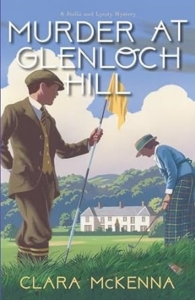 Thanks for asking! My next book is MURDER AT GLENLOCH HILL, the 6th in the Stella & Lyndy Mystery series. It releases on November 26, 2024. Stella and Lyndy take a weekend trip to Scotland to visit her distant kin’s country estate and, as the blurb on the back of the book says, “learn how sinister bad sportsmanship can be when a prestigious golf tournament becomes a deadly game of murder…” Sounds pretty good, don’t you think?
 By Lois Winston
 I don’t know how I didn’t know about this series of books, but I’m so happy I stumbled upon them. Mrs. Polifax is a New Jersey widow who walks into the CIA one day and offers her services as a spy. Surprisingly, they take her up on it! And that’s the start of a very entertaining book featuring an extremely endearing character. The author wrote fourteen books in the Mrs. Polifax series before her death at the age of eighty-eight in 2012. I’ve already started the second one.
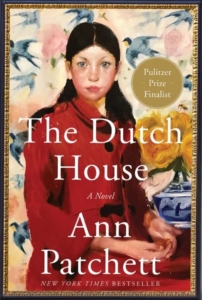 If a book doesn’t draw me in by the third chapter, I won’t waste any more time on it. There are too many books to read and not enough leisure hours in my day. Even so, there are books I finish but soon forget. Then there’s The Dutch House. I first picked this book up because it takes place in a town where I went to college and later lived for several decades. But I kept reading because the author is so adept at crafting both characters and plot.
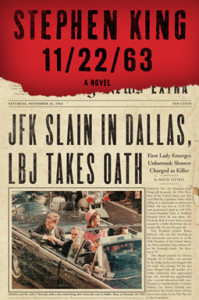 I bought this book several years ago but just got around to reading it this summer. At 880 pages, it’s quite intimidating and requires a huge commitment of time. Because I don’t care for horror stories, I’d never read anything by King other than his book on writing. However, I’m old enough to remember the day Kennedy was shot, and the concept about a man who goes back in time to prevent the assassination fascinated me. I flew through it, unable to put the book down until my eyelids grew heavy each night.
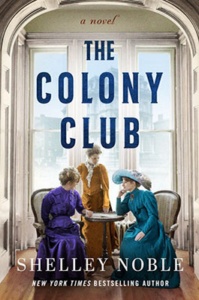 Disclaimer: the author is a dear friend, and I was lucky enough to read this book prior to publication. Daisy Harriman, one of the main characters in the book, was a real person. When she requested a room for the night at the Waldorf Hotel, she was turned away because she wasn’t accompanied by her husband. Appalled by her treatment, she set out to change history, creating The Colony Club, the first woman’s club of its kind in not only New York but the world. The novel also incorporates other historical people of the Gilded Age, including Stanford White, who designed the building, and actress-turned-interior designer Elsie de Wolfe, who decorated the Colony Club’s rooms. The author is a meticulous historian who creates a richly accurate depiction of the times, especially in the treated of women, making the book extremely au courant for today’s readers.