
Our Addiction to Simplicity-by T.K. Thorne
A friend sent me a little story about someone who mocked a man for buying a fancy car, asking him if he realized how many people the money that he spent on the car could have fed. The man recounted all the jobs that were created to make/sell the car and noted that those jobs fed a lot more people than he could count.
Fair enough. But it ended with this:
“Capitalism is freely giving your money in exchange for something of value.
Socialism is having the government take your money against your will and give it to someone else for doing nothing.”
Sounds very uncomplicated and compelling. But let’s look deeper.
There is no doubt capitalism provides jobs. (But so can socialism or even communism.)
Jobs—or at least working and/or creating something—do contribute to a person’s dignity and self-worth. . . .Unless that job pays so little, one is scrabbling to feed oneself or family and building a better life is out of reach no matter how hard one works.
Tying self-esteem to work is risky. Overwork can lead to burnout and diminished productivity. There are many benefits to meaningful work, though “meaningful” is defined differently for everyone. Not all work is meaningful in a positive way.
The adage that teaching a person to fish is a better choice than giving a person a fish, rings with truth. . . unless that person is too hungry to learn anything. Then he needs fish first and teaching second.
I’m not an economist, so I’ll stop there. My point is that we humans have a compulsion to simplify.
Why?
The answer to that seems to go back to the way we evolved. We needed shortcuts for everything to function and thus, survive.
My body/mind has figured out (thanks to billions of years of life’s experimentation) how to move to the kitchen when I’m hungry. If you think about what this requires, it is no easy feat. Thousands of complex electro-chemical interactions and coordination involving nerves, muscles, and tendons takes place. If I had to direct this with my conscious mind, I would fail and lie in a puddle on the floor. . . hungry.
The body/mind has shortcuts for almost everything. It takes effort to think through a statement, judge it, weight the “what-ifs?” What is true in one scenario might not be true in another. For example:
It is wrong to kill another. A simplicity that feels true . . . unless your own life is threatened . . . or if your government has decided that other is “the enemy.”
Life is complicated. That’s why we have lawyers.
Seriously, the mind loves simplicity. And it is not “wrong.” If a tiger is coming for you, simple is better.

But our world is also complicated and very divided. And each “side” clings to its precepts without room for expansion or allowance of deviation or “what ifs.” The human brain prefers shortcut belief/value systems, which are more efficient than wasting valuable energy on something it has already “decided.”
For example, I believe education is the fulcrum for elevating society, but I understand a child born into the stress of poverty and constant violence is not on equal footing, and that our world is better if it allows the potential of all to be fulfilled. I willingly give up a portion of what I earn and my time to try and rectify that, understanding that some beneficiaries to that funding and time will choose not to work for it. (I also support a system that primarily helps those who need it and will do their part, but I am not willing to give up on helping if that is an imperfect system.)
A strong military is the best defense, and all must contribute to pay for that, while understanding that human systems will often devolve to some waste and corruption. (I support a system that discourages and punishes that, but I am not willing to give up a strong military to eliminate it.)
I support hospitals administering care in life threatening situations despite the ability of the patient to pay for it. (See comment above re waste and corruption.)
These societal needs require systems that are, frankly, not simple. They could be simpler; they could work much better. But just opting out would cause many unintentional and devastating consequences. Let’s do the hard work, the creative work of figuring it out. Albert Einstein said, “The true sign of intelligence is not knowledge but imagination.” Do we have the imagination it takes to apply our creativity, technology, and will to the complex problems of our world?
That said, I leave you with a couple of truly simple things:
“Being kind and loving and caring really matters. The truths constantly change and disguise themselves, but being kind and loving and caring always counts.”—Jim Reed
“We can’t just hope for a brighter day, we have to work for a brighter day. Love too often gets buried in a world of hurt and fear. And we have to work to dig it out so we can share it with our family, our friends, and our neighbors.”—Dolly Parton

T.K. Thorne writes about what moves her, following a flight path of curiosity, reflection, and imagination. Check out her (fiction and nonfiction) books at TKThorne.com.
 By Lois Winston
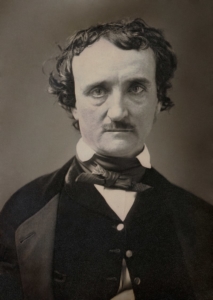
 In recognition of his birth, Edith Maxwell reminded readers of an anthology compiled by New England authors, Edgar Allan Cozy, in which each story is based on one of Poe’s short stories, supplied with a cozy atmosphere, and set in the fictional town of Raven Harbor, Maine. Edited by Sadie Hartwell, it contains stories by Ms. Hartwell as well as Barbara Ross, Sherry Harris, the late Shelia Connolly, and Edith Maxwell. It’s available through Amazon.
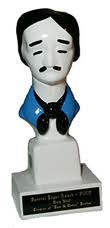 Along with the Edgar nominees, the Robert L. Fish Memorial Award finalists were announced. The estate of Robert Lloyd Fish, an American writer of crime fiction and recipient of an Edgar Award, has sponsored this award for the best first short story by an American author since 1984.
 As a first step, I thought it would be great to get to know one another. I’m a new mystery writer. My first book, Hung Out to Die, was published last spring, and my second book Conflagration!, a historical mystery, is just out.


 Beginning of the Year and I’m Already Tired by Debra H. Goldstein
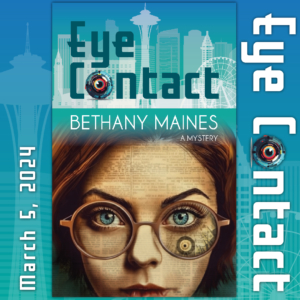 However, since I haven’t had time to figure out what my pen names would be I guess I’ll just forge ahead with the name I’ve got and announce that I have a new mystery coming out! Eye Contact is a stand-alone, laugh-out-loud mystery set in Seattle. With a quirky cast of characters, including a ten-year-old big time wrestling fan, a few science nerds, and a couple of Chinese spies who REALLY dislike working with a guy who thinks he knows it all, this one should tickle a few funny bones.
 Bethany Maines is the award-winning author of action-adventure and fantasy tales that focus on women who know when to apply lipstick and when to apply a foot to someone’s hind end. She participates in many activities including swearing, karate, art, and yelling at the news. She can usually be found chasing after her daughter, or glued to the computer working on her next novel (or screenplay). You can also catch up with her on
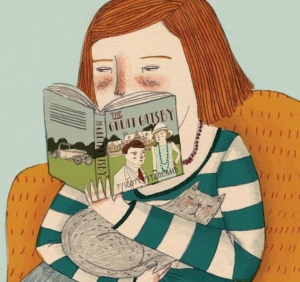 As a lifelong book lover, I read newsletters and articles by literary critics on what they think is important to read. So in January, I usually check the various “Best” book lists for the past year.
 Reader’s Digest doesn’t stop at mere books of the year. It also publishes “The 100 Best Books of All Time.” What they do when new books are published is a mystery. They could easily drop Hamlet from the current list. It’s a remarkable piece of literature, but it isn’t a book. But what about the other 99?
 Dear Readers: I’m slowly but surely recovering from 2023! So much progress. I’m still grieving, but my mother’s estate is settled and I can see the floor to my office. I realized it was my day to blog on The Stiletto Gang so I pulled up an article I wrote in 2016. Funny, the position I took back then is the same position I hold today. After reading, please tell me what you think. Do you avoid prologues, and how much time do you devote to marketing? ~ Donnell