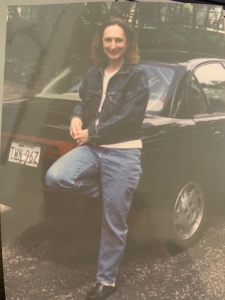
1985 Honda
Some say that bad things come in threes, but not in this case.
Thirty years ago, I finally admitted my faithful 1985 Honda Accord was nearing the end of its remarkable life. After almost 250,000 miles, it had earned a dignified retirement. My husband had been urging me to replace it, especially since I drove twenty miles each way to my teaching job. I resisted by buying a cell phone instead. If the car broke down, I’d simply call him to rescue me. Problem solved—or so I thought.
That plan lasted until the mechanic informed me the transmission needed replacing.
Reluctantly, I went car shopping. To this day, I have no idea why I walked into a Saturn dealership. I loved Hondas, yet somehow that day I drove home in a brand-new Saturn.
Within days, I knew I’d made a mistake. The Saturn was perfectly fine. It just wasn’t a Honda. I tried convincing myself I’d get used to it. After all, I kept cars forever. My little red Volkswagen Beetle lasted ten years, and I cried when I sold it. I cried again when I traded in my beloved Accord for a car named after a planet.
A few weeks later, while my husband was out of town, I headed to my favorite coffee shop. Except I never got there. Instead, I found myself pulling into the Honda dealership. There, gleaming in the afternoon sun, sat an eggplant-colored Special Edition Honda with a sunroof. I walked inside and told the salesman, “I’d like to trade my Saturn for that dark purple Honda.”
He looked out the window at my Saturn, then back at me. “Your Saturn looks brand new.”
“It is,” I said. “I just don’t like it.”
He smiled. “Let’s take the Honda for a test drive.”
“I don’t need a test drive.”
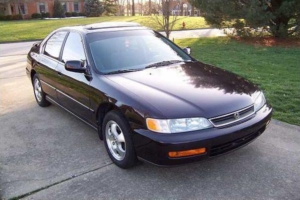
1997 Honda
He laughed and later admitted it was the easiest sale he’d ever made. We completed the paperwork, but I told him I’d return the next morning. I always sleep on major decisions. Driving home, guilt crept in. Shouldn’t I call my husband first? Could I really afford this? Was I being completely impulsive?
I decided I needed a sign from God. Without looking, I grabbed a CD—you remember those—and slid it into the player. The first song was Fred Astaire singing:
“Heaven, I’m in heaven…”
Well…that certainly seemed encouraging. Still, the guilt lingered. I walked through my front door, and within ten minutes the phone rang. My agent was on the line. He’d sold my second book—an Alfred Hitchcock trivia book—and the publisher was offering a $4,000 advance. Remember when publishers paid advances?
A few minutes later, the phone rang again. The publisher of a brand-new magazine called AustinFit had gotten my name from another publication I occasionally wrote for. They needed a staff writer and wondered if I was interested.
“Absolutely.”
Then the phone rang a third time. A science textbook company wanted to know if I’d write three chapters for a middle-school science textbook.
“Sure,” I said, figuring it might pay around $3,000 a chapter.
Then they told me the fee for all three chapters. Thirty thousand dollars! I nearly dropped the phone. With that one assignment, I had almost doubled my annual income, and it was more than enough to buy the car.
The next morning, I arrived at the Honda dealership five minutes before it opened. I drove home in my beautiful Honda Accord. I thought about calling my husband. Instead, I decided to surprise him.
Looking back, I like to think those three phone calls were God’s way of saying, Go ahead. Buy the Honda. For the next several years, every time I slipped behind the wheel of that car, I knew I’d made the right decision. Since then, I’ve owned three more Hondas. One of them drove my husband and me around the country on our 47,000-mile retirement trip.
“American Honda Motor Company, I’m available for promo videos.”
Kathleen Kaska writes the award-winning Sydney Lockhart Mystery Series, which won the 2025 PenCraft Award for Best Series, and the Kate Caraway Animal-Rights Mystery Series. Her trivia book, The Sherlock Holmes Quiz Book, is in its third printing. Kathleen recently won the Amity Literary Award for her upcoming novel, Death Without Dignity, set for release in January 2027.
Her latest Sydney Lockhart mystery is scheduled for release on September 8, 2026. Visit Me
Pre-sales sites:
Amazon: https://shorturl.at/J7AuZ
Smashwords: https://shorturl.at/mDuyO
Barnes and Noble: https://shorturl.at/g89CU
Bookshop: https://shorturl.at/3hyjr
Kobo: https://shorturl.at/cBKpZ
Everand: https://shorturl.at/PaDaD

Word Walls by Saralyn Richard
/in Uncategorized/by Saralyn RichardDuring the time I served as a school improvement consultant, one of the trendy instructional strategies was word walls. Whatever the subject, one could build vocabulary by splashing pertinent words around the environment. Student-generated word walls that spilled over walls, ceilings, floors, and out into hallways became the rage, and we even had contests and prizes for the classes who generated the best word walls.
Surrounding oneself with the most important words was the equivalent of setting out on the journey to learn the unit’s content. Of course, it wasn’t just the words. The meanings of the words, though not usually visible on the wall, traveled to the learner’s brain subliminally. So, the word wall, through single words or phrases, told a story to the brain.
In preparation for the imminent publication of PORT OF DESTINY: A Victorian History, Mystery, & Romance, I thought about how a word wall, like the title, book description, and cover, might convey in a pithy way what the book is about.
So, here’s a word wall for PORT OF DESTINY. Which three words do you find most intriguing?
PORT OF DESTINY will be released next month
.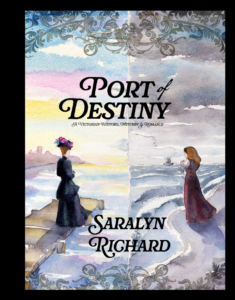
Here’s what author Sherrill Joseph has to say about it: “Richard’s remarkable historical tale of pain and passion weaves a gripping dual narrative about two young women—Rosa, already in Texas, and Chana, desperate for independence and to escape rising pogroms in Russia. Their lives, and those of the men and family members in their spheres, converge amid persecution, immigration, love—and murder.
Richard delivers vivid imagery, brisk pacing, rich character development, and shocking cliffhangers that make the book impossible to put down. The ending is powerful—expect goosebumps and misty eyes.”— Sherrill Joseph, author of the Botanic Hill Detectives Mysteries
For up-to-the-minute info about the book launch or Saralyn Richard’s other books, click here. Also, sign up for the monthly newsletter to enter contests, complete surveys, win prizes, and interact with the author.
Shop Your Series
/in Uncategorized/by Paula Bensonby Paula Gail Benson
I was so happy to see the return of Ted Lasso because I had missed the characters, storylines, and vicarious visit to the British football (soccer) world. But, I must admit another joy of watching the series is the fashion. People who know me well recognize my obsession with purses and handbags. When Pippa Middleton carried a Modalu satchel the day after her sister’s royal wedding, I tracked it down and shamefully spent to acquire one. I love it.
Rebecca Welton, played by Hannah Waddingham on Ted Lasso, has carried many bags I find very appealing. In Episode 1 of Season 4, she arrives in Kansas City to visit Ted carrying a stunning white tote. After viewing the show a second time, I took to the Internet to find that tote.
What I discovered was even more interesting.
There is a website where you can find items featured on TV shows. Here’s the link: https://www.shopyourtv.com/
According to the website, it was created in 2011 by Chloe Bell, an Australian TV enthusiast and blogger, who left the university for a semester and felt “incredibly bored.” Working with her sister Kirsty, at first they covered only five shows, but now have a staff of ten that covers 2,800 shows and lists over 350,000 items on the site.
You can search by show, character, or type of item. For instance, items listed from Ted Lasso’s Episode 1 of Season 4 include handbags, shoes, jewelry, specialized tees and shirts from Kansas City museums, and a baby’s onesie. Once you have found the item you are seeking, you can click on a link to buy it new (sends directly to the store carrying it) or second hand (Ebay, Poshmark, others).
Rebecca’s white tote that drew my attention was a Christian Louboutin Large Cabata Soft Leather Tote Bag. Only $1,790 new. I have not purchased but continue to admire from afar.
A little more research revealed a site that located fashions and other items from movies: Homepage | Shopyourmovies.
This site features fashion from both films and TV: Filmgarb – Clothes from movies n’ shows
Several sites indicate where to buy clothes from TV shows: Worn On TV | Where to buy clothes on TV Shows, soap operas, and talk shows, Spotern | Watch it, Get it, and Look the Part ® | Shop TV Shows.
One site, Home — Femestella, provides information about outfits seen on Amazon Prime, Apple TV+, Bravo, and Netflix.
Cinema Spells is an online shop that helps recreate vintage looks from films and TV. It offers some paid services but has a disclaimer that it is not affiliated with or endorsed by the brands or productions referenced.
From what I could tell, these platforms are not subsidized by the fashion industry. When I posed the question on Google, it indicated no direct subsidies but there might be potential for an affiliate commission if a person clicks on a product, is directed to a seller, then purchases the item.
Are you ever captivated by something you’ve seen in a movie or on TV?
A New, New Car and a Windfall
/in crafting mystery, Author Life, Inspiration, Kathleen Kaska/by Kathleen Kaska1985 Honda
Some say that bad things come in threes, but not in this case.
Thirty years ago, I finally admitted my faithful 1985 Honda Accord was nearing the end of its remarkable life. After almost 250,000 miles, it had earned a dignified retirement. My husband had been urging me to replace it, especially since I drove twenty miles each way to my teaching job. I resisted by buying a cell phone instead. If the car broke down, I’d simply call him to rescue me. Problem solved—or so I thought.
That plan lasted until the mechanic informed me the transmission needed replacing.
Reluctantly, I went car shopping. To this day, I have no idea why I walked into a Saturn dealership. I loved Hondas, yet somehow that day I drove home in a brand-new Saturn.
Within days, I knew I’d made a mistake. The Saturn was perfectly fine. It just wasn’t a Honda. I tried convincing myself I’d get used to it. After all, I kept cars forever. My little red Volkswagen Beetle lasted ten years, and I cried when I sold it. I cried again when I traded in my beloved Accord for a car named after a planet.
A few weeks later, while my husband was out of town, I headed to my favorite coffee shop. Except I never got there. Instead, I found myself pulling into the Honda dealership. There, gleaming in the afternoon sun, sat an eggplant-colored Special Edition Honda with a sunroof. I walked inside and told the salesman, “I’d like to trade my Saturn for that dark purple Honda.”
He looked out the window at my Saturn, then back at me. “Your Saturn looks brand new.”
“It is,” I said. “I just don’t like it.”
He smiled. “Let’s take the Honda for a test drive.”
“I don’t need a test drive.”
1997 Honda
He laughed and later admitted it was the easiest sale he’d ever made. We completed the paperwork, but I told him I’d return the next morning. I always sleep on major decisions. Driving home, guilt crept in. Shouldn’t I call my husband first? Could I really afford this? Was I being completely impulsive?
I decided I needed a sign from God. Without looking, I grabbed a CD—you remember those—and slid it into the player. The first song was Fred Astaire singing:
“Heaven, I’m in heaven…”
Well…that certainly seemed encouraging. Still, the guilt lingered. I walked through my front door, and within ten minutes the phone rang. My agent was on the line. He’d sold my second book—an Alfred Hitchcock trivia book—and the publisher was offering a $4,000 advance. Remember when publishers paid advances?
A few minutes later, the phone rang again. The publisher of a brand-new magazine called AustinFit had gotten my name from another publication I occasionally wrote for. They needed a staff writer and wondered if I was interested.
“Absolutely.”
Then the phone rang a third time. A science textbook company wanted to know if I’d write three chapters for a middle-school science textbook.
“Sure,” I said, figuring it might pay around $3,000 a chapter.
Then they told me the fee for all three chapters. Thirty thousand dollars! I nearly dropped the phone. With that one assignment, I had almost doubled my annual income, and it was more than enough to buy the car.
The next morning, I arrived at the Honda dealership five minutes before it opened. I drove home in my beautiful Honda Accord. I thought about calling my husband. Instead, I decided to surprise him.
Looking back, I like to think those three phone calls were God’s way of saying, Go ahead. Buy the Honda. For the next several years, every time I slipped behind the wheel of that car, I knew I’d made the right decision. Since then, I’ve owned three more Hondas. One of them drove my husband and me around the country on our 47,000-mile retirement trip.
“American Honda Motor Company, I’m available for promo videos.”
Kathleen Kaska writes the award-winning Sydney Lockhart Mystery Series, which won the 2025 PenCraft Award for Best Series, and the Kate Caraway Animal-Rights Mystery Series. Her trivia book, The Sherlock Holmes Quiz Book, is in its third printing. Kathleen recently won the Amity Literary Award for her upcoming novel, Death Without Dignity, set for release in January 2027.
Her latest Sydney Lockhart mystery is scheduled for release on September 8, 2026. Visit Me
Pre-sales sites:
Amazon: https://shorturl.at/J7AuZ
Smashwords: https://shorturl.at/mDuyO
Barnes and Noble: https://shorturl.at/g89CU
Bookshop: https://shorturl.at/3hyjr
Kobo: https://shorturl.at/cBKpZ
Everand: https://shorturl.at/PaDaD
Summer Vibes
/in audiobooks, Author Life, writing life/by Bethany MainesPresidential Humor…
/in Book Clubs, Cozy Mysteries, History, humor, Romantic Suspense, Samantha Newman Romantic Mystery series, Uncategorized/by Gay YellenThis post is dedicated to the fearless leaders of our country who have wittily (or not) contributed memorable public statements to be celebrated on National Presidential Joke Day.
Yes, it’s a real thing that comes around every August 11 to commemorate attempts at humor coming from the mouths our Chief Executives, past and present.
Funny, Not Funny?
Although humor was invented millennia ago, the inciting incident for this celebration actually occurred in 1984, when Ronald Reagan was about to launch his regular weekly radio address to the nation. As he frequently did before the broadcast went live, he warmed up his voice with something humorous. Only this time, the feed was already live.
Scrambling to avoid the unleashing of a real-life War of the Worlds, news outlets removed the remark before their broadcasts aired, but it remained on the recording for posterity. It is said that Reagan’s poll numbers dipped for a time after word of his oopsie got out, but at least the Kremlin recognized a joke when they heard it.
George W. Bush was funny without even trying, as evidenced by the several books of humor written about his gaffes.
Going back in time, we have Herbert Hoover, who once quipped, “Blessed are the young, for they shall inherit the national debt.” Not sure I’d laugh at that one.
Jokesters in Chief
The best humor, seems to me, comes from presidents who know how to laugh with their audience. Abraham Lincoln was a true quipster. Once accused of being two-faced, Honest Abe is said to have replied, “If I were two-faced, would I be wearing this one?”
In modern times, presidents leaned more and more on speechwriters to insert humor where needed.
At his last White House Correspondents’ dinner, the beleaguered Bill Clinton said he felt sorry for Republicans because they only had seven months left to drive him out of office.
“So little time, so many unanswered questions, he quipped. “For example, over the last few months, I’ve lost ten pounds. Where did they go? Why haven’t they presented them to the independent counsel? How did some of them wind up on… the host of Meet the Press?
If you tuned in to the video of the latest Correspondents Dinner, you might wonder if the current occupier of the White House employed writers at all, or if he was simply putting his own riff on the sterling prose they’d dutifully prepared for him. Based on the facial expressions and body language of his writing staff and other attendees, they looked like they’d been stricken with food poisoning.
Some presidents just aren’t born jokesters. According to Bob Dole, while Founding Father John Adams was known as lacking a sense of humor, he was “a sharp-eyes satirist.” But his son, John Quincy Adams was “often cranky and full of insults.”
I have a feeling there were some head-shakes and slapped foreheads in the Writers’ Room when the staff heard that one.
Which President do you think was the funniest?
Photos are official White House images
Don’t Leave Your Readers Fragmented
/in Donnell Ann Bell, How to Write, writing a mystery novel, writing life/by Donnell Ann BellAuthors Note: I’ve been busy doing beta reads and the subject of fragmented sentences came up. I wrote the following article in 2013 while editing Writing from the Peak, Pikes Peak Writers blog. I didn’t update the original because dated as it is, I still think it has relevance in 2026. See if you don’t agree. ~ Donnell
Writing is all about feeling. If you write a story, the number one thing you must be concerned about is not perfect sentence structure, not whether your plot is the most brilliant ever, and not even whether the characters are quirky and out there. The number one thing writers must be concerned with when adding words to the page is how am I making my reader feel?
Feelings are why readers continue to read – not because you’ve written the best book ever, and not because you’re the next Gillian Flynn or Charles Dickens. You’ve grabbed your reader, done something to their heart and they’ve become invested in your story.
That being said, authors have a tendency to glom on to whatever works. Whether I’m judging a contest or reading a book of one of my peers or my favorite NY Times bestseller, as a writer I can’t help but notice when something trends. Books are a lot like Twitter. Authors find out what they perceive as hot, and make an unconscious decision–or perhaps conscious–to implement that trend in their next book.
One of my earliest critique partners, Colonel Jim Roper (ret.), gave me some advice that I’ve never forgotten. He said, “Find your own voice.” That advice truly resonated with me, and from that point on, I’ve done my best not to copy other writers. True, we choose a genre that we prefer, but if someone starts a style all his own and the next twenty writers jump on the “Me Too” bandwagon, that kind of dilutes his style, doesn’t it?
Example: I don’t know what writer came up with using the period for emphasis. Because I mainly read mysteries and suspense, every so often I’d see a writer use something like: He had to stop him. Couldn’t. Let. That. Happen. The first few times, placing a period after a word might have been effective. Incorporated into every other book, however, the style became redundant. Interestingly enough, I’m not seeing it used much these days.
There are tricks that writers use to increase the pacing of a manuscript. If you’re writing an action scene, and you want to pick up the pace, shorten your sentences. If you want to slow the pace, lengthen your sentences so that your reader will take a breath. I’ve read that something in the brain is triggered when sentence structure is varied. But if you’re fragmenting your sentences because you think it ups the excitement or makes you a more compelling writer, consider changing what I personally feel is an ineffective style and an overused trend.
Am I saying never use a fragmented sentence? Absolutely not (there – feel better?) All I ask is that when you do write a fragmented sentence, you’re doing so deliberately and not because you think it elevates the scene. Words are tools; writers are the tradesmen. Every word in your manuscript belongs to you. Don’t leave your sentences or your readers fragmented. Remember, we readers have feelings.
About the Author: Donnell Ann Bell is an award-winning author whose romantic suspense novels have reached Amazon’s Bestseller list. Her Cold Case Suspense series also received accolades, including a 2020 Colorado Book Award nomination for Black Pearl: A Cold Case Suspense and in 2023, Best Thriller in the Imadjinn Awards, Imaginarium Celebration in Louisville, Kentucky for Until Dead: A Cold Case Suspense. Before turning to fiction, she edited for The Colorado Springs Business Journal and Pikes Peak Parent newsmagazine. Her website is www.donnellannbell.net
Authors Never Graduate
/in Author Life, Cozy Mysteries/by Sparkle AbbeySparkle Abbey
Summer has ended, and the new school year is about to start.
But for authors, school is never out of session. In fact, authors never graduate.
But it’s not just our craft where we need to expand our knowledge. It’s also learning and re-learning the ever-changing landscape of marketing, social media, discoverability, and how to keep readers coming back. It seems like we’re constantly testing what’s working in marketing and what’s not.
And then there’s AI.
AI has completely changed the landscape of writing, publishing, and marketing.
To use AI or not to use AI.
For those who choose to use AI, how will you use it? Editing, plotting, suggestions? Marketing strategies and tactics? How much time do you invest in a new tool that’s still evolving?
And for those who choose not to use AI, it’s already here, and we still need to stay up to date on what’s going on.
Then there are the AI ‘detector’ programs you may have heard of, such as GPTzero.me, Scribb, Text Defender. These highly ‘trained’ programs claim to detect how much of a submission was written by a human versus AI. It’s been in the news lately due to a two million dollar deal that was recently canceled over AI claims. That’s still being sorted out. But the bottom line is some tools are flawed, and some are downright wrong. So, more education.
Mystery author Donna Andrews decided to run her first book, Murder with Peacocks, through a couple of programs. We won’t spoil the results. You’ll have to check out her report to see how that turned out, but we will say…we weren’t shocked. Check out her Facebook post here.
Keeping yourself educated is never-ending when
it comes to marketing. What worked today won’t necessarily work tomorrow.
AI has transformed marketing and discoverability, too. Keywords and comparables, genre-morphing. Readers using AI shopping assistants to find book recommendations.
And just when we update all our book descriptions, reformat our “keywords,” and master the new “system” of discoverability, the new system is six months old, and we’re back to evaluating what’s working and what’s not.
Authors can never graduate. We’re lifelong learners, and so we’ll keep going “back to school” whether it’s learning more about the writing craft or what’s happening in the publishing industry.
But don’t worry! It’s all worth it as long as we get to continue to keep our readers entertained and moved by our storytelling.
They are friends as well as neighbors so they often get together and plot ways to commit murder. (But don’t tell the other neighbors.)
They love to hear from readers and can be found on social media or contacted via their websites:
Sparkle Abbey: Facebook Website
Mary Lee Ashford: Facebook Instagram Website
Clicking Our Heels – Caffeine or Not in the Morning?
/in Clicking Our Heels/by DebraAlthough there are many writers who, over the years, supposedly demonstrated an affinity for alcoholic beverages, the Stiletto Gang has a thing for coffee. Here’s what happens if each doesn’t get caffeine in the morning:
T.K. Thorne: I’m napping.
Saralyn Richard: I don’t drink coffee or tea, so the better question for me would be, “What are you like if you have caffeine in the morning?” I’d probably talk a mile and minute and zoom all over the house.
Kathleen Kaska: Tired and uninspired.
Judy Penz Sheluk: I do drink coffee in the morning, but it’s not a must-do. I can do herbal tea just as well. Has to be hot and in a mug. Other than that, I’m flexible.
Lois Winston: Not fit for polite society…or any other society!
Bethany Maines: I was poor in college and stopped drinking Diet Coke because I couldn’t afford my habit. And it wasn’t until after my daughter was born that I tried caffeine again. But my caffeine intake is about the amount of one cup of coffee (or less) and it’s not every morning. Which is not to say that you should approach me in the morning. I’m not a morning person and regardless of caffeine intake, and quite honestly, I’m grumpy as hell until about ten.
Gay Yellen: Unplugged.
Mary Lee Ashford: I’m not sure and I’m not sure we want to test that out. I’d have to go very far back to remember a morning without caffeine. Maybe it would have been prior to a medical test and we definitely don’t want to talk about that. The truth is, I very much enjoy my morning coffee routine – both the coffee and time to adjust to the day. My family claims I’m grumpy without my coffee, but I’m not. I just don’t yet have anything to talk about.
Donalee Moulton: My normal self. I don’t drink caffeine. Although I can slurp back numerous decaf mochas in any given week.
Donnell Ann Bell: Absent!
Debra H. Goldstein: Unhappy.
The Devil’s in the Details
/in Author Life, Brooke Terpening, Mystery, Research, writing life/by Brooke TerpeningEven though we write fiction, authenticity matters. It’s the details that make our stories authentic and create an immersive world for the reader. As a crime fiction writer of a series that is legal adjacent, I believe my responsibility is to get the details correct.
My second book has a scene involving a corrections officer and an in-person family visit with an inmate. This scene was necessary to establish relationships that were key to the plot. While I’d been inside that particular jail many times in the past as an attorney, I’ve never been there as a visitor.
Like most authors today, my first stop was the internet. I was dismayed to discover that family and friends could only have remote video visits. Well, that wasn’t going to work. That had to be wrong.
TAIT Radio with BOB
I called the jail directly, not expecting to get anywhere. After numerous transfers, I finally connected with a counselor who was willing to speak with me. No, the only in-person visits were on special holidays such as Christmas or Father’s Day. Worse yet, these visits were in a group setting. It looked like I had to go back to the drawing board.
Then the counselor asked why I wanted to know. I explained I was an author writing crime fiction— a fact they could verify since my name appeared on their caller id—and described the scene.
The counselor spoke to another person in the room. After a brief consultation, the other person, who was in charge, got on the phone. “You’d have to put in a motion and get a court order. Then we’d arrange a contact visit.” She laughed. “But you’d have to find a judge that would do that.”
Since I had a fictional judge in my fictional pocket, that wouldn’t be a problem. I thanked the counselors profusely for solving my plot problem.
Close-up of BOB
My scene also required the corrections officer to leave the room when an incident occurred in the jail. In the first draft, a radio squawked out a code. Something about that scenario didn’t feel right, so I decided to call a lifeline — my neighbor, Tom, whose company provides radio systems to prisons and jails.
Just like the counselors, Tom was glad to help. He brought over a demo radio. When I described the scene, he immediately disabused me of codes and messages that inmates can hear. I learned that guards carry their radio in a leather holster on their duty belt along with two sets of cuffs and a couple cans of CS spray, a.k.a. tear gas. A speaker mic, connected by a curly cord resembling an old telephone cord to the radio, clips on the guard’s collar. The guards listen to the radio through a corded earpiece that could be stored in the speaker mic.
These radios are more than glorified walkie-talkies. Each one has a screen that displays a unique id such as a badge number or an officer’s call sign. The radios have accelerometers much like the Apple watch feature that detects a fall. If the radio accelerates, goes on its side, or is in a horizontal position, a “man-down” is issued. If an incident occurs, the guard pushes BOB (Big Orange Button) located on the speaker mic. If BOB is held down for three seconds, an emergency is broadcast.
Wow! Did I have a wrong detail in my jail scene! A small detail, but nonetheless, an important one for authenticity. Armed with my new information, I fixed my faux pas.
I learned a valuable lesson. Research on the internet doesn’t always deliver the goods. Whenever possible, seek out a person with the right experience.
And don’t be afraid to ask.
A Fatal Affair: The Murder of Helen Grier [Part II]
/in Judy Penz Sheluk, A Fatal Affair, Helen Grier, True Crime/by Judy Penz ShelukI first wrote about A Fatal Affair: The Murder of Helen Grier in my January first Monday post (if you missed it, you can find it here). Since that time, my co-author, Amanda Capper, and I have continued our research. Much of that research is about the police investigation, the events leading up to the trial, the trial, the verdict, and for lack of a better term, the cast of characters.
Here’s the thing. Much of what we discover, while interesting (at least to us) won’t be relevant to the book, and has nothing to do with Helen Grier. We learned, for example, that the Crown Attorney (Canada’s version of District Attorney) went back to the scene of the crime two-and-a-half months after the initial investigation. And given the remoteness of the hunt camp in Northern Ontario, the only way to access it in mid- to late-January was to fly in.
Okay, so that part is relevant. But the former journalist in me can’t leave it at that. I contacted the Canadian Bushplane Heritage Centre in Sault Ste. Marie (known as “the Soo,” where I live), gave the curator the approximate date of the flight and the known passengers (Crown Attorney John O’Flynn and Ontario Provincial Police Constable Thomas Crawford) and moved on to the next rabbit hole.
George H. R. Phillips
Here’s what the Bushplane museum came back with:
All relevant enough to include in the book. But what about the history of the Ontario Provincial Air Service? The backstory on the pilot? I couldn’t resist digging deeper.
I learned that George Hector Reid Phillips was a legend in the Ontario Provincial Air Service and one of the most active pilots in the Forest Protection Division.
I also learned that the Buhl Airsedan used, registration CF-OAT, crash landed into Haw Lake on June 22, 1940, while transporting two-and-a-half-year-old Hope Matvenko from the Wawa area north of the Soo, to the Sault Ste. Marie Hospital. The pilot, doctor, and another passenger were found alive five days later, able to swim ashore, though without food or shelter. The child, who was suffering from a skull injury from a car accident, was unable to swim and drowned. The plane was left behind to rot.
Which of course led us to…
A visit to the Canadian Bushplane Heritage Centre:
Where we took loads of pix, copious notes, and learned lots, including this tidbit of information: The Canadian Bushplane Heritage Centre is the only museum in Canada dedicated to bushplanes, and visitors come from far and wide. And here it is, right in my own backyard.
The research continues…
L to R: Curator Mary Collier, Co-author Amanda Capper, co-author Judy Penz Sheluk
Parts of the CF-OAT’S wreckage are on display at the Canadian Bushplane Heritage Centre
Judy Penz Sheluk is the multiple award-winning author of seven bestselling mystery novels, two books on publishing, and several short stories. She is also the editor/publisher of five Superior Shores Anthologies, including the 2025 Derringer- and Silver Falchion- nominated Larceny & Last Chances, and the 2026 Derringer-nominated Midnight Schemers & Daydream Believers. Find her at www.judypenzsheluk.com