Confessions of a dormant writer

By Donnell Ann Bell

I have three problems when it comes to writing fiction. Simplicity bores me, I have a perfectionist problem, and I write above my pay grade.  Don’t get me wrong. I’m far from perfect. But I work hard to make sure my research is accurate. I also carry “What if?” and minutia to the extreme.

Combine this with life events over the last three years and writing has been a struggle. My Stiletto blog partner Debra Goldstein offered me sage advice when I expressed this problem. Familiar with my situation, she empathized and let me know my writing pause might take some time. Was she ever right!

I’m here to announce, “Times up.”

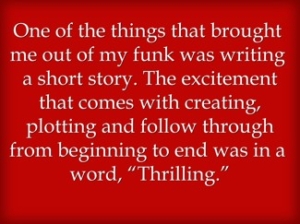
One of the things that brought me out of my funk was writing a short story. The excitement that comes with creating, plotting and follow through from beginning to end was in a word, “Thrilling.”

Somewhere buried inside me, yet dormant, was the writer I used to be.

And so I’m back to writing, which I consider progress. However, I’m still a perfectionist and still interested in topics I don’t fully understand. But to write something that doesn’t interest me would bore me silly.

Thought I would share some of the things I’ve been researching in case you’re interested.  In my work in progress, the month is October
2019.  My antagonist has escaped and he’s traveling on foot at night. Several issues crossed my mind while writing this scene, including: How will he get from Point A to his temporary objective of Point B when he faces all kinds of dangerous impediments?  Namely, he doesn’t know the area or the terrain, all he’s wearing are the clothes on his back, law enforcement is in pursuit, he’s being tracked by a fellow escapee, and it’s dark!

Which led me to research:

How to hike at night – crazy as that sounds, avid outdoorsmen (and women) do this. But they hike aided by night vision tools, GPS and compasses, walking sticks, appropriate clothing, and the ability to slow their pace, if necessary (which my antagonist mustn’t do at the risk of apprehension.) There are several videos and articles dedicated to night hiking.  I found this one particularly interesting and useful.  https://greatmindsthinkhike.com/hiking-at-night/

The phases of the moon. (Remember when I said I carry minutia to an extreme?) Here’s an example. It occurred to me that October is known for Hunter’s Moons and Harvest Moons, which I could use to my antagonist’s advantage. Then again, what fun would that be? I’m writing a suspense. Another complication occurred to me because the year is 2019. I can’t remember that far back; can you?

There are times I love the internet. There is a site called MoonGiant, which allowed me to narrow down the exact days of my WIP. It also pointed out that the days I referenced were in the Waxing Gibbous phase, which I will reluctantly leave out because my antagonist probably wouldn’t know that. 😊 Want to learn more about MoonGiant. Check out https://www.moongiant.com/

Thank you for allowing me to confess my writing sins–the others you don’t need to know. While I’m trying to break this useless perfectionist quality, I am setting goals and word count challenges.  How about you? Do you have any writing confessions you’d like to share?


Special Guest – Catriona McPherson

by Sparkle Abbey

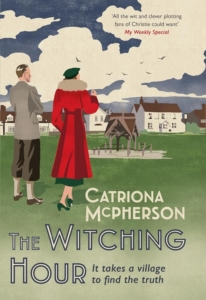
Today we welcome a very special guest back to the blog and she’s chatting about the latest in her Dandy Gilver series – The Witching Hour. Plus let’s talk about in-laws…

Catriona take it away!

“Two houses both alike in dignity” says Shakespeare of the Montagues and the Capulets at the start of Romeo and Juliet. (Off topic, but “Juliet Capulet” has always bugged me; I’d have swapped their names in the edit.)

And I suppose two houses can easily be alike in dignity but not in much else. When you’re wee, you think your family is normal and quite possibly all families are similar to it. But when you grow up and especially when you join families in a marriage . . . Well, I can’t be the only one who reads Carolyn Hax in the Washington Post. Second only to destination weddings – a pox on all of them, right? – her column is full of in-laws as far as the eye can see.

As THE WITCHING HOUR (Dandy Gilver No.16)  opens, Dandy and Hugh are gearing up to meet a prospective daughter-in-law. They’ve weathered one dynastic alliance (and survived the awkwardness of a corpse at the engagement-do) but now in the spring of 1939 their younger son is bringing a girl home and his track record is  . . . not unblemished.

Cover of book - The Witiching Hour

I love this jacket!

‘Cartaright?’ Hugh said. ‘Not Cartwright?’

‘Nor Carter-Wright,’ I assured him. ‘Teddy wrote it down for me to address the envelope.’

‘What address?’

‘London,’ I told him. ‘A 3F, I’m afraid. A flat. But north of the river. It’s so hard to tell these days. She could be anyone.’

‘Dolly Cartaright,’ said Hugh. ‘She sounds like a barmaid.’

‘I don’t care if she is a barmaid,’ I said. ‘Or a chorus girl, or even a . . .’ My imagination ran out.

‘An artist’s model,’ said Hugh. ‘Like What’s-her-name.’

‘I think she was a muse,’ I reminded him. ‘Although that might be the same thing, now I consider it at a distance. She was very . . . limber.’

Hugh rewarded me with a snort of laugher.

‘And I mean it. I don’t care. If she marries our son-’

‘If marriage isn’t too old-fashioned for her,’ Hugh chipped in.

‘And the call goes up for single men first-’

‘It won’t or only very briefly.’

‘-then she could pull pints of beer in the Atholl Arms for all our friends and I’d drive down to pick her up at closing time and offer a lift home.’

‘What friends of yours drink pints of beer in the Atholl Arms?’ Hugh asked me.

I rewarded him with a little snort of my own.

I remember meeting my in-laws. I was dressed all in black with a crew-cut and an attitude. They can’t have been thrilled, but Neil and I were only nineteen so they no doubt thought I’d soon be gone. Ha! How’d that work out?

Young Catriona and Neil

We were infants!

I do remember a formal meeting of in-laws in advance of one of my sisters’ weddings. My mum prepared an elegant meal then my dad came home with a punctured tyre, brought his bike into the kitchen and turned it upside down in the middle of the floor. A lively debate ensued.

I also remember sitting awkwardly in the living room at home with a set of in-laws-to-be in advance of a different wedding when a knocking noise came out of nowhere and all four of us girls stood up and left the room. There used to be a door there, see, and the wall is hollow so, when dinner was ready, my dad would knock on the hollow bit instead of shouting through the house. Seemed perfectly normal to us; looked like The Village of the Damned to strangers.

Then there was the fact that my dad didn’t drink either coffee (normal for Brits born in the 1930s) or tea (outlandish for Brits born anytime) so when visitors, including prospective in-laws, came and orders for hot drinks were taken, he was missed out and passed over. It wasn’t until someone said “Your mum looks so innocent but she rules with a rod of iron, doesn’t she?” that any of us realised the impression being given of a downtrodden and thirsty husband.

Library Offering

This was offered to me at a library once.

But that’s nothing, when it comes to food and drink and new alliances. I’ve got an American pal, Jewish, from Boston (these details are because I have no idea where her norms come from!), who married a Turkish bloke and, upon meeting her prospective family-in-law, politely cleaned her plate making yummy noises. Her mother-in-law-to-be replenished her plate. She cleared it. It was replenished. It was cleared. It was replenished. It was cleared. Only when the bloke started paying attention, which was thankfully before his mother had to send out for more food or his fiancée burst, did he say, “Oh yeah, babe? She’s gonna keep filling your plate till you leave something on it. And, anne, she’s trying to show she likes the food by eating it up.” Relief all round.

My sister’s mother-in-law is no longer with us so I can tell tales of her legendary and misguided culinary confidence without causing upset. You’ve heard the expression “a plain cook”? Well, this lady took it to soaring heights. She once opened a storage jar in my sister’s kitchen, saw muesli, pondered a while, recognised the rolled oats in the mix and made porridge with it. (I realise that this story is very British. The US equivalent would be making grits with granola.) Another time, she looked in my sister’s crisper drawer and found a head of broccoli. She thought Well that can’t be right and put it straight in the bin.

Photo of broccoli

It wasn’t even Romanescu!

All the weird and even annoying clashes of family norms become funny stories in the end, eh? I’d love to hear yours, Stiletto Gang. Can you remember meeting your in-laws? When did you realise you were in-laws? What’s the equivalent for single people? I know there’ll be one.

Here’s a little bit about The Witching Hour

It’s the spring of 1939 and Dandy Gilver, the mother of two grown-up sons, can’t think of anything except the deteriorating state of Europe and the threat of war. Detective work is the furthest thing from her mind. It takes a desperate cri de coeur from an old friend to persuade her to take on a case.

Daisy Esslemont’s husband Silas has vanished. It’s not the first time, but he has never embarrassed her with his absences before. It doesn’t take Dandy and her side-kick, Alec Osborne, long to find the wandering Silas, but when they track him down to the quaint East Lothian village of Dirleton, he is dead, lying on the village green with his head bashed in, in full view of a row of alms houses, two pubs, a manse, a school and even the watchtowers of Dirleton Castle. And yet not a single one of the villagers admits to seeing a thing.

As Dandy and Alec begin to chip away at the determined silence of the Dirletonites, they cannot imagine what unites such a motley crew: schoolmistress, minister, landlord, postmaster, park-keeper, farmworkers, schoolchildren . . . Only one person – Mither Golane, the oldest resident of the village – is loose-lipped enough to let something slip, but her quiet aside must surely be the rambling of a woman in her second childhood. Dandy and Alec know that Silas was no angel but “He’s the devil” is too outlandish a claim to help them find his killer. The detecting pair despair of ever finding answers, but are they asking the right questions?

Thanks so much, Catriona, for stopping by. We love stories set in Scotland and we love Catriona! So needless to say, we already have our copy of The Witching Hour. How about the rest of you?

Photo of author Catriona McPherson

Serial awards-botherer, Catriona McPherson (she/her) was born in Scotland and immigrated to the US in 2010. She writes: preposterous 1930s private-detective stories, including September 2024’s THE WITCHING HOUR; realistic 1940s amateur-sleuth stories about a medical social worker; and contemporary psychological standalones. These are all set in Scotland with a lot of Scottish weather. She also writes modern comedies about a Scot out of water in a “fictional” college town in Northern California. She is a proud lifetime member and former national president of Sisters in Crime.  www.catrionamcpherson.com


New Lessons from High School

Hard to believe that the public school year opened here yesterday, especially when we’re still inside the blast furnace that is August. I remember sweating through those first days. It was pretty brutal.

My own high school reunion happened just this past weekend, which made me wonder what the children returning to class will be learning, and what they’ll need to figure out on their own after they graduate.

As grown-ups, we know it’s impossible to escape high school as fully-formed adults. There are too many new lessons to be learned as years go by. Matter of fact, I caught up with a few new ones at the reunion.

If you plan to attend such a gathering, it’s common to question whether or not you have measured up to expectations. Maybe we feel we haven’t aged well, or weren’t successful enough, or didn’t meet our own hopes in some other way. Mercifully, most of my classmates at the party seemed to overcome those useless notions and decided to be there just for the fun of it.

The Good, the Bad, and the Ugly

Right off the bat, I ran into a couple of people I’d long remembered for having been cruel to me. The first was the grown-up version of a girl who had very publicly humiliated me my freshman year.

We managed to have a cordial conversation, but as I walked away, I couldn’t help noting that she would make a good villain in a mystery some day. Come to think of it, that long-ago betrayal may have fed my subconscious as I created E.B. Odom, the villain in The Body Business. So, here’s a thank-you to her!

Also at the party was a person who, in elementary school, had a nasty habit of kicking my shins until they bled.

I remembered him as a little devil. But at the reunion, he went out of his way to talk to me, and spoke so kindly about my mother that I instantly changed my opinion. As mystery readers know, sometimes an apparent villain in a story turns out to be a hero. Something like that occurs in the third book in the The Samantha Newman Mystery Series.

Recaptured Memories

The absolute highlight of the evening was being able to reconnect with old friends, many of whom I hadn’t seen since graduation. Remembering with them what we were like back then and sharing our life journeys since those sweet days was a priceless gift. It left me longing to connect with others who hadn’t made the trip.

There’s something deeply satisfying about sharing memories with people who knew us when. Most special was excavating the hidden treasures of experiences we’d long ago forgotten. And feeling so very grateful for the new lessons, too.

Have you ever attended a class reunion? How did it go?

Please leave a comment below…

Gay Yellen is the award-winning author of the  Samantha Newman Mysteries include The Body Business, The Body Next Door, and The Body in the News!  Now available on Amazon.

Contact her at GayYellen.com


Clicking Our Heels – If We Could Be Any of Our Characters

If We Could Be Any of Our Characters
When you read a book, do you ever imagine what it would be like if you could be one of the characters, even for a day? We thought it would be interesting to see, if given the opportunity, which of our characters we would each switch with.

Bethany Maines – Uh… eeek. My heroines have a lot of adventures. I’m not sure I’m cut out for some of that. This is a bit of a deep cut, but I’ll go with Ariana Grace from my short story anthology “Tales from the City of Destiny.” Ariana is a half-fae antique dealer who lives in Tacoma who also solves a few problems and mysteries. That way I would still be a small business owner and still live in Tacoma, but I would have a bit of magic and mystery.

Barbara J. Eikmeier – Julia. She’s so confident and fun.

Saralyn Richard – Nana, the sheepdog pup, who just wants to have fun!

Dru Ann Love – Lizzie.

T.K. Thorne – That’s a difficult question because they have all had really tough times that I would not want to go through! Perhaps Adira from my second historical novel, Angels at the Gate, the story of Lot’s wife. I love the romance between her and one of the “angels” and her bond with her desert dog, Nami.

Debra H. Goldstein – Mama Maybelle so I could say “Bless Your Heart” to people with a straight face and get away with it.

Lois Winston – This is a loaded question. My characters all deal with problems I’d never want—like constant dead bodies. However, if I could switch places without the dead bodies and other baggage I’ve dumped on her, I’d opt for Anastasia Pollack, my reluctant amateur sleuth, because of her strength, courage, and resilience.

Gay Yellen – It wouldn’t be Samantha, because she finds herself in trouble much too often. I’d choose her friend, Gertie, who has waited a long time for happiness and has finally found it.

Donnell Ann Bell – I’d switch places with any of my female protagonists AFTER the case was solved. 😊

Debra Sennefelder – Kelly Quinn from my Resale Boutique Mystery series. I’m so jealous she’s surrounded by clothes all day.

Anita Carter – Honestly, probably not a single one. They’re all very flawed, find too many dead bodies, and have more issues than I do. Ha!

Mary Lee Ashford – Oh, it would definitely be Caro Lamont from the Pampered Pets series. Who wouldn’t want to live in Laguna Beach and spend their days with cute cats and dogs?

Donalee Moulton – Riel Brava, the main character in my book Hung Out to Die, is a psychopath. Not the Hannibal Lecter kind of psychopath, the other kind — those who live and work among us without violence or animus. I’d like to step into Riel’s world for a few days.


WHAT DO YOU WRITE?

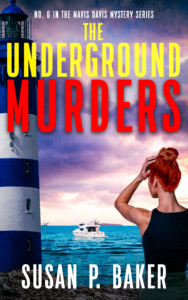
My new novel, The Underground Murders, was released yesterday, July 1, 2024. Do you write (or read) political novels? Or novels that contain even a bit of a political message? Or novels that address societal concerns? Or novels that are pure entertainment? I chose the subject of my latest novel with the intent of speaking out against the direction in which our country headed and knowing there would be backlash. I’ve already received a tongue lashing from one of my advance readers. I’m hoping she, at least, gave some thought to the issue, that her mind, which probably wouldn’t be opened, would get a small crack. Since the book only arrived on the scene yesterday, I’m waiting to see who else protests.

In some of my novels in the past, I’ve included (in addition to murder) gambling addiction, false allegations of child abuse, child trafficking, greed, adultery, characters with a sense of entitlement, judicial corruption, mental illness, theft—well, basically, my characters breaking all Ten Commandments!

History is replete with nursery rhymes that have been interpreted as political commentary or as a rendering of historical events. At https://englishhistoryauthors.blogspot.com/ many authors give their interpretations of historical pieces. I particularly liked Author Lucinda Brant’s Part Two about nursery rhymes including “Georgy Porgy” and “Jack and Jill.”

Fairy tales were another way authors expressed themselves. A nice piece that discusses how fairy tales can be used as teaching tools today can be found at  https://www.kidsbookhaven.com/article/exploring-relevance-of-fairy-tales-in-todays-world. There is also discussion about how they form the basis for so many current books and movies.

At https://journals.sagepub.com/doi/abs/10.1177/03061973241241877, there is a book review of Buried Treasures: The Political Power of Fairy Tales by Jack Zipes. Zipes discusses social ills, to put it mildly, and who the authors often were.

I’m a fan of John Sandford and his “Prey” novels. I was pleased to find he addressed environmental problems in his latest novel Toxic Prey, where the protagonists hunt down a mad scientist who believes the violent actions he intends to take will save the planet

It’s 2024 in the U.S. So far we still have the right to free speech. For the most part, we have the right to write what we want, unlike authors in some countries and those in history. I believe it’s my duty to address modern society’s ills. Though there is no guarantee what I write will be read, I fully intend to continue to write as my conscience dictates. If only a few readers will have their eyes opened, I will have accomplished my goal.

Susan P. Baker is a retired family court judge from Texas and the author of 15 published books. You may read more about her at https://www.susanpbaker.com.


With a Little Help from my Friends

artwork from Pixabay and Depositphotos

By Lois Winston

As authors, we spend much of our days in our writer caves. Sometimes, we rarely leave the house for days as we peck away at the keyboard, increasing our word count. Living life in a vacuum is hard, though. Sometimes we need to bounce ideas off someone, and let’s face it, kids and spouses are rarely helpful when it comes to figuring out the perfect murder or choosing whodunit from several possibly suspects. That’s why critique partners, as well as writing communities, are so important. Often, they’re the only people who truly “get” us.

My latest book, Sorry, Knot Sorry, the thirteenth in my Anastasia Pollack Crafting Mysteries, released earlier this month. In-between a month-long virtual book tour, I’ve been mulling over possible plots for the next book in the series.

I’ve always had a weird fascination with unusual personalities and often put them in my books. Anastasia’s communist mother-in-law is a perfect example. She’s based on my own communist mother-in-law, minus the French bulldog.

Years ago, we had some very strange neighbors living across the street from us. They’ve been parked in a recess of my brain for two-and-a-half decades, waiting to spring forth as characters in a book. I wondered, though, were they too over-the-top?

I decided this was a question, not for my critique partner nor my fellow writers. I needed to hear from my readers. So, in my May newsletter, I introduced them to the couple I had dubbed The Stoop Sitters. After relating the story, I asked if they thought The Stoop Sitters should become characters in my next book.

Everyone who responded loved the idea. I don’t know yet who these characters will be, but based on the overwhelmingly favorable responses I received, they will show up in some way in the next book.

I had already set up the possibility of The Stoop Sitters back in A Stitch to Die For, the fifth book in the series. Circumstances which occurred in that book resulted in the house across the street from Anastasia being torn down and replaced with a McMansion. Since Anastasia has yet to meet her new neighbors, they could be The Stoop Sitters.

Have I piqued your curiosity? Are you dying to know more about The Stoop Sitters?

When my husband and I purchased a home in an upscale New Jersey suburb, the house across the street stood out for all the wrong reasons. It was a dilapidated mess in need of major repairs. We suspected the resident or residents were elderly with a limited income. Much to our surprise, we discovered the owners were a couple in their late thirties or early forties. They had two school-aged kids.

The parents didn’t seem to have jobs. They’d camp out on the top step of their small concrete landing for hours at a time, either together or individually. Just sitting and smoking and often drinking beer, but never conversing with each other. Often the husband would remove his shirt and lie back on the landing, his massive stomach pointing heavenward. He’d remain that way for hours, apparently napping.

When Mr. Stoop Sitter wasn’t sprawled bare-chested on the landing, he’d spend hours mowing his lawn, an extremely small barren patch of packed dirt and weeds. For hours, he’d walk behind his mower, trimming the nonexistent grass, until the mower ran out of gas. The next day, after refilling the mower, the scene would repeat. It continued each day throughout the year, except during rain and snowstorms.

I need to stop here to mention that I’m not a voyeur. My home office was situated at the front of the house with my desk positioned under the front window. It was impossible not to notice The Stoop Sitters.

One day, my concentration was broken by a cat fight between two women. I glanced up from my computer screen to find Mrs. Stoop Sitter standing on the sidewalk, accusing another woman of trying to steal her husband. The scene was right out of Real Housewives of New Jersey, minus the camera crew. Eventually, Mrs. Stoop Sitter hurled one last warning, stormed up the steps, and entered her house, slamming the door behind her. The other woman turned and walked down the street. I never saw her again.

Now, Mr. Stoop Sitter was no one’s idea of a catch, but the scene I’d witnessed proved otherwise. Obviously, there’s someone for everyone. At least in Mrs. Stoop Sitter’s mind.

Eventually, the Stoop Sitters sold their house to a developer who tore it down and built a McMansion. There’s a story to be told about the people who moved into the McMansion, but I’ll save that for another time.

So what do you think? If my readers can suspend their disbelief enough to accept a communist mother-in-law and a Shakespeare-quoting parrot (not to mention a reluctant amateur sleuth who stumbles across more dead bodies than the average big city homicide cop in an entire career,) will they buy into the Stoop Sitters?

Would you? Post a comment for a chance to win a promo code for a free audiobook download of any of the currently available Anastasia Pollack Crafting Mysteries.

~*~

USA Today and Amazon bestselling and award-winning author Lois Winston writes mystery, romance, romantic suspense, chick lit, women’s fiction, children’s chapter books, and nonfiction. Kirkus Reviews dubbed her critically acclaimed Anastasia Pollack Crafting Mystery series, “North Jersey’s more mature answer to Stephanie Plum.” In addition, Lois is a former literary agent and an award-winning craft and needlework designer who often draws much of her source material for both her characters and plots from her experiences in the crafts industry. Learn more about Lois and her books at her website where can also sign up for her newsletter and find links to her other social media: www.loiswinston.com

On Naming Names

In my first stint as a magazine editor, I looked up from my desk one afternoon to see a young deliveryman at my office door, carrying a flower arrangement. He looked lost. “Can I help you?” I offered.

“Are you Gay?” he asked.

“Yes,” I said.

He grinned broadly and proudly declared, “So am I!”

We shared a laugh for a good minute before he set the flowers on my desk, wished me a great day, and disappeared down the hall.

In my twenty-four years on earth at that point, it was the first time I realized that, as a name, mine had become an anachronism. When I told my mother about the humorous encounter, she revealed that she and my Dad had debated among three names for me—Joy, Merry, or Gay—before they settled on the one I have.

Ever since the flower guy’s visit, I’ve always tried to avoid startling any new person I’m about to meet with what might sound like a sexual identity announcement. So, instead of the usual “Hi, I’m Gay,” I say, slowly and distinctly, “Hello, my name is Gay.”

“Gay?” one might repeat.

I nod. “That’s my name.

Naming a fictional character

Choosing names for fictional characters is tricky, too, because the name has to fit. What might it communicate about them and their story?

I first pondered this when I helped write the thriller Five Minutes to Midnight. The author was an international expert on terrorism, and not a native English speaker. To start with, he asked for help in naming the main character, who plied the same profession as he did. The hero was bold and dangerous. After playing with possibilities, I came up with Sartain. To my ears, it sounded like a good cross between the word “certain” and the ultimate tough guy, Satan. The author loved it.
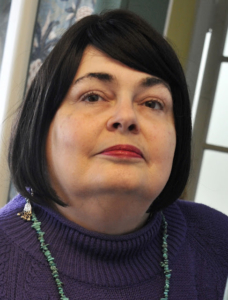
In my own Samantha Newman Mystery Series, I chose Sam’s last name because it reflected her unlucky habit of having to reinvent herself in each book. Now, after the first three books, she’s  in a good place. But given her history, who knows how long it will last?

Do you have a favorite fictional character name? Please share it in the comments below.

Gay Yellen writes the award-winning Samantha Newman Mystery Series, including: The Body Business, The Body Next Door, and The Body in the News.

Following a Character into a Book

Following a Character into a Book by Linda Rodriguez
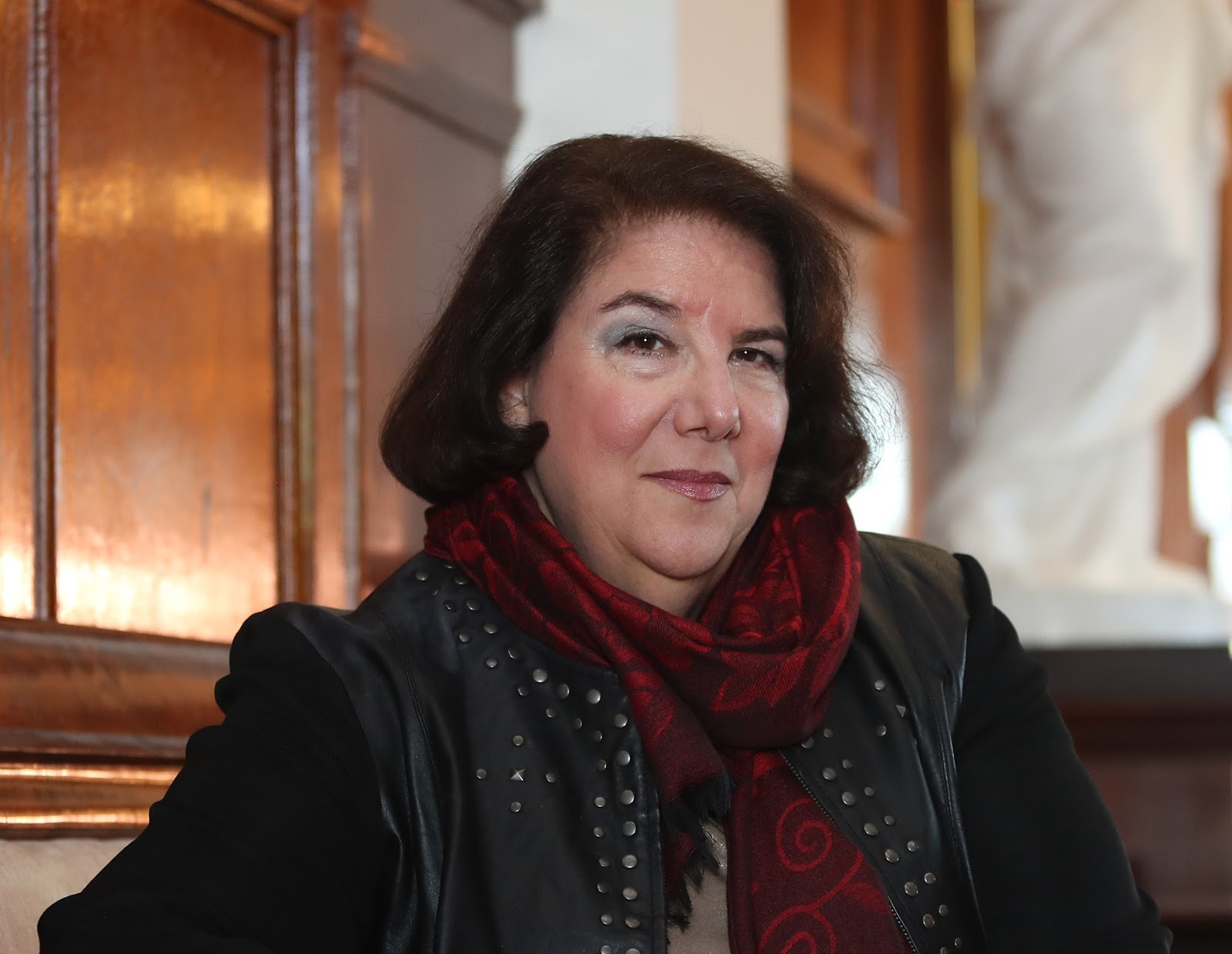
Lately, I’ve been intensely writing a new book. That’s a fairly common thing around here. Several times a year I follow a character into a short story or book. After the first draft is finished, I still refer to the much more I know about that character from writing that first draft as I revise and edit and edit, still following those characters as I chip away whatever doesn’t matter to them or what doesn’t fit. In a way, you could say that I spend most of my professional time chasing after characters, and you’d be correct.

Some people have the idea that plot is the be-all and end-all of the mystery writer, but I see it as story. I can write a book based on a clever plot with all kinds of surprises and twists, but if the reader doesn’t care about the characters or if the actions taking place don’t ring true for the characters, it’s no good. And yes, I know there are books like this that are published and sometimes very successful, but I still think it’s really story we need in the mystery, a story where the actions rise organically out of the characters and their motivations, where we care about the characters and what they’re trying to do because we know why it’s so important to them to succeed in their attempts.

When I’m looking for story, I start with character. As I start to know that character better, she or he leads me directly into story. A nice complex, twisty narrative with surprises and suspense comes from following all the major characters as they lead me on their path toward their goals in the story and come into conflict with each other or help each other or, sometimes, both.

When I run into problems with story as I’m writing a book, I go back to the characters involved with the aspect of the story that’s giving me a hard time. I sit down and have them write their situation, feelings, and problems with the story’s direction in first person as if they were writing diary entries or letters to me to tell me why they won’t do what I think they should do. Always I find that there’s something I’ve overlooked with that (those) character(s). I’ve been trying to steer the plot in a direction that’s false to the character(s), and I have to learn more about each character in order to find out the direction the story needs to go.

I’ve always been glad I take the time to do this, even as I whine about taking that time in the middle of a book with a deadline facing me. Often it leads to big changes—once I even had to change the villain into a possible love interest—but it always makes for a stronger, more vital story. And that’s what I’m after.

Right now, I’m chasing another set of characters into a book that I’ve tentatively set up to go one way, but I know that, as I get deeper into this story following these characters, I may find we’ve gone a different way into a whole different and much richer story. It’s the ultimate adventure, following a character into a book.


Parrott and Tonya Sitting in a Tree by Saralyn Richard


Literary detectives rarely work alone. Sherlock had Watson. Nero Wolfe had Archie Goodwin. Poirot had Captain Hastings. Then there are Nick and Nora Charles, Tommy and Tuppence Beresford, Lincoln Rhyme and Amelia Sachs, and Lord Peter Wimsey and Harriet Vane.

Authors make good use of the sidekicks throughout the series. The sidekick provides a sounding board for the detective, someone to help with collecting evidence and processing clues. Sometimes the sidekick offers an insight that might turn out to be a red herring—or not. The dialogue and interaction between the detective and his sidekick add interest and humanity to the story.

The Detective Parrott mystery series features Detective Oliver Parrott, a young, smart, organized person who’s well-grounded and dedicated to finding the truth. An outsider in the wealthy community he serves, he has a sixth sense about sniffing through subterfuge and barriers, and he’s undaunted by rich and powerful people. He just wants to do the right thing and make way for justice to be served.

That’s a big job for one guy to do, and the work can become frustrating and lonely. That’s why Parrott has a sidekick—his lovely fiancée (and then wife) Tonya.  College sweethearts, Parrott and Tonya have similar backgrounds. Both come from single parent homes in underprivileged neighborhoods. They had scholarships to Syracuse, where Parrott was a football star. Tonya majored in political science, while Parrott majored in criminal justice.

When the series opens in MURDER IN THE ONE PERCENT, Tonya is on a tour of duty in Afghanistan with the Navy. Parrott visits with her on Skype, and, while she can’t tell him much about her work, and he can’t tell her much about his, they both provide significant encouragement and support for each other.

By the time of the second book, A PALETTE FOR LOVE AND MURDER, the Parrotts are married and living in Parrott’s small house with their pet cockatiel, Horace. They have a loving marriage, but from the start, their lives are complicated by Tonya’s PTSD. Without spoiling the plot of this and subsequent books, I’ll say that Tonya’s story becomes inextricably entwined with Parrott’s investigation, and from then on, the Parrotts’ personal lives and the detective’s professional life cross paths.

The pattern continues in CRYSTAL BLUE MURDER and MURDER OUTSIDE THE BOX. At times the elements of humor and romance tip the plots into scenes unusual for a police procedural. Readers and reviewers apparently enjoy the dynamics between the two characters, and I’ve been present at many book clubs where people remark about it. One reader stopped me at the theater to plead with me never to let Parrott and Tonya divorce.

I doubt that will ever happen, although the Parrotts have to go through rough times, just like the rest of us. Right now, Parrott and his lovely wife are getting ready for the holiday celebration in their home, and they’ve asked me to wish each and every one of you the best of the season, and a happy new year. Let me echo those chirpy good wishes. May you have good health, friendship, love, peace, and happy reading!


MURDER OUTSIDE THE BOX will be available January 5. For other books, check out Saralyn Richard’s website here or Amazon page here.

Gay Yellen: The Return Trip

Has this ever happened to you?

You’re driving to somewhere you’ve never been before, searching for street signs, hoping you don’t get lost in an unfamiliar part of town. Finally, you arrive, conduct whatever business you came for, and head home.

But as you retrace your route, you begin to notice singular, interesting sights that you’d ignored on your way there. Oh! That must be the new soccer stadium I’ve read so much about, and there’s that new CosMc’s!

macrovector/freepik

E. L. Doctorow once said that writing a novel is like driving at night in the fog. Even though you’re only able to see as far as your headlights, you can still make it to your destination that way.

I’d add this: it’s only after you complete the round trip home that you realize where you’ve been. This is what happened to me when The Body in the News became Book 3 in the Samantha Newman Mystery Series.

The revelation appeared as I recalled a late, spur-of-the moment decision I’d made to introduce a very minor character into Chapter 9 of the book.

Meet Apollo, the sugar glider (and a possible metaphor).

Wikipedia

This tiny Pacific island marsupial weighs only 4 to 5 ounces. In the book, he arrives at Samantha’s door, sitting atop the head of a person who’s come to help Sam get through a pesky roadblock in her search for a happy life.

I meant to use Apollo as a bright spot during a dark moment in Samantha’s journey. He’s a creature who is almost too cute for his own good. But as I did my research, I learned that sugar gliders are very popular with exotic pet lovers, and that’s bad news for the little critters.

Now, back to yesterday…

…when I suddenly realized that Apollo and Sam had both been dropped into strange and hostile predicaments. And they each needed to get to a place where they belong.

I could claim that I’d planned Apollo’s situation to be a metaphor for Sam’s struggles, except that I saw the connection only after completing my own foggy writing journey to the end of Book 3. But I’m glad Apollo showed up to help her contemplate new hope for the future, even if I hadn’t seen it coming.

Writers always welcome a little bit of magic to grace our creative attempts, something that can intrigue our readers and add a little spark to our work. Even unplanned, a very minor character can be exactly that.

Gay Yellen is the author of the  award-winning Samantha Newman Mysteries include The Body Business, The Body Next Door, and The Body in the News!  Now available on Amazon.

Contact her at GayYellen.com